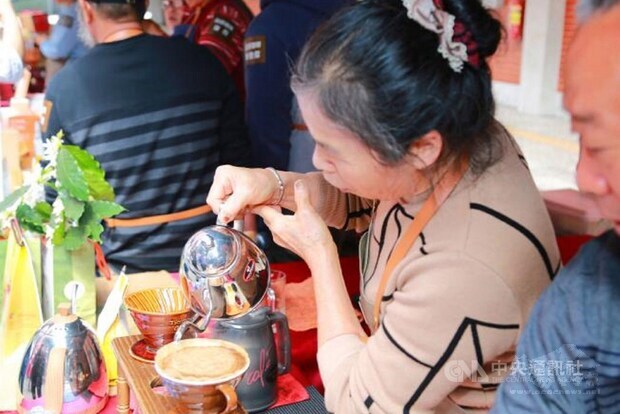
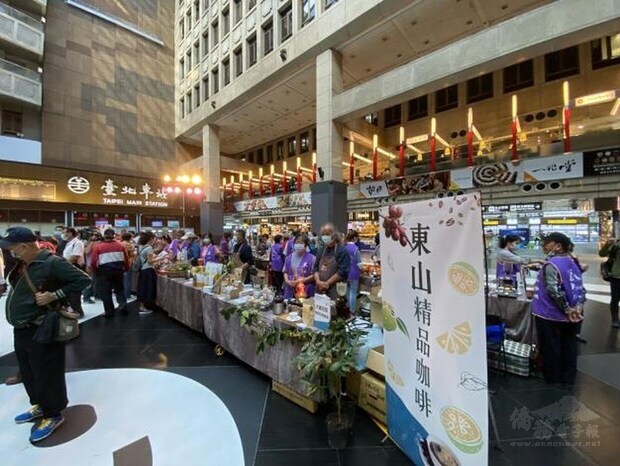
Tainan is now hoping to promote not only its rich history, but the coffee made from beans grown in its Dongshan District, in the northeastern part of the city.
For more than 200 years, Taiwan's previous rulers - from the Dutch, to Ming loyalist Cheng Chenggong and then the Qing Dynasty - ruled the island from its southern city Tainan.
In 1884, the British brought coffee to Taiwan, and what was then considered an exotic agricultural product was first cultivated in Sanxia in northern Taiwan, according to the Dongshan Farmers Association.
In 1895, the Japanese seized control of Taiwan, and decades later in 1941 the colonized territory saw a peak coffee production year after the Japanese introduced the Arabica species to the colony, according to the association.
However, the coffee industry in Taiwan was hurt by the Second World War as well as the deteriorating economy in the post-war era before momentum picked up in recent decades as more local consumers grew fond of the beverage.
Coffee has now become part of the daily life of many Tainan residents. Much of the coffee plants in the city are grown in what is known as the global coffee belt in the mountains, 500 to 800 meters above sea level, in Dongshan District.
Over the years, Dongshan's coffee has earned the same reputation as other prestigious Taiwanese brands, including Gukeng coffee in Yunlin County, Taiwu coffee in Pingtung County, Alishan coffee in Chiayi City, and Guoxing coffee in Nantou County.
Donghsan's coffee farms are located close to the Tsengwen, Baihe and Wushantou reservoirs, where temperature, humility and soil quality are ideal for coffee to grow, according to the farmers association.
Growers now want to let people outside the city enjoy their product.
"The city is working to boost the visibility of Dongshan coffee, allowing more coffee lovers to know the good quality of it," Tainan Mayor Wei-che (黃偉哲) recently talked to the press.
According to Tainan's Agriculture Bureau, the city has almost 57 hectares of coffee farms, with Dongshan as the major growing area, spanning about 53.9 hectares.
That makes the city the largest coffee growing area in Taiwan with an annual harvest of 730,000 metric tons.
Since most of the coffee farms in Dongshan are located along County Highway No.175, the road has been nicknamed "Coffee Road" or "175 Street."
Many coffee shops have popped up on both sides of the road to satisfy visiting coffee lovers.
Wu Cheng-fu, who runs "Old Home" coffee shop on Coffee Road, said in an interview with CNA that Dongshan always offers fresh coffee to consumers, and this freshness is an advantage no imported coffee can offer.
"Since Dongshan is famous for its longan and oranges growing, Dongshan coffee has a special fruit aroma," Wu said, referring to coffee beans absorbing the fruity aroma of the fruits growing nearby during their maturing process. "As the coffee is lightly roasted, consumers are able to have a sweet taste at the end of their drinks instead of only bitterness."
According to Wu, about 100 coffee farmers work along Coffee Road, where more than 30 coffee shops have been opened.
As part of Tainan's efforts to promote its coffee, the city is planning to build an agricultural leisure park in Dongshan with the aim of attracting consumers around Taiwan to travel to the district and have a taste of the coffee the district grows, the agriculture bureau told CNA recently.
Dongshan is keen to seek approval from the Council of Agriculture (COA) for the establishment of the leisure park in the district to promote its coffee, the bureau said.
In Taiwan, leisure agriculture parks are usually built in 18 to 24 months after approval from the COA, but the bureau said it will try its best to open one in a shorter amount of time to allow consumers to gain a good understanding about Dongshan's coffee sooner.
The bureau added the Dongshan leisure agriculture park will serve as a pilot project, paving the way for similar tourist attractions to be built in Tainan to promote the city's various agriculture products.
In Dongshan, the district's farmers association is already operating a coffee cultural museum built in a Japanese style dormitory, where consumers can learn how coffee beans are grown and roasted, and what a coffee ecosystem looks like. In the venue, visitors can also sip a cup of Dongshan coffee and relax.
Meanwhile, the Tainan City Government has sent coffee beans Dongshan grows to the U.S.-based Coffee Quality Institute (CQI) for certification in the past eight years in hopes that it will help them compete in the market.
As of 2020, a total of 21 coffee beans in Dongshan have scored more than 80 points to secure the Q Certificate from the CQI to vault them to the category of specialty coffee, according to the city government.
In addition to the plan to build a leisure agriculture park, Tainan has organized the annual Dongshan Coffee Festival for more than a decade, normally in October or November, to enhance the district's coffee promotion efforts.
Moreover, Tainan has put Dongshan coffee on sale in the popular Dongshan service center on Freeway No. 3, while it has also worked with the Taipei Agricultural Product Marketing Co. to have consumers in the north gain quick access to the district's agricultural specialty.