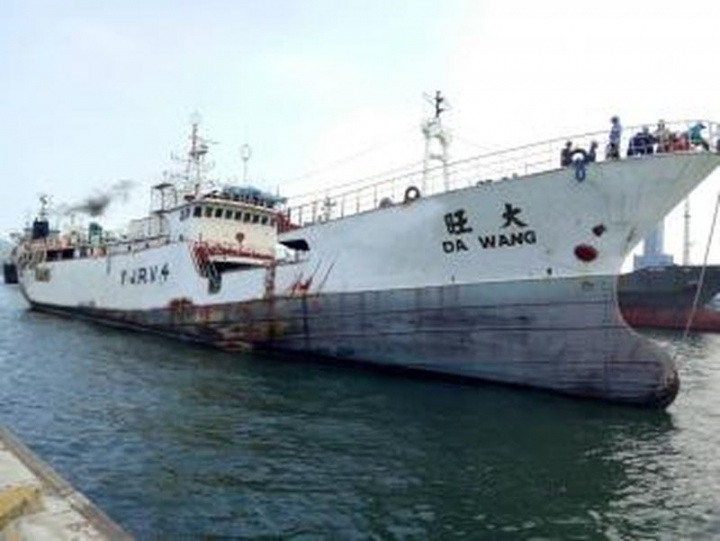
Taipei, Feb. 12 (CNA) Global environmental campaigning network Greenpeace accused Taiwan's Fisheries Agency on Saturday of dragging its feet on abolishing the operation rights of a Taiwanese-owned fishing vessel determined by the United States to have used forced labor.
The U.S. Customs and Border Protection (CBP) announced on Jan. 28 it had determined that Taiwanese fishing vessel, the Da Wang, had used forced labor in its operations after investigations had uncovered evidence of all 11 indicators developed by the International Labor Organization to assess forced labor conditions aboard the vessel.
The 11 indicators are abuse of vulnerability, deception, restriction of movement, isolation, physical and sexual violence, intimidation and threats, retention of identity documents, withholding of wages, debt bondage, abusive working and living conditions, and excessive overtime.
However, Taiwan's Fisheries Agencies did not announce it would revoke the Taiwanese owner's rights to operate the vessel until Jan. 29, a day after the CPB made its announcement, while Greenpeace had already published reports of alleged abuse and a death on the ship since 2019.
The Da Wang, which is owned and operated by the Taiwanese company Yong Feng Fishery Ltd, was named in Greenpeace Southeast Asia's 2019 report, "Seabound: The Journey to Modern Slavery on the High Seas."
The vessel has also been linked as a supplier of Taiwanese tuna trading company FCF, which owns U.S. consumer brand, Bumblebee Seafoods.
In a testimony in the report, a former crew worker stated, "When the Fishing Master was angry, he hit my friend's head near his left ear. After that he was forced to continue working until the work was finished and only then was he allowed to rest. In the morning when we woke up for breakfast, we found him dead in his room."
According to Yuton Lee (李于彤), oceans campaigner from Greenpeace East Asia's Taipei Office, the Taiwan government is not doing enough to crack down on human rights abuses in Taiwan's distant water fishing industry.
Taiwan is also failing to take proactive measures to stop crime and other illegal activities coming from the supply side, Lee said.
"As one of the largest distant water fishing economies, Taiwan needs to know that by failing to take proper action, it not only hurts vulnerable workers from Southeast Asia who are usually roped onto these vessels, and consumers around the world, but also our own fishing industry and reputation," Lee said.
After the death occurred on the vessel, the Da Wang was still allowed to enter and exit ports in Taiwan, entering in March 2020 before leaving again in May that year, and returning in March 2021 before exiting again in October, Lee told CNA.
However, in July 2020, the Da Wang was handed a Withhold Release Order by the CBP, denying the entry of its goods into the U.S., pending further investigation and conclusive evidence, yet the Da Wang was still able to enter and exit Taiwan, according to Greenpeace records.
In response, FA Deputy Director-General Lin Kuo-ping (林國平) told CNA when the Da Wang entered and exited port, the Fisheries Agencies dispatched personnel to conduct investigations and provided relevant information to the prosecutor's office.