By Zachary Lee, CNA reporter in Bali, Indonesia
Thousands of Ukrainians have flocked to Bali seeking refuge since their country was attacked by Russia, and while many are not that familiar with Taiwan, they are hoping neither it nor any other country will experience what they have been through.
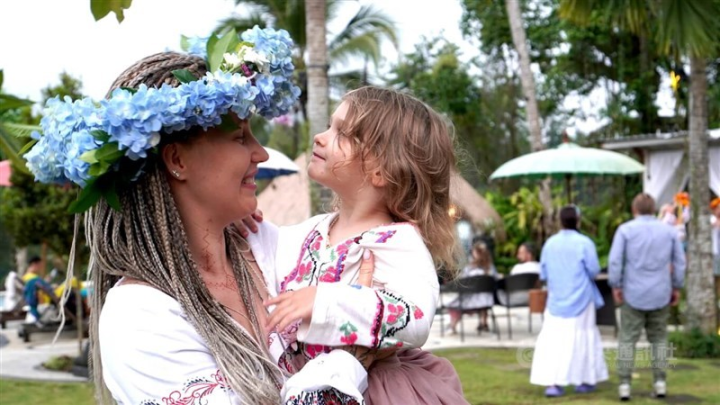
"War is very very scary. [We are] in a very bad situation. I hope that the people in Taiwan will never ever know what it is like to be in a war," said Hanna, who moved to Bali from Kyiv in May.
Hanna is among the Ukrainians in Bali who are aware of the comparisons being made between Ukraine and Taiwan by international media due to the military threat China poses and wanted to let Taiwanese know how easy it is to take peace and normality for granted.
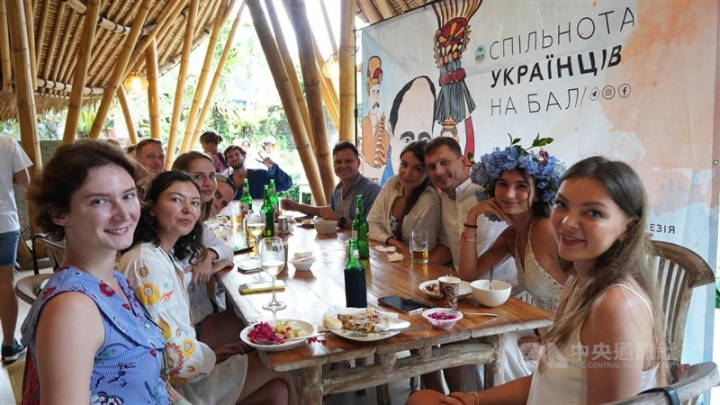
Speaking to CNA at a gathering of Ukrainians at a café in Ubud in the second week of July, Hanna said people in Ukraine thought the war was far away and would never happen, but then the Russians invaded.
"Everyone had plans for the future, and everything was beautiful. People were hopeful about the future, and then the war broke out," she said.
Hanna urged Taiwanese to prepare for war, even though she hoped it would never happen.
"You have to prepare savings, cash, medicine, and other important documents such as a passport," she said.
She mentioned medicine because when the war started in Ukraine, people panicked and tried to stock up on medicines they needed, but pharmacies were empty.
Dmytro, one of the leaders of the Ukrainian community in Bali, has closely watched the tensions between Taiwan and China and echoed Hanna's sentiments about being prepared for war.
"It's not impossible; anything can happen," said Dmytro, who still cannot believe the city he used to live in in Ukraine has been destroyed.
Another Ukrainian, Oleksandra Makharynets, who just brought her mother from Ukraine to Bali, told CNA that she was not familiar with the Taiwan issue but hoped the Taiwanese would never have to experience what war really is.
Hanna, Dmytro and Oleksandra are among the 17,109 Ukrainians who entered Bali in 2022 or the first five months of 2023, according to the Bali provincial government, seeking refuge from the war.
Even more Russians, a total of 131,141, have arrived in Bali during the same period, including 73,110 who entered the island paradise from January to May this year.
They have gravitated to Bali because of its relatively low cost of living and its tourist visa-on-arrival system, which allows them to stay in Indonesia for a long period of time by getting residence permits or leaving and re-entering the country every two months.
The arrival numbers may inflate the size of the communities because they could include the same person returning to Bali multiple times on visa runs, but they are still sizable.
Different from the warm and welcoming ambiance of Ukrainian gatherings, Russian communities in Bali are more isolated and indifferent to the media. Many Russian men left the country to avoid the draft and are not willing to discuss the war.
"Maybe they are afraid of the government at home, so they don't talk about their stance on the war," Illia, one of the few Russians who talked to CNA, said.
The Russians who did open up had the same anti-war sentiments as the Ukrainian community.
The 40-year-old Illia, who moved to Bali earlier this year, was very saddened by the war in Ukraine, and the Russian government's political propaganda, both internally and externally. "Putin is a bad man," he said.
Alexander Zorilov, who moved to Bali from Moscow before the war broke out, is anti-war. He believed all wars are a political instrument. "But in the end, it is the civilians who will suffer the most," he said.
Zorilov has kept a close eye on the situation in the Taiwan Strait and hoped that Taiwan and China can find a solution to deal with their issues before things get any worse.
Nastya, a 33-year-old Russian, said she was not familiar with the Taiwan issue but had a simple message: "Don't fight!"
Yet even in the safe haven of Bali, friction has emerged between the two communities. Ukrainians there want to differentiate themselves from the Russians after the Bali government suggested revoking the visa-on-arrival scheme for both groups due to bad behavior.
In a letter to CNA, Oleksandra Smotrytska, secretary to the Honorary Consul for Ukraine in Bali, stressed they are two different communities. "It's very important that the Ukrainian community in Bali doesn't connect and communicate with Russian citizens," she wrote.
For all of these Ukrainians and Russians, however, Bali is now their home, though for how long, nobody knows.
As Hanna said: "I don't know my plan for now, but I must help Ukraine and I need to go back. It is very important for me."