The 2023 Taiwan International Ethnographic Film Festival (TIEFF) kicked off Thursday and featured 31 elaborately curated local and international films that showcased how media old and new can be used in ethnographic filmmaking and how anthropology can help people from different backgrounds solve common problems.
This year's TIEFF, the 12th of its kind since the festival was launched 22 years ago, will also pay tribute to late TIEFF founder Hu Tai-li (胡台麗), an anthropologist, who is one of this year's in-focus directors and whose documentaries "Sounds of Love and Sorrow" and "Encountering Jean Rouch" will be featured, according to event organizers.
This year's films look at how traditional media, such as traditional language, song and dance, is being preserved and transformed, and how new media, such as animation, is being used to connect young people with their cultures, TIEFF programmer Teri Silvio, a research fellow at Academia Sinica, said at a news conference about the film festival.
The festival's team of reviewers received more than 1,300 submissions from applicants in 98 countries, which were narrowed down to 31 after a selection process that lasted more than six months, Silvio said.
One of the festival's goals is to give the general public a better understanding of anthropology, of which a defining feature is cross-cultural comparison, Silvio said.
While most anthropologists study cultures that they did not grow up in, there are more Indigenous anthropologists now studying their own culture or ethnic group, Silvio told CNA, adding that she hopes TIEFF can provide a basis of comparison that underpins ethnographic research, Silvio told CNA.
"So even if you're part of a group there should be an awareness of other possible ways of doing things or the other possible ways that people have approached similar problems or questions," she said.
At the same time, audiences at the screenings will "get a lot more out of it" and find that some films "pair up well" if they watch more than one film and observe how very similar projects are being "undertaken in very different ways" by filmmakers from different cultural backgrounds, she said.
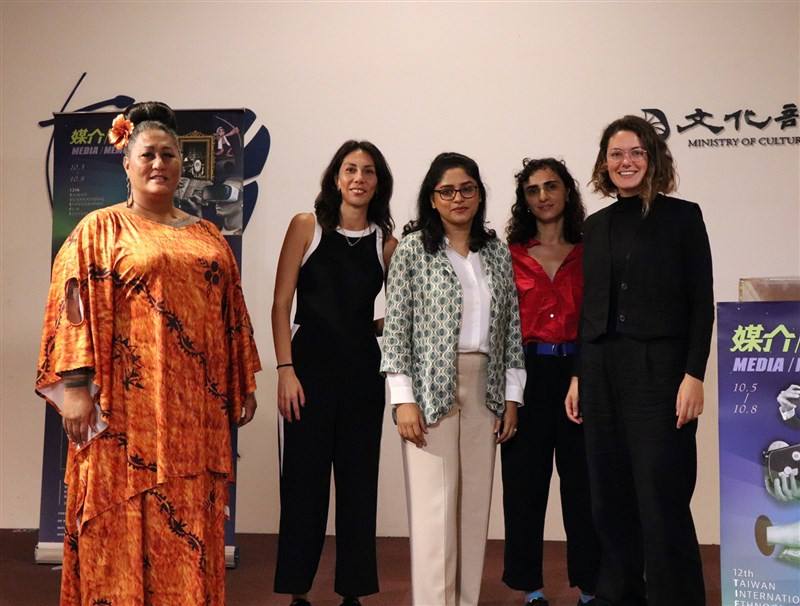
Five of the directors whose films were selected appeared at a post-news conference symposium to discuss their works, including Hinaleimoana Kwai Wong-Kalu ("The Healer Stone of Kapemahu"), Carolina Arias Ortiz ("Rebel Objects"), Isil Karatas ("Analogue Practices in Digital Landscapes"), Suzanne Elizabeth Schaaf ("The Memory of Glitch"), and Humaira Bulkis ("Things I Could Never Tell My Mother").
Taiwanese directors whose works made the cut, including Gu Shou-chi (古少騏, "60 Years of Singing Ballad in Hakka: Mu-Zhen Xu" 客家說唱一甲子 徐木珍), Su Hung-en (蘇弘恩, "Swirling in the Dreams" 夢洄), Lee Li-shao (李立劭, "When We are Together" 記憶家園), Pan Chih-wei (潘志偉, "Home" 何處是我家), and Chuang Li-hua (莊麗華, "Man Under the Moon" 月亮·男人), also talked about their films at the symposium.
The festival's selections are being shown at the Wonderful Theater in Taipei's Ximending until Sunday.