The number of newly reported HIV infections in Taiwan has declined for six consecutive years since 2018, with the number of cases this year expected to fall below 1,000 for the first time in 20 years, Taiwan's Centers for Disease Control (CDC) said Wednesday.
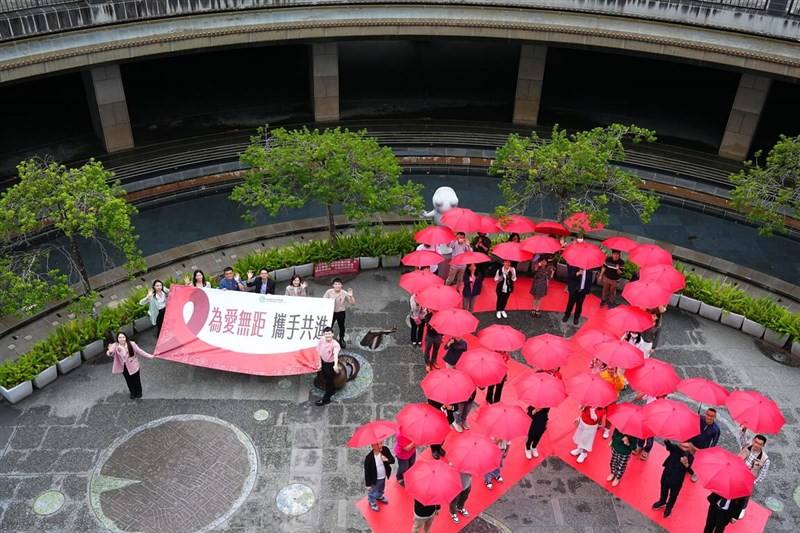
As of Oct. 31, the number of newly diagnosed HIV infections in Taiwan this year had reached 804, down by about 9.3 percent from the 886 recorded in the same period of last year, CDC spokesperson Lo Yi-chun (羅一鈞) said at an event in Taipei to mark World AIDS Day on Dec. 1.
For the whole of 2023, the total number of infections is expected to dip to below 1,000 for the first time in 20 years, Lo added.
In 2022, 1,069 HIV cases were registered across Taiwan, down from around 1,246 the previous year, according to CDC data.
The United Nations Joint Program on HIV/AIDS (UNAIDS) has set ambitious treatment targets known as Project 95-95-95, aiming for HIV testing, treatment and viral suppression rates to be 95 percent each by 2030.
Taiwan has achieved a score of 90-95-95 last year, outperforming the global average of 86-89-93, according to Lo.
In addition, Lo noted the HIV self-testing program in Taiwan served nearly 75,000 people in the first 10 months of this year, the highest number since the trial run of the program was launched in September 2016.
Meanwhile, the number of designated pharmacies around Taiwan that provide medicine for HIV and AIDS patients has increased to more than 100, he added.
In Taiwan, an estimated 10 percent of people living with HIV do not know they have the virus, the CDC said, adding that people can now order rapid HIV self-testing kits online at https://hiva.cdc.gov.tw/Selftest/, with shipping fees to be waived from Dec. 1-31 during a promotional campaign.