Last March, Taiwan and Germany signed a Scientific and Technological Co-operation Arrangement (STA), which determined four key areas of cooperation—semiconductors, lithium batteries, hydrogen energy, and AI. Since then, the NSTC and the German Federal Ministry of Education and Research (BMBF) have contin-ued to promote relevant cooperation and exchanges. On September 3 and 4, 2024, Taiwan time, both sides held bilateral seminars on AI and semiconductors in Germany. NSTC Minister Cheng-Wen Wu attended the two seminars to deliver re-marks and listen to researchers from both sides present their findings.
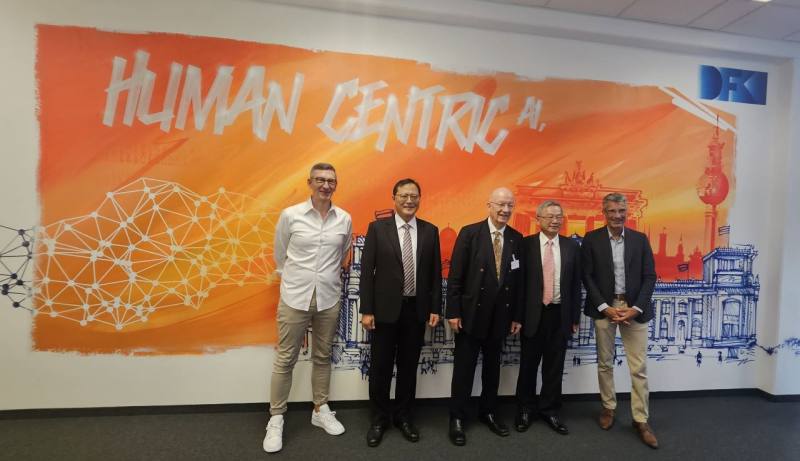
On September 3, both sides held a bilateral seminar on AI in Berlin, Germany. This seminar was a continuation of an April visit to Taiwan of a BMBF delegation on AI. After the BMBF delegation conducted in-depth exchanges with relevant re-searchers at the Taiwan AI Center of Excellence (Taiwan AICoE), both sides planned to hold a seminar in September. Thus, this seminar was co-chaired by AICoE Vice Chief Professor Jane Yung-jen Hsu and German Research Centre for Artificial Intel-ligence (DFKI) Founding Director and Chief Executive Advisor Professor Wolfgang Wahlster. In addition to discussing future opportunities for cooperation, both sides focused on two topics: generative AI in large language models and AI edge compu-ting.
In Minister Wu’s remarks, he stated that Germany is one of Taiwan’s closest European partners in terms of S&T cooperation and exchange. In addition, Minis-ter Wu expressed appreciation that through joint efforts, Taiwan AICoE and Ger-many’s largest AI research center, DFKI, signed an MoU for cooperation. Minister Wu said that this latest partnership will accelerate the integration of innovative bi-lateral AI scientific research results into the global value chain. BMBF also ex-pressed the thanks for the NSTC’s support of this AI seminar, and the hope that in the near future, Taiwan and Germany can create and international platform for AI scientific research cooperation and exchange.
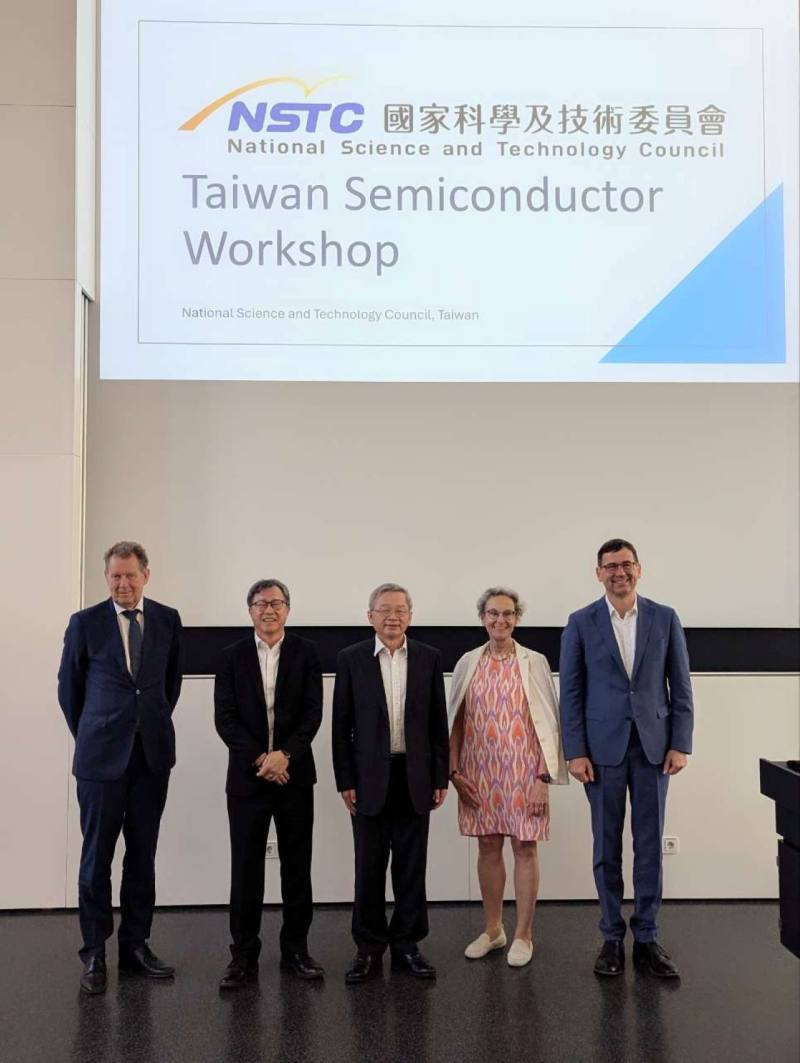
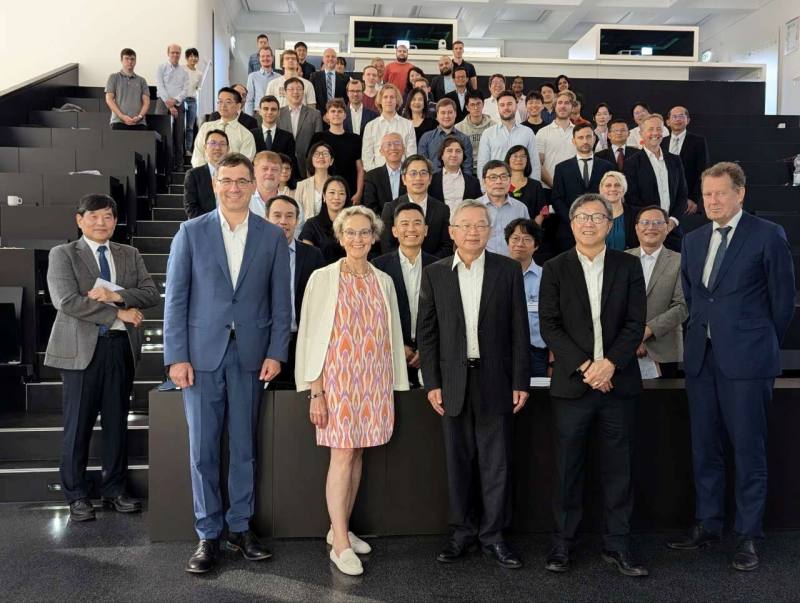
On September 4, both sides then held a bilateral semiconductor seminar in Dresden, Germany. Both official representatives and scholars from Taiwan and Germany, as well as representatives from research institutions and the private sec-tor were invited to participate. The NSTC and BMBF are currently co-funding six Taiwan-Germany teams to carry out joint chip design research projects. The prin-cipal investigators of these six projects also presented their research results during the seminar and exchanged views with participants on future industry clusters and the development of related ecosystems.
During Minister Wu’s remarks at the seminar, he stated that he had visited Dresden three times in the past for reasons related to academic research. Thus, Minister Wu said that he is acutely aware of Dresden’s potential and importance in the development of semiconductor technology, which will play a critical role in shaping future Taiwan-Germany cooperation. In addition, at a luncheon in the State of Saxony, Minister Wu held exchanges with government representatives on topics such as regional development, infrastructure construction, and supply chain ecosystems.