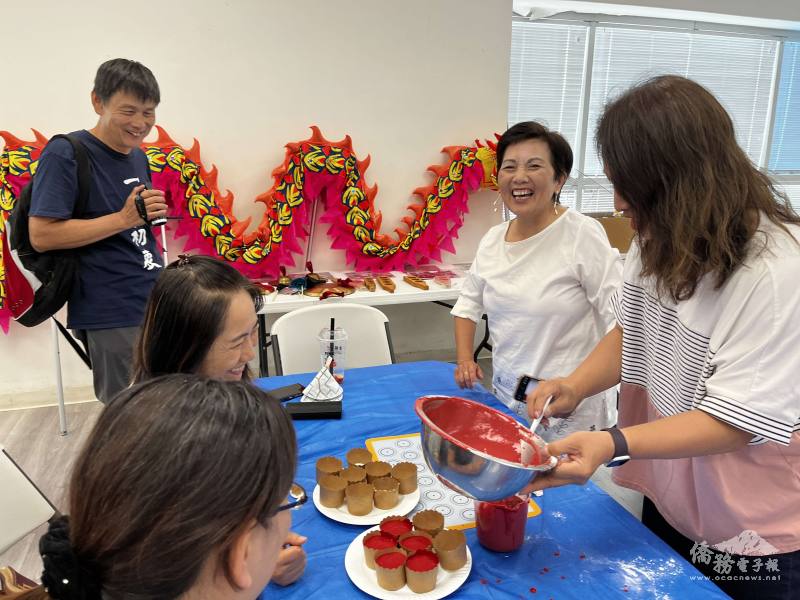
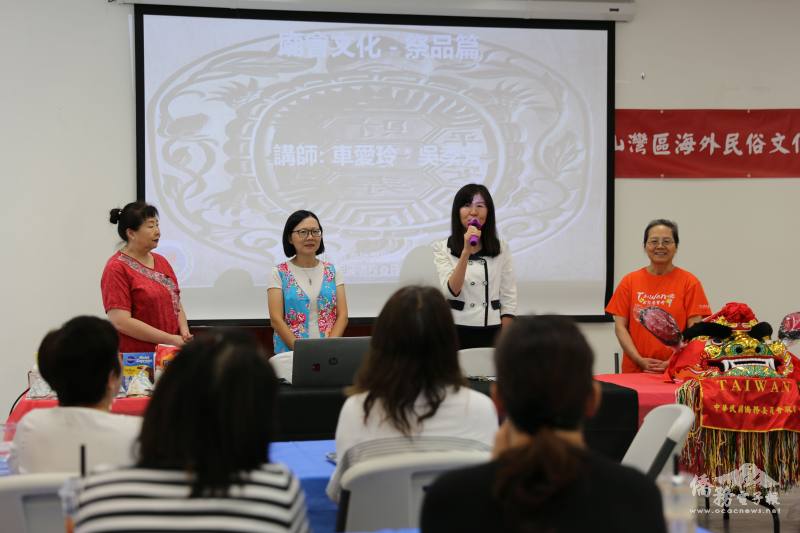
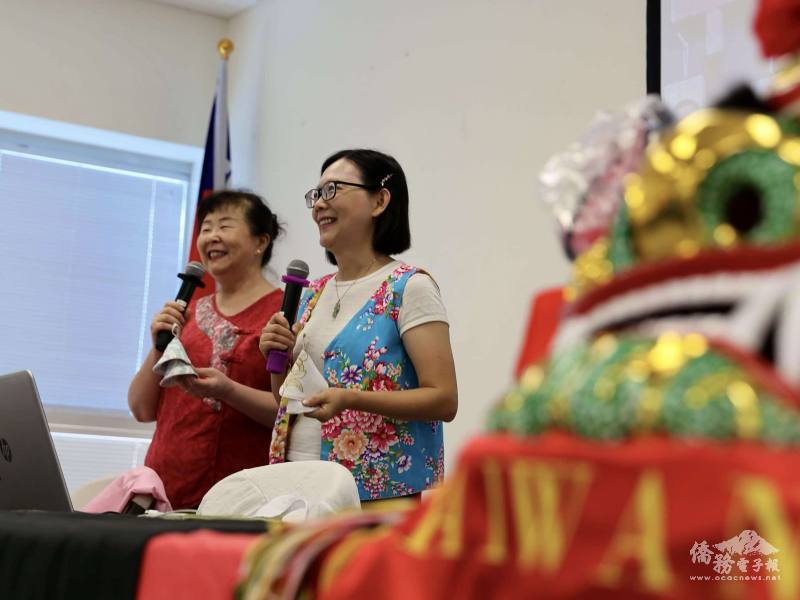
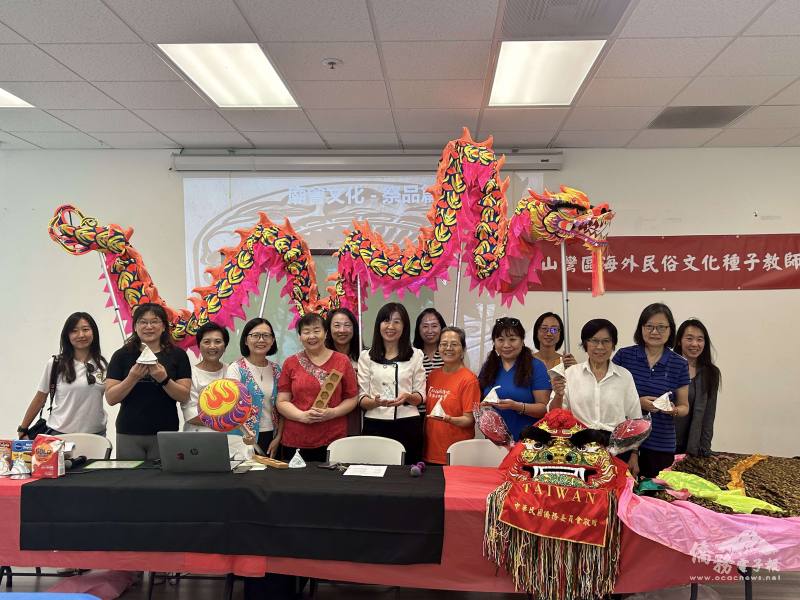
On September 8th, teachers Chifang Wu and Ailing Ku hosted a local training session for Seed Teachers of Folk Culture at the Culture Center of the Taipei Economic and Cultural Office in Milpitas. The focus of the training was on temple traditions, as temples are as common as convenience stores in Taiwan. These temples are vibrant places, often bustling with people praying for various aspects of their lives—such as love, wealth, education, and health. A survey of the attendees revealed that there are distinct traditions regarding offerings in Northern and Southern Taiwan.
Sophia Chuang, Director of the Culture Center of the Taipei Economic and Cultural Office in San Francisco (Milpitas), attended the event. She spoke about the relevance of the classes to events held at the Taipei Economic and Cultural Office, noting the positive feedback received for the Taiwan Bando event held late last month.
Temple fairs are traditional Chinese cultural events typically held at temples and often feature religious ceremonies, performances, food stalls, and various forms of entertainment. These fairs are organized to honor deities and are a significant part of local festivals and community gatherings, where cultural practices and traditions are prominently displayed. Many Taiwanese community events center around religious observances, performances, and celebrations at temples.
As Teacher Wu explained, the phrase “begging for a turtle” is a direct translation from Mandarin and refers to a traditional Taiwanese custom where people seek blessings and good fortune by asking for a turtle-shaped pastry or offering during religious or cultural events. Turtles are often associated with longevity and prosperity in Chinese culture.
Prosperity cakes, or traditional Chinese steamed sponge cakes, are typically made during festive occasions, particularly the Lunar New Year. They symbolize good luck and prosperity. The Mandarin name for these cakes also means "to rise" or "to prosper," which is why they are associated with good fortune. Teacher Ku guided attendees in making steamed cakes of various flavors.
The teachers also introduced the story behind the Mazu pilgrimage and its associated offerings. This traditional religious procession honors the sea goddess Mazu, during which devotees carry her statue through the streets, accompanied by various rituals and offerings. Nearly 30 participants spent the afternoon learning about Taiwanese temple traditions and creating steamed cakes by hand.