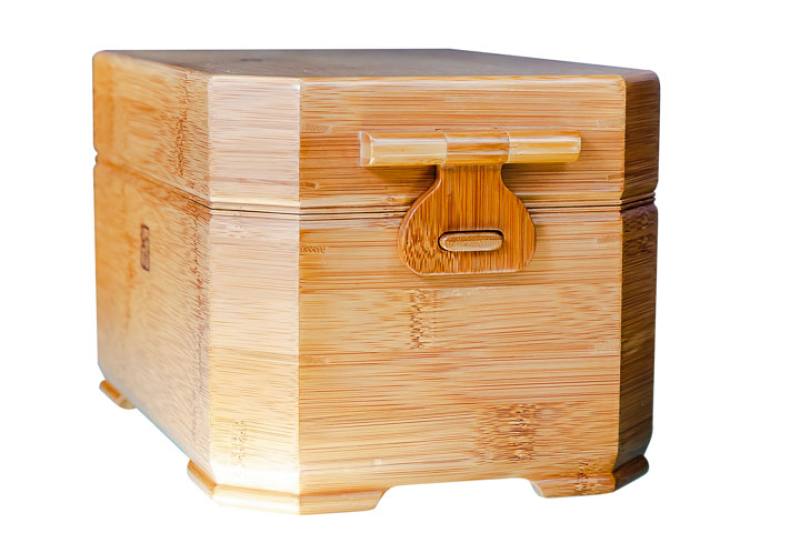
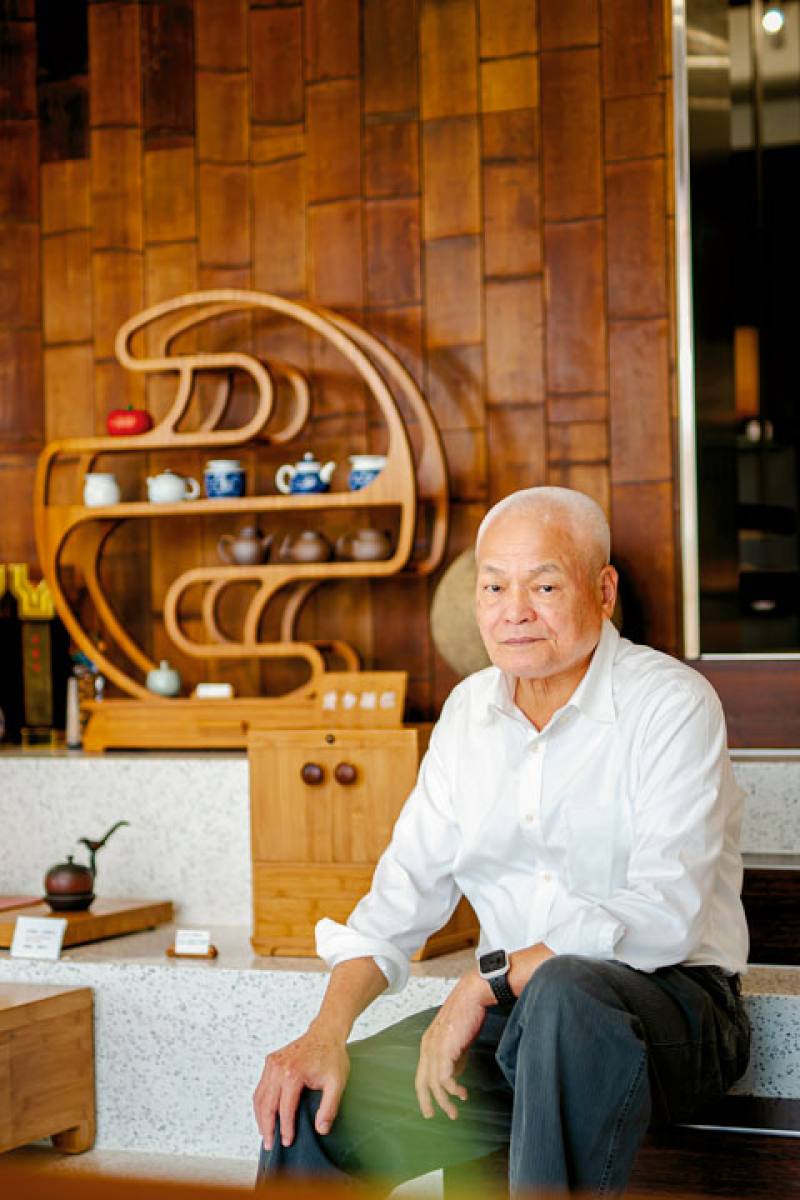
People think that Bamboola owner Liu Wenhuang’s “puzzle boxes” are based on curio cabinets or trick boxes in Chinese craft traditions, but Liu doesn’t agree. Countering such observations, he does not mince his words: “Do you know what creativity is about?”
Liu’s bamboo craft business was nourished by the distinctive culture of his hometown, Zhushan in Nantou County. His father was a bamboo mat weaver, so he became familiar with bamboo at a tender age. Having studied animal husbandry at Chinese Culture University, he stayed in Northern Taiwan to work but eventually fell into poverty and had to return to Zhushan.
Rivaling wood
Desperate to earn a living, Liu could not afford to indulge in highfaluting ideas. He says that he cherished no grandiose plans when he first started his business. Rather, he had his eye on materials that were easy to come by. It was when he realized that bamboo could hardly compete with the value and versatility of mainstream woods that a new idea dawned on him: “I wanted to use bamboo to create craftwork and furniture that were on a par with their wooden counterparts.” These considerations prompted Liu to turn his back on the small-scale production that is characteristic of traditional artisanship.
Liu produces laminates by arranging bamboo strips in layers at right angles to each other. This method, coupled with the inherent strength of bamboo fibers, results in bamboo boards that are “lighter than sandalwood but stronger than false cypress wood—their strength is greater than that of tree woods,” Liu says with pride.
Liu’s factory has also invested in CNC cutting equipment, which helps transform its bamboo laminates into finely manufactured designer products. Bamboola is thus one of the few bamboo craft brands whose creations are deemed suitable for stocking in department stores and hotel gift shops.
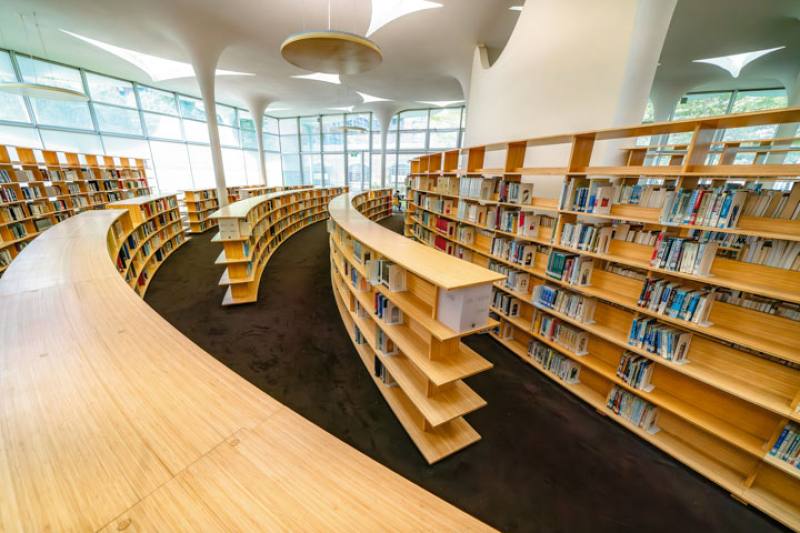
This is also why Bamboola was commissioned in 2000 to produce the bamboo bookshelves designed by Kazuko Fujie for the library of the College of Social Sciences at National Taiwan University, the library itself being the work of eminent Japanese architect Toyo Ito. With 1,220,000 bamboo stems cut into 9,220,000 strips and then formed into 3,688 boards, the parabolically curved bookcases required careful calculation of their curvature and precision machining of the joints used in their construction. “We worked through 10,000 equations,” Liu recalls. The elegant shelves and the building complement each other. The high standard achieved by Bamboola for this project represented a significant leap forward for Taiwan’s bamboo crafts.
Ingenious inventions
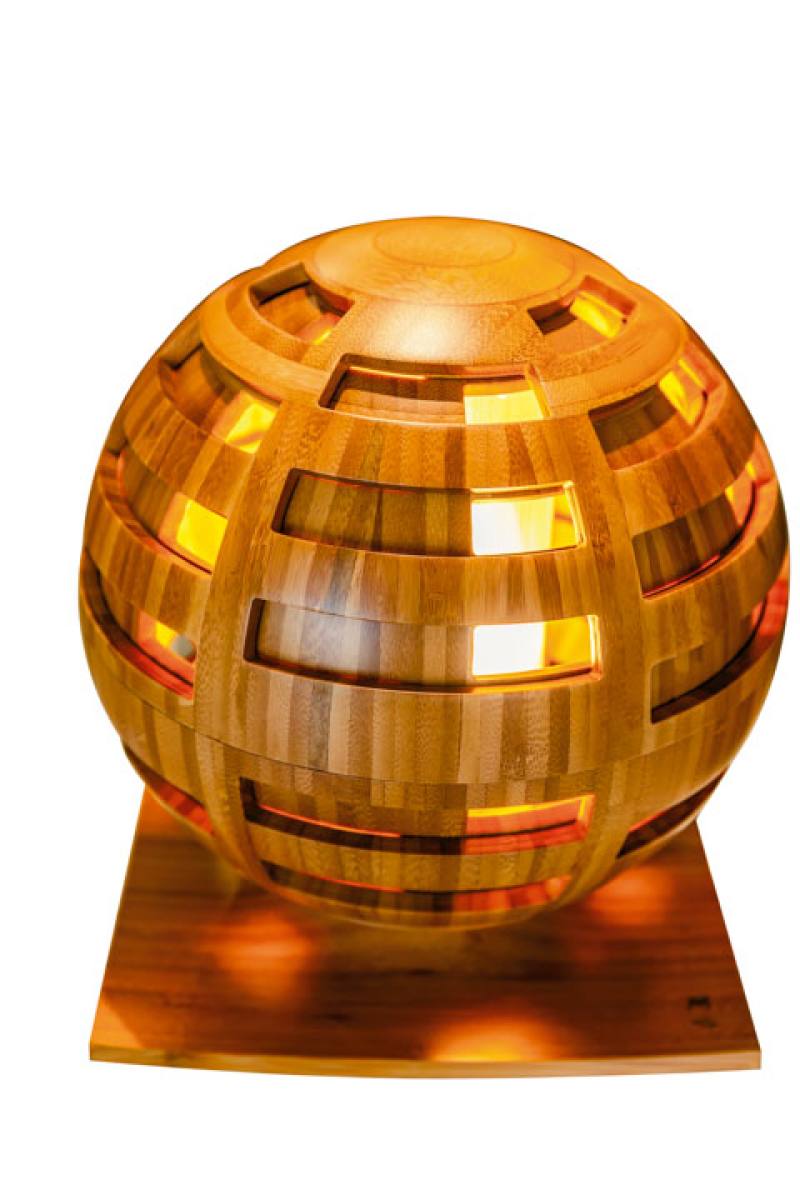
Many of Bamboola’s products are derived from inspirations in Liu’s daily life. For example, his “puzzle boxes” were dreamed up when a customer asked him to design a lockable bamboo box for storing mahjong tiles. Watching Lionel Messi play at the 2022 FIFA World Cup inspired him to make a decorative bamboo football. And a request from his sister gave birth to a dressing table.
Liu’s bamboo creations usually have a glossy finish. The component parts of each are fitted together perfectly with screws or with finely crafted woodworking joints. Many of these works are puzzles that challenge us to find ways to open them without using keys or passwords. Whether they rely on gravity, magnetic force, or structural design, these neat, trim boxes can be opened just by triggering some unsuspected mechanism. We can’t help marveling at their ingenious simplicity when Liu shows us how they work.
Creative practitioners should avoid becoming entangled in intricate ideas and losing sight of practical processes. Commenting on creativity, Liu says: “Isn’t it just about a person living in a particular place who carefully observes and gleans information from his surroundings, and then uses these insights as raw materials to design and create his work?” These words throw a bright light on Liu’s career in bamboo craft over the last four decades.