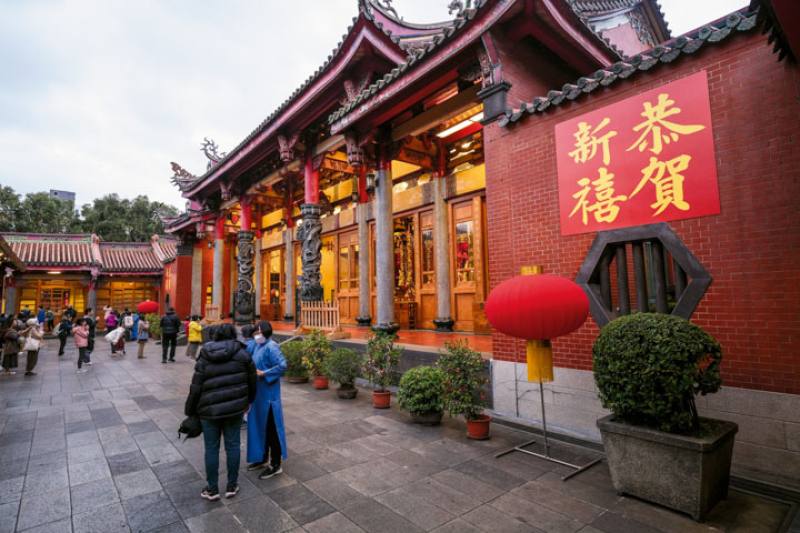
Every year four large tables packed with offerings are set out for the ritual of pudu (crossing over, salvation, or deliverance), the activity that most symbolizes the festival, and which is presided over by Daoist priests.
Studious Daoist priests
The pudu ritual is presided over by “red-headed” Daoist priests from Keelung’s Leicheng Pedestal temple. Wearing red headscarfs when they conduct ceremonies, they mainly engage in auspicious, happy events like thanking the gods for good fortune. Meanwhile, the “black-headed” priests so prominent in Southern Taiwan have a broader field of activity, presiding over not only positive ceremonies but also negative ones such as funerals.
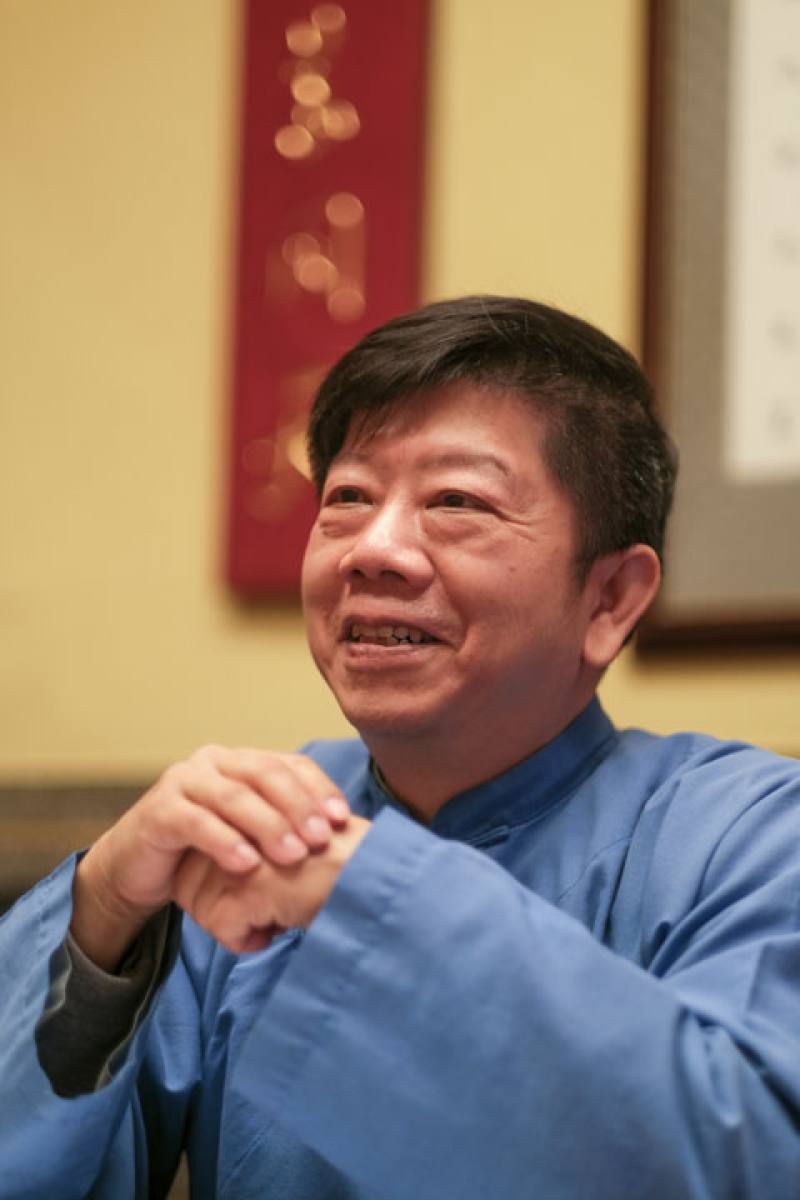
Regardless of school, all Daoist priests serve as bridges between humans and deities. Li Mingjun, the sixth-generation head priest at Leicheng, explains that priests were the intellectuals of traditional society and had to master writing out and chanting religious texts, and even astrology.
Today training for Daoist priests is still not easy. Even for the most basic rituals, they must be able to recite religious texts and verse in Taiwanese Hokkien as well as learn physical movements and gestures.
Recalling his own education, Li admits that he was not good at memorizing texts, and listened to tapes to improve his memory. “In fact, even now I learn new things every day, because there is no limit to what a Daoist priest should know.”
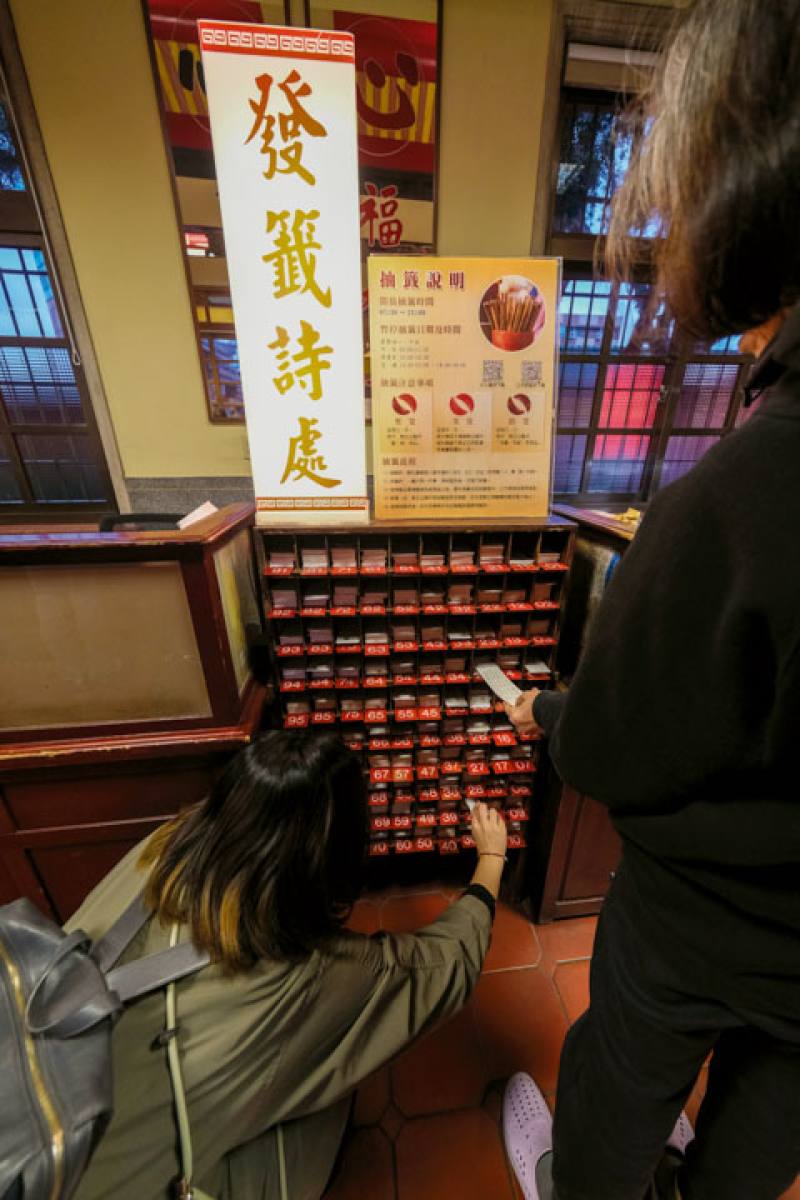
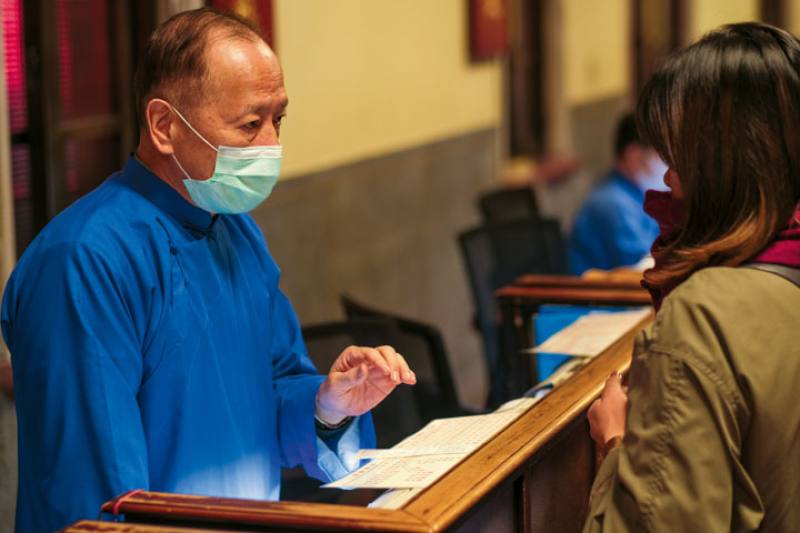
Ordinarily, besides rituals, Leicheng provides believers from all over with services including astrology readings, shoujing rituals (to call a frightened soul back to the body), and divination. Li says that priests can be seen as the lawyers of folk religion. “Lawyers understand the law and know how to draw up legal documents to help people. We understand religious texts and rituals and assist believers in preparing needed documents as well as conveying their desires to the deities.”
Not so mysterious
As a Daoist priest, Li’s life looks very mysterious to most people. When he was 13, he decided he would succeed to the family profession, after which his maturation process differed markedly from his peers. He often took time off from school for religious matters. However, he admits that for a time the doubts of others caused him to waver in his commitment.
Nonetheless, each time he receives thanks from a believer, he feels confirmed in his choice. During his studies he had a teacher in school who was skeptical about his chosen profession, until at some point the teacher’s child got a persistent fever that did not clear up with medical consultations, so they came to Leicheng for help. After a shoujing ritual, the cause of the illness was quickly diagnosed, and the teacher gained a new appreciation for Li’s work. It may be that each seemingly simple and dry ritual is an opportunity for someone to find spiritual peace.
To help more people understand the work of a Daoist priest, in recent years Li has taken to social media, which he hopes makes it easier for people to contact him. To those who are uncertain whether their troubles can be solved by folk rituals, he is encouraging: “Just think of it as coming in for a chat.”
Li stresses that by no means do people have to pay a fee for every chat, and many people just need someone to listen to them. People who come to Leicheng can converse with him, his father, or his grandfather. “Sometimes just by talking, their problems are solved even without the power of religion.” It happens that the role of a Daoist priest is not merely to preside over rituals or convey faith, but also just to provide companionship.