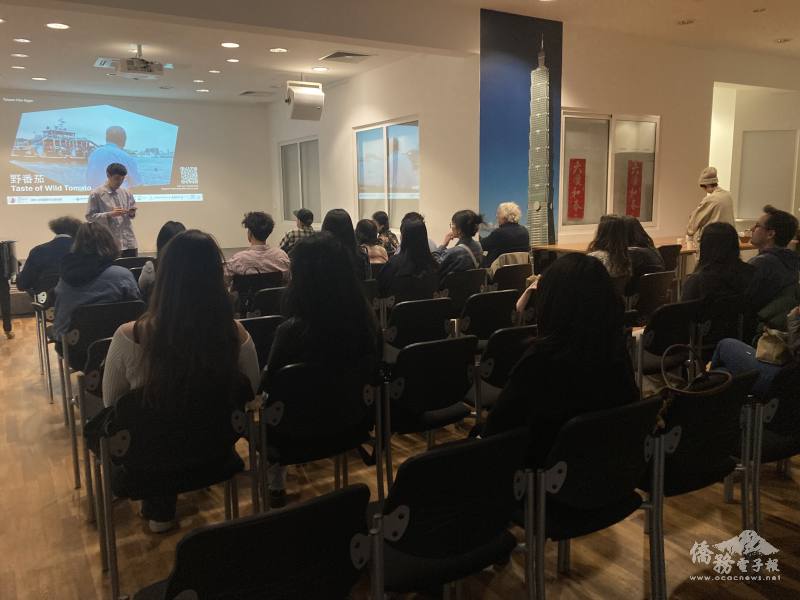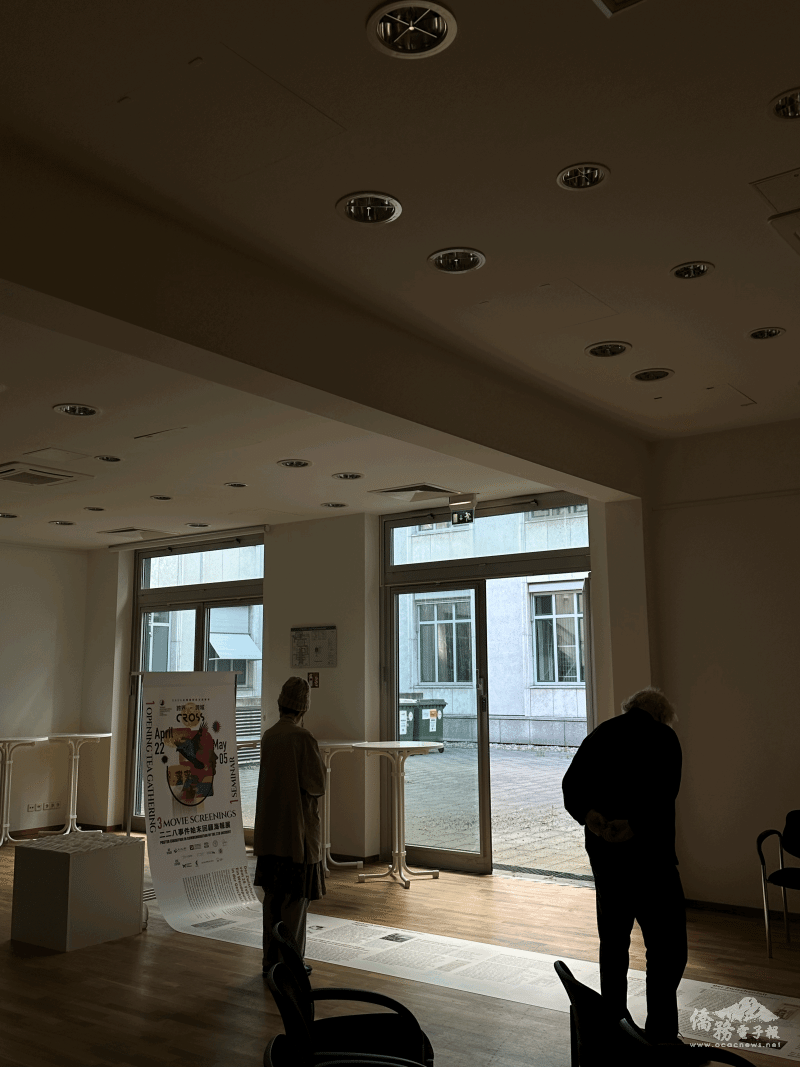
On the evening of April 26, the Cultural Hall of the Taipei Representative Office in Berlin hosted a quiet but powerful documentary screening. Organized by the non-profit organization Impression Taiwan e.V (映像臺灣協會)., the documentary Wild Tomatodrew a diverse audience, including German attendees and members of the Taiwanese community in Berlin. The event was held in collaboration with the “Poster Exhibition in Commemoration of the 228 Incident” and the “Taiwan International Democratic Film Festival,” aiming to make a part of Taiwan’s complex and often overlooked history more accessible through film.
Directed by Malaysian filmmaker Lau Kek-Huat (廖克發), Wild Tomato focuses on the 228 Incident and its aftermath in Kaohsiung. The film doesn’t rely on dramatic reenactments. Instead, it gently leads viewers into the daily lives of those who lived through the events: Taiwanese soldiers who had served in the Japanese army during World War II, young men who joined local self-defense units, and families who lost loved ones and never found closure. Through everyday conversations and personal memories, the film brings history close—real and tangible.
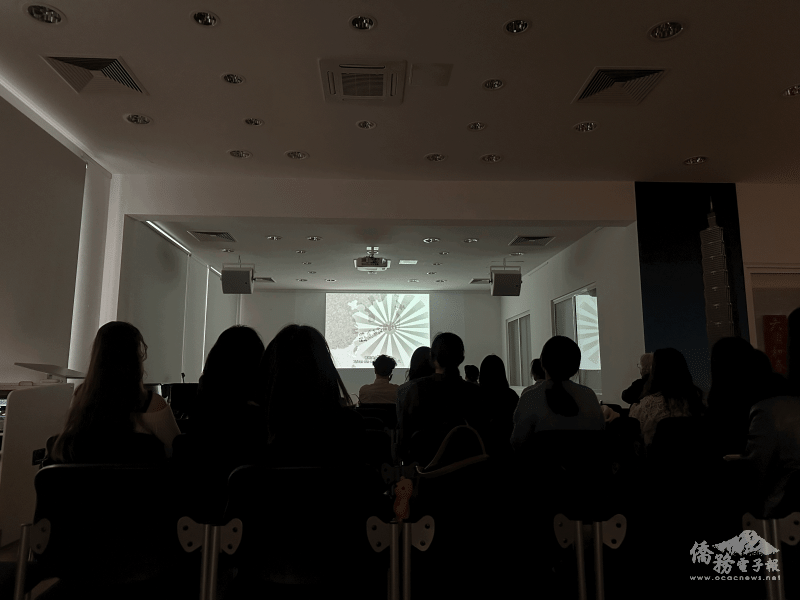
As the film unfolded, the audience remained quietly engaged. Many stayed in their seats after the lights came up, absorbed in thought. One viewer shared, “This film gave me a different understanding of Taiwan. It made me think about how history shapes us all.” A long-time Taiwanese resident in Berlin added, “Even within the Taiwanese community, these topics rarely come up in everyday life. Watching a documentary like this here in Berlin is emotional—it’s moving and heavy at the same time.”
Impression Taiwan announced that starting this year, they will host monthly free screenings of Taiwanese films in Berlin, creating more opportunities for cultural exchange. The association was founded in 2017 by a small group of Taiwanese and German members and has been promoting Taiwan’s films and cultural stories ever since. In addition to organizing the annual Taiwan Film Festival Berlin, they also host talks, lectures, and other events that introduce Taiwan’s diverse cultural landscape to local audiences.
This screening was supported by Taiwan Docs, a platform for promoting Taiwanese documentaries overseas, under the Taiwan Film and Audiovisual Institute. According to the organizers, Wild Tomato was a meaningful selection: while the stories may be difficult, they are important reminders that some wounds don’t fade with time—and being willing to talk about them is a step toward healing.
Impression Taiwan plans to continue sharing different perspectives from Taiwan through film—not just as entertainment, but as a way to connect people, spark conversation, and remember the things that matter.