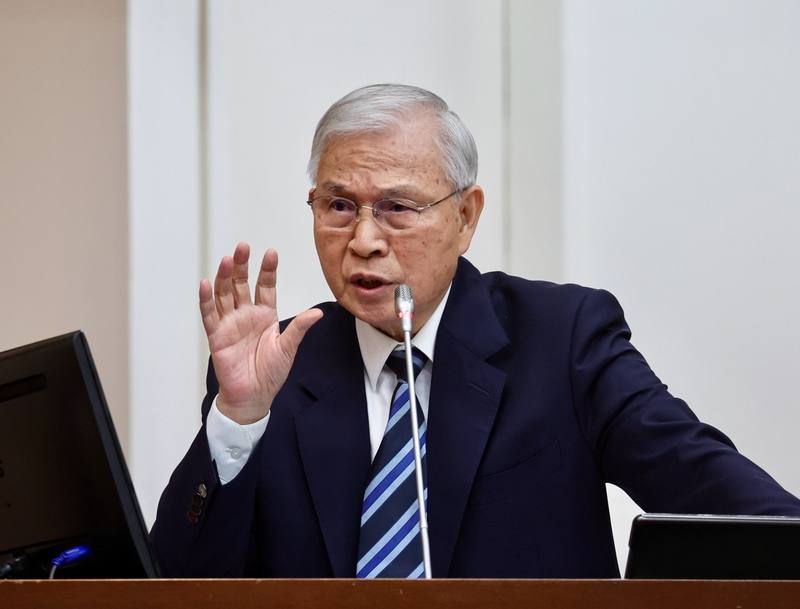
Taipei, May 8 (CNA) The United States is not pressing Taiwan to allow its currency to appreciate, Taiwan's central bank chief said Thursday, claiming that comments by his South Korean counterpart acknowledging U.S. pressure on Asian currencies were poorly translated.
During testimony at the Legislature, central bank chief Yang Chin-long (楊金龍) was asked about recent comments on currency pressure from the U.S. by Bank of Korea Governor Rhee Chang-yong, which were widely reported in Taiwanese media.
Based on his understanding, Yang said, Taiwan's Chung-Hua Institution for Economic Research and the Korean Peninsula News Platform (a Chinese-language Facebook page that covers Korean news) have both said there were "discrepancies" in the translation of Rhee's remarks.
"I don't know the precise comments by the Bank of Korea, but there has not been any American pressure on Taiwan," Yang said.
According to South Korea's Yonhap News Agency, Rhee told reporters on Tuesday that Asian currencies, including the Korean won, "have been gaining ground partly due to the U.S. administration's pressure on Asian countries to appreciate their currency."
The rise was also partly due to expectations that the U.S. and China will resume trade talks, Rhee said, adding, "We are not sure whether what the U.S. really wants is a strong dollar or weak dollar," according to the report.
Rhee's comments came after the Taiwan dollar soared by 6.21 percent against the U.S. dollar during trading last Friday and Monday, in a record two-day spike.
Some local media speculated that Taiwan had agreed to allow its currency to rise amid tariff negotiations with the U.S. -- the countries held their first in-person meetings on the topic last Thursday -- but the government has denied that exchange rates were part of the talks.
Since the beginning of April, when U.S. President Donald Trump announced his "Liberation Day" tariffs, the Taiwan dollar has risen by about 8.7 percent against the greenback, sparking concerns about its export-driven economy.
The White House has said it wants to weaken the U.S. dollar in order to boost U.S. exports, bring back manufacturing and help reduce the country's trade deficit.
During his testimony Thursday, Yang contended that the Taiwan dollar's surge last Friday was the culmination of market expectations -- fueled by financial commentators -- that had been building since the tariff announcement.
"But the central bank has learned a lesson from this. When you see sparks, you have to move quickly to put them out," he said.
Following the recent volatility, market expectations that the Taiwan dollar will rise further have eased, and a more stable equilibrium between supply and demand for the currency has prevailed, Yang said.
Currently, the Taiwan dollar is trading at around NT$30, which historically has happened "quite a few times," he added.