The night skies of June are set to dazzle, as planets and meteor showers light up the heavens in a celestial symphony of wonder. From the very first days of the month, a series of breathtaking astronomical events will unfold—inviting all to witness the grandeur of the cosmos firsthand.
On Sunday, June 1, just before dawn, Venus reaches its greatest western elongation, marking the best time to observe this radiant “Morning Star.” Gleaming at an impressive magnitude of -4.4, Venus will dominate the eastern horizon, shining brilliantly even from within light-polluted cities. That same evening, a stunning pairing graces the western sky: Mars in close conjunction with a crescent Moon. Separated by less than one degree, this intimate alignment creates a striking tableau—a poetic encounter of red and silver in the twilight.
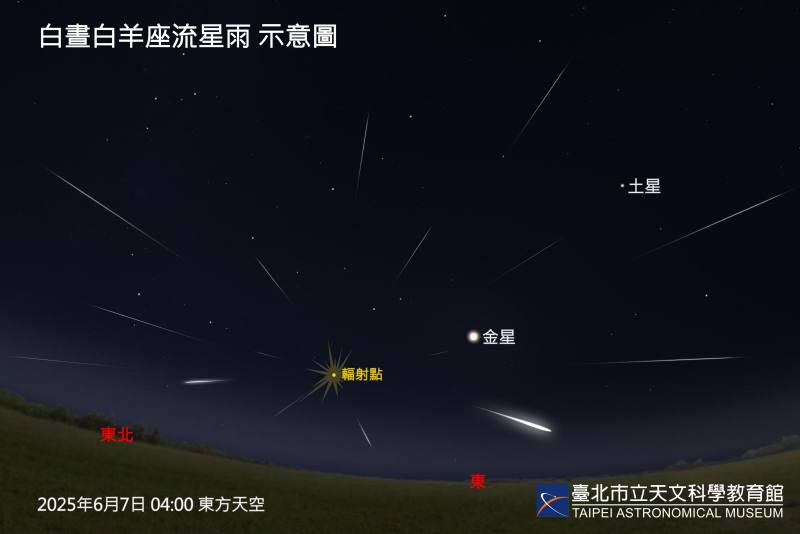
Then on Saturday, June 7, skywatchers may glimpse the elusive Daytime Arietids Meteor Shower. While classified as a daytime shower—its radiant lies within 30 degrees of the Sun—it begins to rise around 3 a.m., offering a narrow but magical window before sunrise to catch its subtle, silvery streaks. Though modest in display, it adds a whisper of romance to the pre-dawn hours.
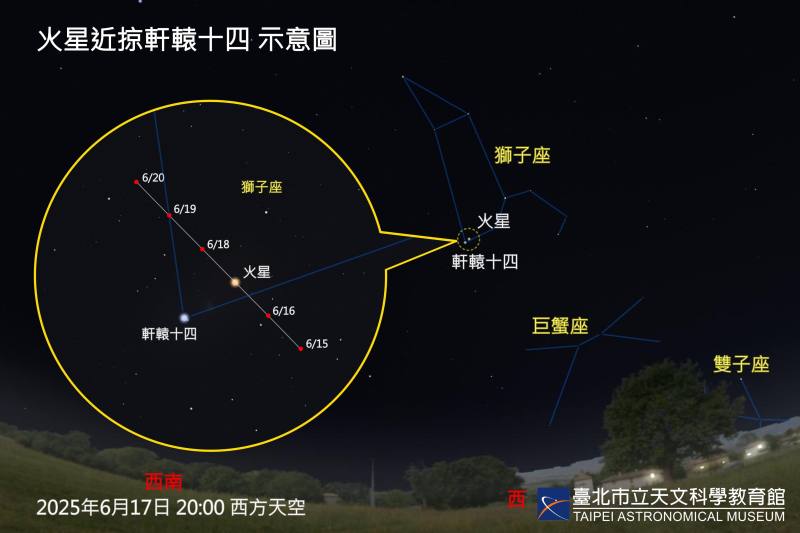
The mid-month skies hold yet another treat. On Tuesday, June 17, and Wednesday, June 18, fiery Mars will have a striking visual encounter with Regulus—the blue-white, first-magnitude star at the heart of the constellation Leo. Separated by about one degree, their contrasting colors and similar brightness will make for a compelling visual pairing, easily visible to the unaided eye in the western sky after sunset.
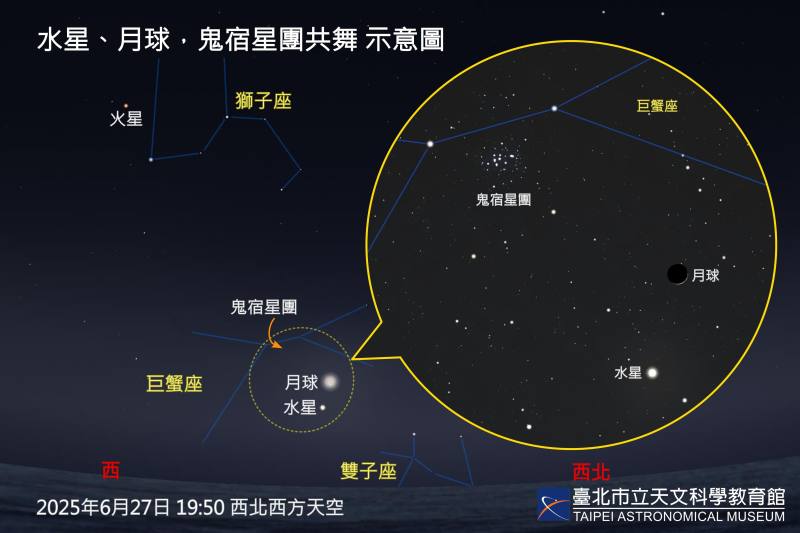
The most enchanting moment of June arrives on Friday night, June 27. A slender new Moon, radiant Mercury, and the glittering Beehive Cluster (Messier 44) in Cancer will gather low in the west-northwestern sky. Through binoculars, this rare celestial convergence will resemble a jewel box in the heavens, sparkling softly against the summer twilight—a dreamlike sight not to be missed.
Beyond these luminous happenings, June also marks two significant solar milestones. Monday, June 9, brings the earliest sunrise of the year, with the Sun rising at 5:03 a.m.. Later in the month, on Saturday, June 21, we welcome the Summer Solstice, the longest day of the year, with 13 hours and 42 minutes of daylight. Though these dates do not coincide, the offset is a subtle testament to the graceful complexity of Earth’s rotation and orbit—an elegant rhythm that governs our dance with the Sun.
For further details on these and other celestial events, please visit the Taipei Astronomical Museum website.