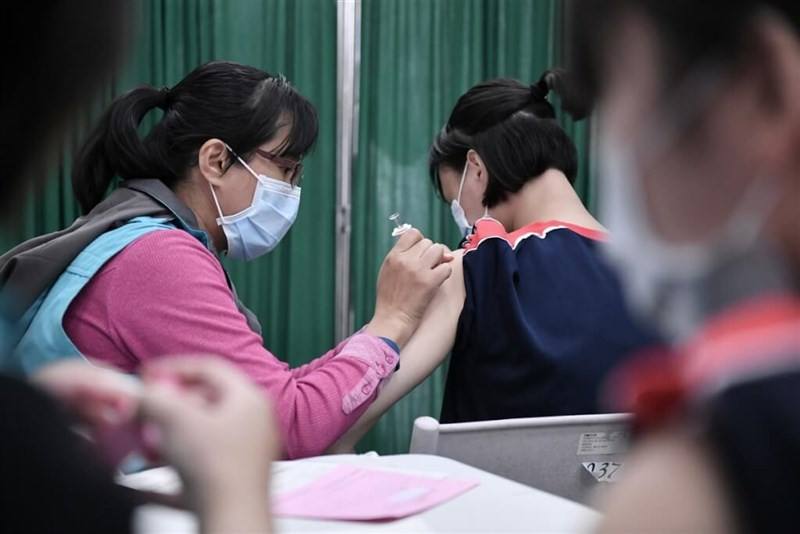
Taipei, June 9 (CNA) Taiwan will expand free human papillomavirus (HPV) vaccination to junior high school boys, along with girls, starting in September, a government official said Monday.
The expanded program is expected to benefit around 90,000 junior high male students, bringing the total to 180,000, in addition to junior high school girls originally eligible for the free HPV vaccine, Health Promotion Administration (HPA) Director-General Wu Chao-chun (吳昭軍) said at a news conference.
The news event was jointly held by several medical groups and the National Alliance of Presidents of Parents Associations to call on the public to recognize the impact of HPV on the health of both men and women.
Wu said that in the first year of offering the free HPV vaccine to boys, the goal is to achieve an 80-90 percent coverage rate. Together with the 90 percent rate among girls, the total number of junior high students receiving free HPV vaccines in the year is expected to reach 180,000.
Under the program, vaccination teams will visit schools to administer the vaccine and all eligible students are encouraged to receive it, Wu added.
Speaking at the news conference, Wu said that the HPV vaccine is an effective means to prevent HPV-related cancers and diseases. Since 2018, the HPA has provided free HPV vaccinations to junior high school girls as part of a global effort to meet the World Health Organization's (WHO) goal of eliminating cervical cancer by 2030.
According to WHO recommendations, maintaining a 90 percent vaccination coverage rate offers optimal protection. In Taiwan, the vaccination rate for junior high school girls has reached 90 percent for the past two years, Wu said.
When discussing HPV, most people associate it with women and cervical cancer. However, men are not immune from HPV infection and are also at risk of developing HPV-related health issues.
Lou Pei-jen (婁培人), vice superintendent of National Taiwan University Hospital and president of the Taiwan Society of Otorhinolaryngology-Head and Neck Surgery, indicated that HPV is closely linked to various cancers -- not only cervical cancer, but also oropharyngeal cancer, oral cancer, nasopharyngeal cancer and anal cancer, which are common among men.
Lou noted that 30-50 percent of oropharyngeal cancers in Taiwan are related to HPV, compared to 50 percent in Japan and 80 percent in Western countries.
A recent study published by a local medical team found that the prevalence of oral HPV among healthy adults in Taiwan is 2.1 percent in men and 1.6 percent in women -- indicating that the rate is not low, Lou said.
Lou added that he hopes vaccination coverage can be expanded to include high school students, college students and unvaccinated adults in the future.
The HPV vaccine has been rolled out in over 140 countries worldwide, according to Lee Ping-ing (李秉穎), convener of Taiwan's Advisory Committee on Immunization Practices.