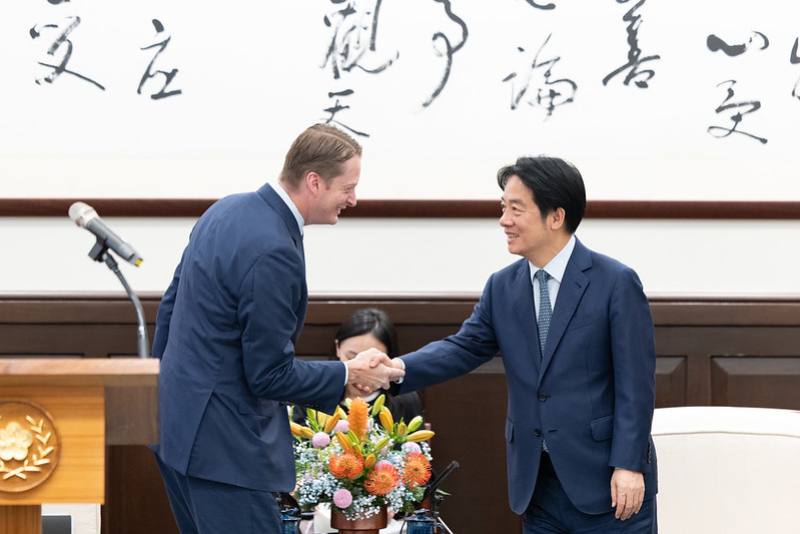
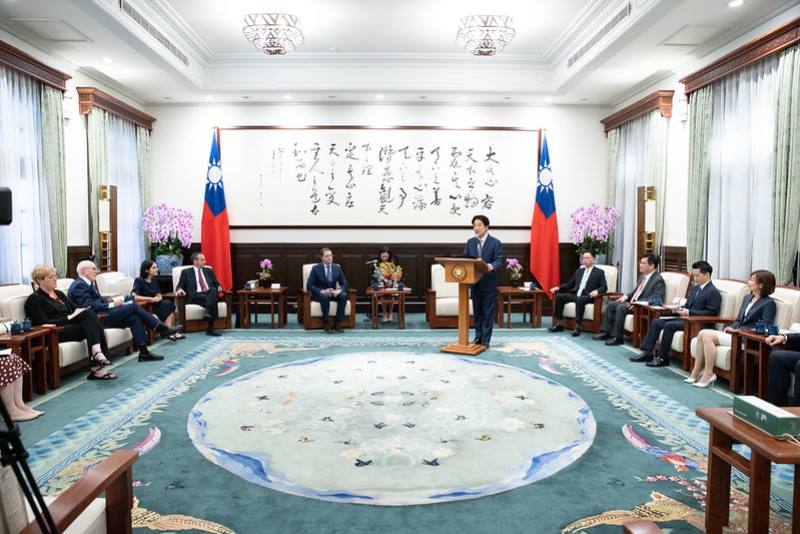
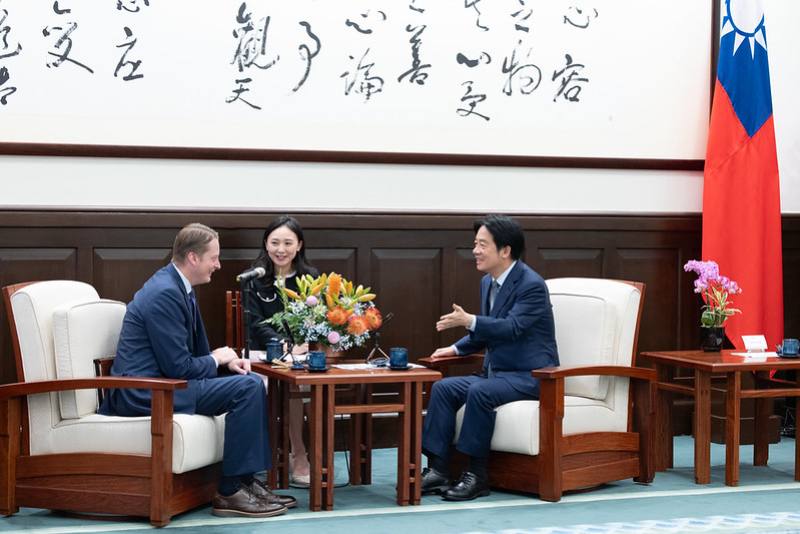
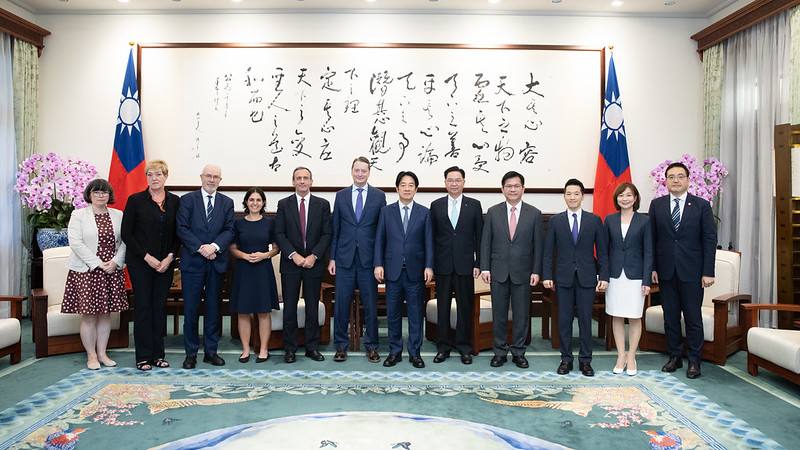
On the morning of August 14, President Lai Ching-te met with a delegation of experts and scholars from the Brookings Institution. In remarks, President Lai thanked friends in the government, Congress, and think tanks in the United States for their longstanding and bipartisan support. The president said that in face of mounting threats and coercion from China, Taiwan is actively bolstering its national defense capabilities, building up economic security, and continuing to work alongside the US and other like-minded countries to defend Taiwan’s democracy and safeguard peace and stability in the Indo-Pacific region.
A translation of President Lai’s remarks follows:
I warmly welcome our good friend Mr. Ryan Hass, director of the John L. Thornton China Center at Brookings, who is once again leading a delegation of esteemed scholars to Taiwan. I am also delighted to meet Dr. Philip Gordon, former US national security advisor to the vice president, and Dr. Constanze Stelzenmüller, director of the Center on the United States and Europe at Brookings, who are both visiting for the first time.
The Brookings Institution, established over a century ago, is one of the oldest and most influential think tanks in the US. Its analyses and policy recommendations have consistently been highly valued by the international community. We cherish our friendship with you, and I hope that during this visit you will be able to gain even greater insights into Taiwan through exchanges with various parts of our society.
The Taiwan of today is a Taiwan of the world. Taiwan is not just a crucial link in global democratic value chains and the first island chain in the Indo-Pacific, it is also an indispensable part of global non-red supply chains. The Taiwan of today owes its development and achievements to the democracy-loving, hard-working Taiwanese people. I want to especially thank our friends in the government, Congress, and think tanks in the US for their staunch, longstanding, and bipartisan support.
Taiwan faces mounting threats and coercion from China – including through military and economic means, gray-zone aggression, united front infiltration, and media and cognitive warfare. In response, Taiwan is implementing the Four Pillars of Peace action plan and is bolstering its national defense capabilities, building up economic security, and working alongside the US and other like-minded countries. This March, I also unveiled 17 response strategies to defend Taiwan’s democracy and safeguard peace and stability in the Indo-Pacific region.
Facing changes in and the restructuring of the international economic and trade order, Taiwan will continue to strengthen economic and trade relations with the US, building on our already solid foundation, to create mutually beneficial outcomes. Whether it is the current reciprocal tariff negotiations or the agreement for the avoidance of double taxation, which would benefit both Taiwan and the US, we hope through joint efforts to reach a consensus as soon as possible. This will deepen our cooperation across all domains, as we work together toward progress and prosperity.
I believe that by upholding our shared values and continuing our close cooperation, Taiwan and the US will be able to pave a broader, smoother path for even more win-win developments.
Director Hass then delivered remarks, thanking President Lai and the Taiwan government for the warm hospitality and kind greetings. He said that he and his colleagues are here as part of a delegation for a study tour to deepen their understanding of issues affecting Taiwan, adding that the visit reflects a long-term investment by the Brookings Institution to deepen policy and public awareness of those issues.
Noting that the Brookings Institution has been sending visiting delegations to Taiwan for many years, Director Hass said that they anticipate many more years of visits, through ups and downs, twists and turns. In closing, he said that they look forward to further exchanges.