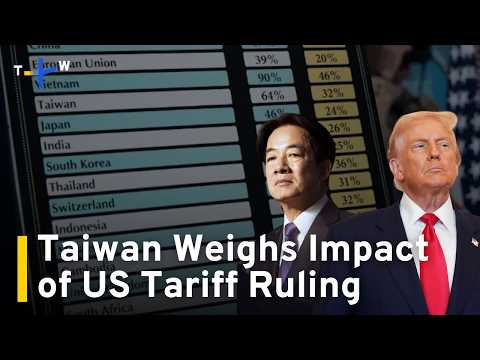
The US Supreme Court ruling striking down President Donald Trump’s “liberation day” tariffs has injected fresh uncertainty into global trade, including the newly signed Taiwan–US trade deal. Washington has since announced a 15% global tariff on a different legal basis; that's the same rate Taiwan negotiated in exchange for a combination of investments, purchases and loans totaling up to US$585 billion. Questions now remain over how the developments will impact existing agreements.
Taiwan’s premier has pledged to secure the most favorable terms, while opposition parties are calling for a delay in reviewing the deal or even a renegotiation. As countries around the world assess the implications of the Supreme Court’s decision and the possibility of policy shifts, uncertainty continues to ripple through international markets.
TaiwanPlus speaks with Lien Hsien-ming, president of the Chung-Hua Institution for Economic Research, to break down the current situation, the legal and economic implications, and what it all means for Taiwan’s future.