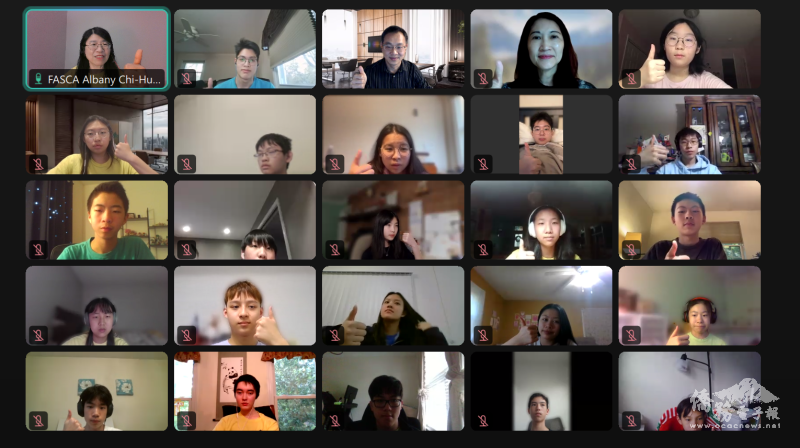
On April 18, 2026, students from Albany FASCA participated in the third day of their training. While the first two days were held in person, the third day was conducted online and featured two seminars on artificial intelligence, led by Professor Jian from Siena University and Professor Chang from SUNY Albany. The online training also invited participants from other FASCA chapters, including Riverside, Atlanta, Charlotte, Dallas, and Los Angeles. Yi-Ju Wang, Director of the Culture Center of the Taipei Economic and Cultural Office, was invited to deliver remarks during the session.
During the lessons, students learn about these topics like how AI generated content is made and how to properly differentiate between AI generated content and authentic material . Within these seminars, students engaged in activities regarding creativity and further practice critical thinking. These seminars also encouraged vigilance towards AI generated content, deeper understandings in Artificial Intelligence functions, and helped students learn to utilize their tools and resources in an ever-changing world of technological advancements.
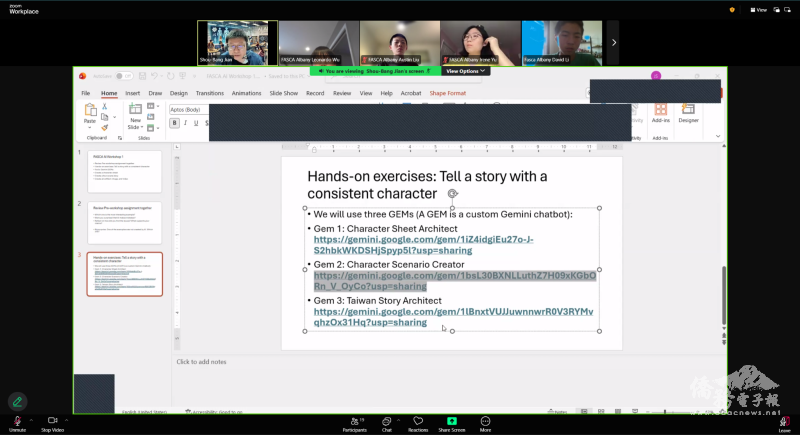
In the first seminar hosted by Professor Jian, students first discuss with one another about the differences between AI images and real ones. Throughout these discussions, they were able to notice small, inconsistent details that either clash with other implied details like shadow positioning or reflection distortion. With this activity, students learned to be more alert about the possibility of any content being made with AI. Then, the students learned a safe, fun way to use AI. Professor Jian went through a step-by-step process to teach them how to generate their own AI images with their own characters, based on their own figurines and toys. Afterwards, students learned how to generate images with the character in specified settings or with specific characters. This activity further enhanced engagement and helped students explore creative situations with their own characters.
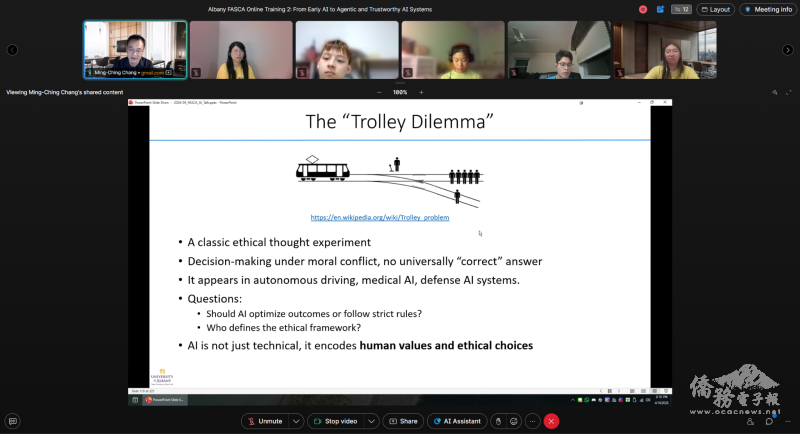
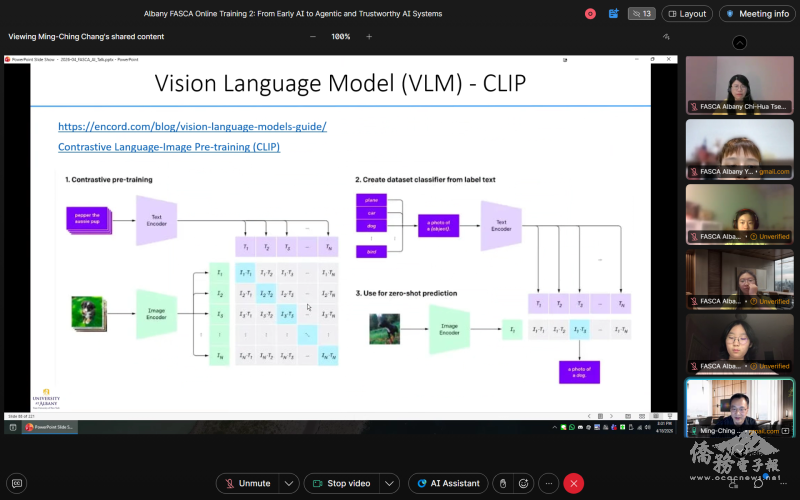
The second seminar was arranged by Professor Chang, diving into the history of computer science, the roadmap of Artificial Intelligence development, and ways to defend against malicious AI usage. In this seminar, students were shown the history of AI development, and deeper analysis of why AI is so prevalent in the modern-day world. Professor Chang explored ideas like visual data processing and how it affects the way generative AI’s work and behave, as well as concepts like AGI (Artificial General Intelligence) and how the impacts of AGI could affect human population. He also provided many examples along with abstract ideas in computer science, to help students have a good grasp on the concepts being provided. Students of FASCA were provided with both sides of arguments regarding morality and ethics with AI, so they were able to strengthen their contemplating abilities from their own opinions.
Professor Chang was asked about his thoughts on AI advancements in the future and how the profound knowledge about AI will assist the students. “Agentic AI tools will advance greatly in the years to come. The ability to differentiate the trustworthiness of AI is based on one's understanding of technology, so the students should strive to master AI tools.” He aims to assist the next generation in understanding and growing alongside AI’s development.
Additionally, a FASCA student was asked about how these seminars may have influenced his view on AI technology. “These prospects help me broaden my horizon on AI and empower me to research more into these topics, both to learn more out of curiosity and to be able to better utilize AI tools,” replied Ying-Chou Hung. These seminars help inspire the next generation to keep learning, and guide them to have an open and motivated mindset.
The FASCA training of 2026 has provided great insight, problem solving skills, and helped further develop a wholesome community. Furthermore, providing students with an introduction to artificial intelligence development in modern society can help prepare them for the future of artificial intelligence advancements. Students were able to learn ways to protect themselves from those with nefarious intent who could utilize these advancements on the internet. After the seminar, students eagerly asked many questions, expressing a wish to keep learning about these topics and stay informed about the vast and unique world of AI within the internet.
Reported by Hana Chang (Albany FASCA)