文|蘇俐穎 圖|林旻萱
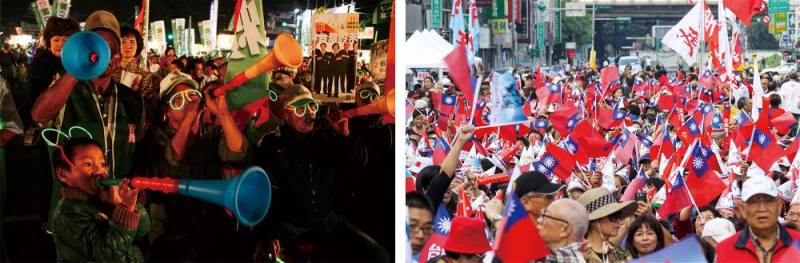
「政治的『政』在日文中與『祭典』同音(まつりごと),而台灣的選舉就像是一場盛大的祭典。」
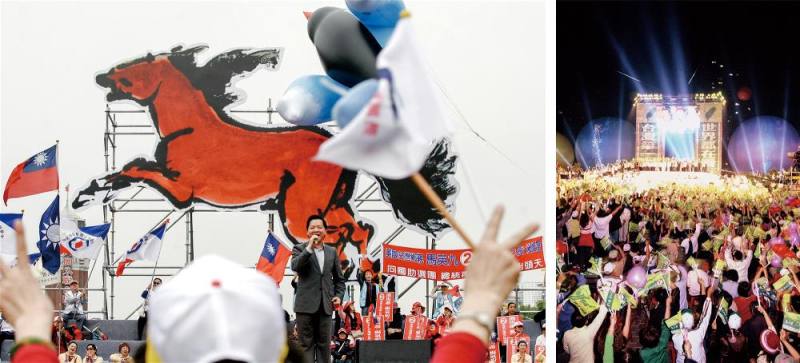
「投票前一天的造勢集會,若以日本人容易理解的例子來比喻,氣氛就像是世界盃足球賽的日本代表隊要出發前所舉行的預祝活動。」──小笠原欣幸《台灣總統選舉》
在這舉國投入,猶若嘉年華慶典的盛會,用以串場、烘托氛圍、渲染情緒的不可或缺,就是音樂。
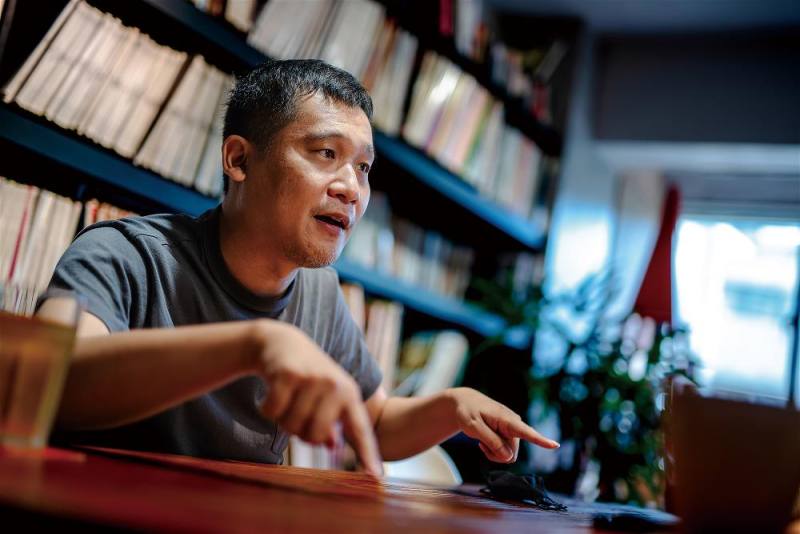
直抒胸臆的音樂,向來與政治有著千絲萬縷的連結。嫻熟台灣流行音樂史的逢甲大學行銷學系助理教授李律鋒娓娓道來,往昔戒嚴時代,即便創作者無意為之,仍常有歌曲因時局敏感而遭禁。
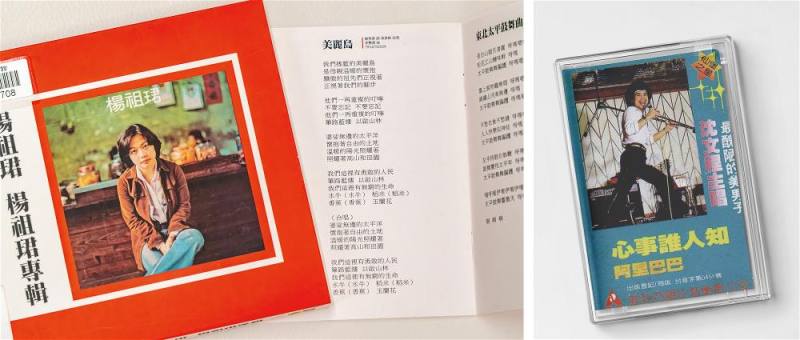
楊祖珺個人同名專輯《楊祖珺》(1978)中的〈美麗島〉與〈少年中國〉,因被認定各自帶有獨、統意識而遭禁;張洪量的〈祭文〉(1987)發行時,恰逢蔣經國逝世而遭禁。
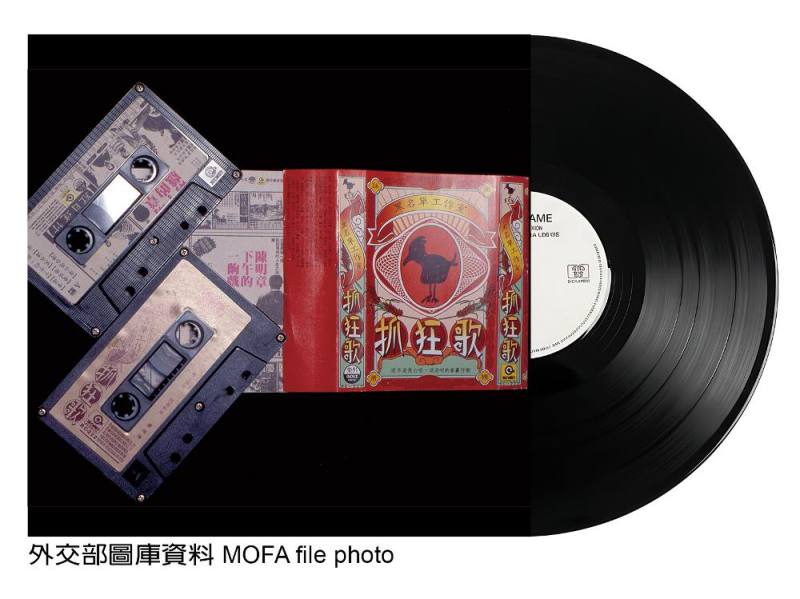
黑名單工作室推出的《抓狂歌》(1989),因遇到縣市長、省議長與增額立委選舉,題材敏感而被禁。
然則,也有創作之時並無特定政治立場,但因曲子合乎心事,而意外涉入政治場域而成為禁歌。好比沈文程〈心事誰人知〉(1982)抒懷著頓挫鬱悶的情致,以及文夏〈黃昏的故鄉〉(1958)描寫了對故鄉、親人無盡思念,戒嚴時期因異議而滯留海外無法返台的黑名單人士因覺合乎心境,遂藉以傳唱抒懷。
用音樂改寫選舉生態
直到台灣在1991年廢止《動員戡亂時期臨時條款》,並歷經數次修憲,為民主化進程奠定了良好基礎。1994年,北高兩直轄市迎來第一次直選地方首長;1996年,第一次由人民直選總統,政治氣象改頭換面。
選舉情勢的風起雲湧,舉凡議題政策、宣傳造勢等選戰策略的運用,都牽動了輸贏勝負。團隊幕僚也開始注意到,運用音樂營造出氣氛溫馨的造勢現場,比起生硬的政見發表,更能吸引選民注意。
在1994年的台北市長選舉,候選人陳水扁、趙少康、黃大洲,三強鼎立。
台北人的李律鋒回憶,彼時走在街頭,只要聽到氣勢磅礴的新黨黨歌〈大地一聲雷〉(1993),即知道來到趙少康的場子。
代表國民黨的黃大洲則採用〈台北的天空〉(1985)(有趣的是,這首歌在2006年郝龍斌參選台北市長時再度用上)與〈牽阮的手〉(1992)。
民進黨的場合,則播送著〈台北新故鄉〉、〈春天的花蕊〉等合乎「快樂、希望、陳水扁」slogan的歌曲,一掃民進黨過去主打的悲情色彩。
此後,競選歌曲成了台灣選舉時不可或缺的元素。
為了拉近與本土派支持者的距離,2014年連勝文出選台北市長時,多次與馬英九一同合唱閩南語歌曲〈愛拚才會贏〉。
韓國瑜披掛上陣時則偏好唱起〈夜襲〉、〈我現在要出征〉等軍歌。
這些旋律,都在熱鬧喧騰的選舉祭典時凝聚起選民心緒,也為不同時代留下了註記。
“In Japanese the character 政 [Mandarin zhèng, meaning ‘politics’ or ‘government’] is pronounced matsurigoto, the same as 祭典 [jìdiǎn, meaning ‘festival’]. And Taiwan’s elections are just like grand festive events.”
“To use an example that Japanese people might easily understand, the atmosphere at Taiwanese campaign rallies the day before voting is similar to that at the ceremonies wishing the Japanese World Cup football team the best of luck before they head to the event.”
—Yoshiyuki Ogasawara, Taiwan’s Presidential Elections
Amid the carnival-like mood created by nationwide enthusiasm, music is an indispensable element to fill in intervals in programs, create a good vibe, and evoke emotions.
Music that speaks from and touches the heart has always been inextricably linked with politics. Li Lu-feng, assistant professor in the Department of Marketing at Feng Chia University and an expert on the history of pop music in Taiwan, recounts that in the martial law era, songs were often banned for touching on sensitive topics, even when the songwriters weren’t doing so intentionally.
In 1978, two songs from Yang Tzu-chun’s self-titled album were banned because one was considered to show pro-independence sentiment, and the other pro-unification sentiment. Jeremy Chang’s tune “Eulogy” (1987) was proscribed because it happened to come out just when then-President Chiang Ching-kuo died. Meanwhile, Blacklist Studio’s 1989 album Songs of Madness was banned for sensitive content when it came out close to the time of elections for local leaders and supplementary legislators.
On the other hand, many creative musical works that had no specific political content or advocacy were proscribed after unintentionally being connected to politics because they evoked certain emotions. Examples include Shen Wen-cheng’s “Who Knows What’s on My Mind” (1982), which expressed feelings of despondency, and Wen Hsia’s “Hometown at Dusk” (1958), a song of longing for home and family, which both became anthems for political dissidents barred from returning to Taiwan under the “blacklist” system of the martial law era.
Changing election ecology with music
It was only starting in 1991, following the repeal of the Temporary Provisions Effective During the Period of National Mobilization for Suppression of the Communist Rebellion, that democratization in Taiwan made real progress. In 1994 the special municipalities of Taipei and Kaohsiung welcomed their first popularly elected mayors since liberalization, and in 1996 citizens for the first time directly cast ballots to choose the president. The political climate had changed dramatically.
During elections, strategies such as policy agenda statements and campaign rallies all affect outcomes. But political staffers also began to notice that using music to create a positive vibe at live events was much more effective at winning and keeping voters’ attention than old-fashioned political speeches.
As a Taipei native, Li Lu-feng recalls that during the 1994 race for mayor of Taipei City, on the streets you merely had to hear the New Party song “The Earth Thunders” (1993) and you knew you were at a campaign event for its candidate Jaw Shau-kong. Meanwhile, incumbent Huang Ta-chou, running under the Kuomintang (KMT) banner, adopted “Taipei’s Sky” (1985) and “Hold My Hand” (1992) as his anthems. Chen Shui-bian, representing the Democratic Progressive Party (DPP), opted for “Taipei, Our New Hometown” and “Bud of Spring” to match his upbeat slogan “Happiness, Hope, Chen Shui-bian,” which aimed to overturn the DPP’s established tragic image.
Since then, campaign songs have become indispensable elements in Taiwan’s election landscape.
影劇裡的台灣政治視界
Political perspectives in Taiwan films and TV
台灣獨特的政治生態與選舉文化,因強烈草根性以及戲劇張力,而屢納入成為影視作品中的創作元素。包含電影《悲情城市》(1989)、《黑金》(1997)、《大佛普拉斯》(2017)、《血觀音》(2017)、《國運之戰》(2026),以及近年最具代表性的劇集《國際橋牌社》(2020)、《人選之人─造浪者》(2023)均有述及。
Because of their strong grassroots emotiveness and dramatic tension, Taiwan’s unique political history, status, and election culture have been repeatedly incorporated into film and TV productions. Examples of movies include City of Sadness (1989), Island of Greed (1997), The Great Buddha+ (2017), The Bold, the Corrupt, and the Beautiful (2017), and Land of the Free (2026). Recent TV dramas in this genre include Island Nation (2020) and Wave Makers (2023).
《國際橋牌社》
台灣影劇史上首部政治劇集,被喻為台灣版的《紙牌屋》。故事取材自1987年解嚴以後台灣民主化的歷史進程,攸關政治角力、權謀鬥智,以及國際情勢牽動之複雜現況。
Island Nation
Taiwan’s first-ever political serial drama, this show has been called the island’s House of Cards. The complex story, set against the country’s transition to democracy in the wake of the lifting of martial law in 1987, includes political power struggles and international events.
《人選之人─造浪者》
真實揭露了政治文宣幕僚工作的職人劇,描寫台灣獨特的選舉生態,以及如何在高壓的工作環境中堅持理念與價值,頗具「台味」。
Wave Makers
This is a workplace drama revealing the true job of political staff responsible for information dissemination and publicity. It depicts Taiwan’s unique election ecology and discusses how one can retain one’s ideals and values in a high-pressure work environment.
音樂記錄的政治現場
Songs that have left their mark in politics
1990年3月,主訴國會改革的野百合學運爆發,收錄於專輯《抓狂歌》中的〈民主阿草〉,以市井小民的角度批判體制,因其訴求、立場之強烈,而傳唱於現場。
In March 1990 the Wild Lily Student Movement emerged, focusing on reform of the old parliamentary system with its fixed majority of pro-KMT representatives from China. The song “Democracy Bumpkin,” from Blacklist Studio’s album Songs of Madness, which criticized the system from the point of view of an ordinary Joe, was often sung by Wild Lily participants.
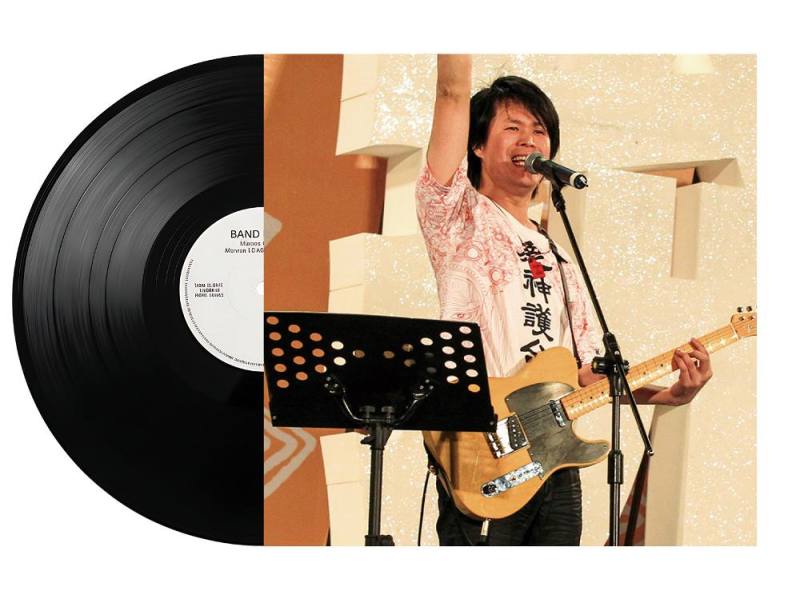
頗具草根地氣的董事長樂團〈眾神護台灣〉(2010),具有強烈的本土意識,縱然創作起始並無特定政治意涵,但常見於造勢場合。
The song “The Gods Bless Taiwan” by the grassroots band The Chairman had an intense nativist consciousness. Although when written it had no particular political intent, it has often been heard at DPP campaign rallies.
而除了專為候選人量身打造的競選歌曲,回顧台灣風雲變幻的政治史,也有不少在政治、社會場合廣大傳唱的「名曲」。
Looking back at Taiwan’s turbulent political history, besides campaign songs written especially for particular candidates, there have also been a number of “hits” sung at political and social events.
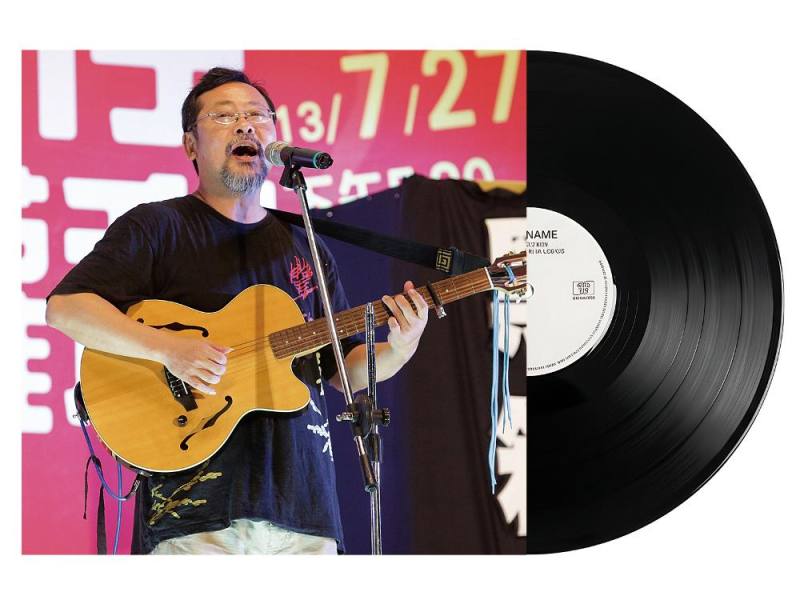
陳明章為勵馨基金會「搶救雛妓」活動所創作的〈伊是咱的寶貝〉(1993),靈感來源於自己為小女兒蓋被的回憶,曲調溫暖、蘊含盼望,常見於眾多場合。如921大地震以此曲聲援災區重建,「百萬人牽手護台灣」、「三二六護台灣大遊行」等集會遊行,亦採用播放。
The song “She Is Our Darling,” written by Chen Ming-chang for a campaign organized by the Garden of Hope Foundation to rescue child sex-trafficking victims, was inspired by Chen’s memories of his own daughter. The tune is warm and hopeful and can often be heard at mass events. It has been used to support reconstruction in areas affected by the Jiji Earthquake of September 21, 1999, and has been broadcast at activities including Hands Across Taiwan (a 2004 call for peace in protest against missiles aimed at Taiwan) and the March 26 Rally to Protect Taiwan (a 2005 protest against China’s Anti-Secession Law).
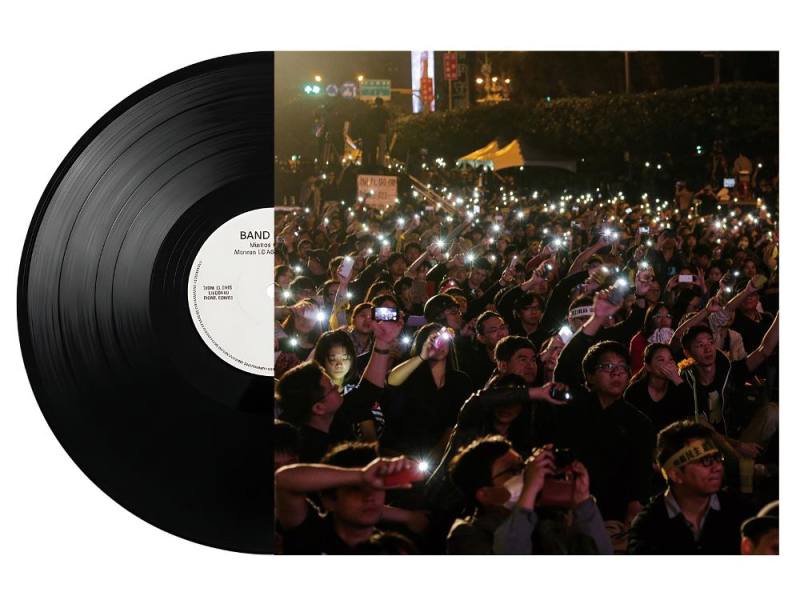
不少獨立樂團聲援的太陽花學運,滅火器樂團一曲〈島嶼天光〉(2014)溫柔的旋律,響遍現場。
Many indie bands supported the Sunflower Student Movement, with the song “Island’s Sunrise” by Fire EX. being especially popular on-site at the occupation of the national legislature.
本文轉載自《台灣光華雜誌》
多音交響的選舉祭典 流動在政治場合的旋律
https://pse.is/9emb6s