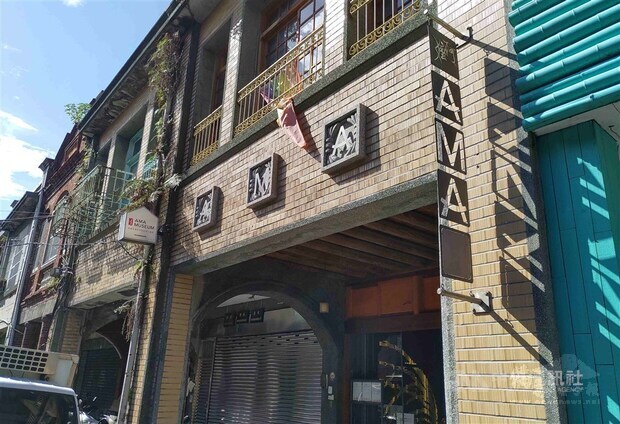
Taipei, Nov. 7 (CNA) The first and only museum in Taiwan dedicated to World War II Japanese military sex slaves known as "comfort women" will move to a new site in the first half of 2021, its operator Taipei Women's Rescue Foundation said on Saturday.
In a press conference, the foundation's executive-director Tu Ying-Chiu (杜瑛秋) said the new site will be located at an office building close to the Minquan West Road MRT Station and is set to open in April 2021.
The new museum will showcase rotating exhibits with different themes periodically, Tu said.
"The condition of the new space is very good, which can translate into savings on maintenance and renovation expenses," she said.
"Ama" means grandmother in Taiwanese Hokkien dialect, and the term is also used to refer to military sex slaves in their old age.
The museum, established in December 2016, will close down its operation at the current location in the historical district of Dadaocheng in Taipei City on November 10 due to financial difficulties.
In 2019 alone, the museum incurred a loss of more than NT$4 million (US$ 138,888), when its expenses reached NT$11.4 million against income of only NT$7.4 million, Tu said.
During the first 10 months of 2020, the museum again suffered a loss of nearly NT$2.7 million despite government subsidies and private donations, she said.
According to the foundation's report, the museum attracted 9,065 visitors in 2019 and 8,141 visitors in the first 10 months of 2020.
The museum's guests plunged to only 33 in January this year and only started to pick up since July, after the foundation announced the closure of the museum, the report showed.
The new space has an area of 198 square meters with a monthly rent of NT$66,000 and another NT$3,000 for the building's management fee, according to the foundation.
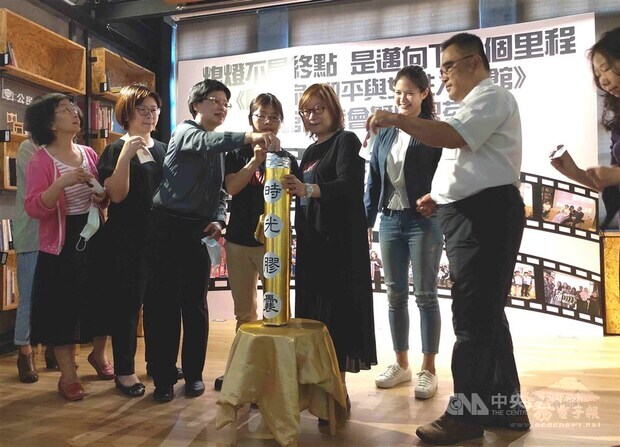
During the press conference, the foundation's president Yeh Der-lan (葉德蘭) thanked all the people who have supported the museum's operation and vowed to continue to pass on the "brave stories" of the military sex slaves to future generations.
Meanwhile, Taipei City Councilor Lin Liang-chun (林亮君) said in the same event that the city council will try its best to provide assistance to the museum so that it can play a more vital role in women's rights issues.
The foundation has initiated a fundraising campaign online with an initial target of NT$2 million, Tu said.
It is also planning to bring the stories of Taiwanese military sex slaves into campuses and communities through exhibits, she said, adding that a picture book on Taiwanese military sex slaves will be launched when the new museum opens.
More than 2,000 Taiwanese women were forced into sexual slavery by the Japanese military during World War II, according to the foundation. However, only two are still alive today, it said.
Thousands of women from other countries, including South Korea and the Philippines, also suffered similar fates.
Japan's government has been criticized for not officially apologizing for this wartime violation of human rights and for not paying compensation to many of the women, including those in Taiwan.