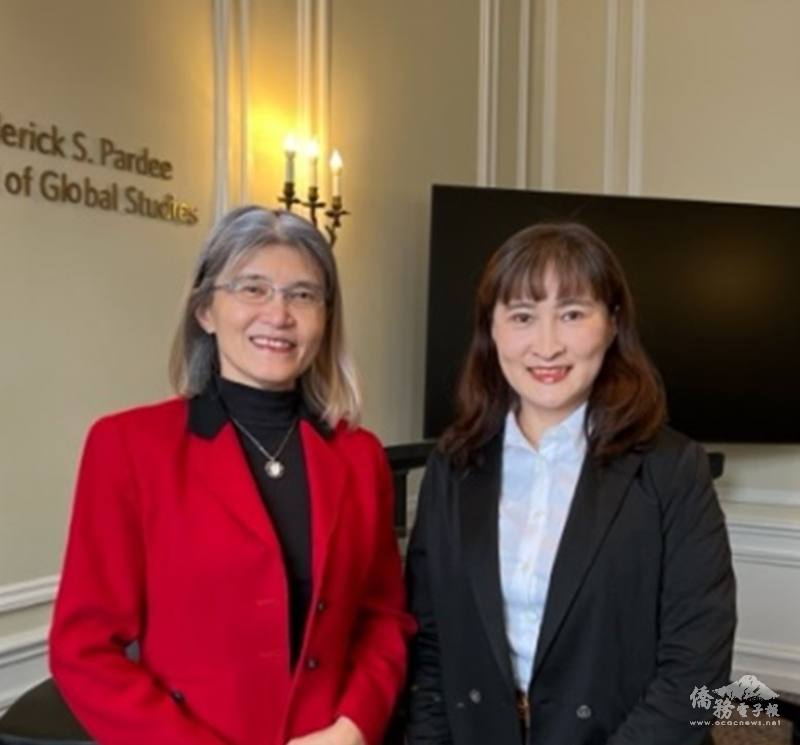
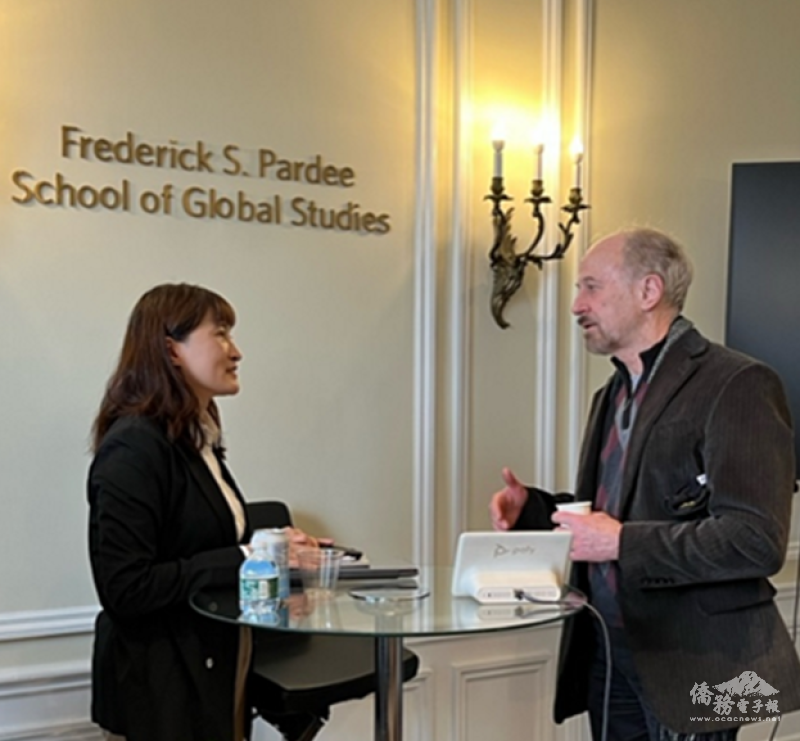
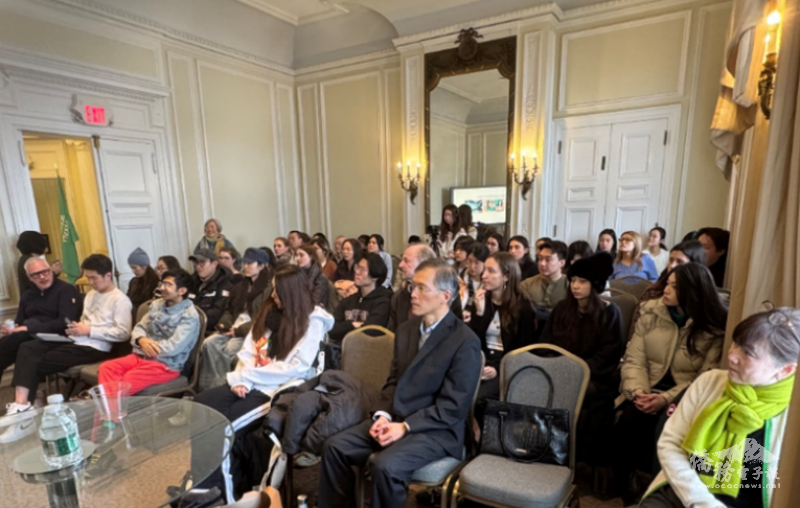
Boston University’s Center for the Study of Asia at the Pardee School of Global Studies began its 2025 Taiwan Studies Series on February 10, 2025, with a lecture titled AI in Taiwan Newsroom: Collaboration, Challenges, and Opportunities. It was presented by Dr. Lin Yi-Chieh 林怡潔, an associate professor in the Department of Journalism in the College of Communication at National Chengchi University. She attained a PhD in Anthropology at Harvard University where she is currently a visiting scholar at Harvard’s Yenching Institute.
Prof. Robert W. Hefner, Director of the Center for the Study of Asia welcomed Prof. H. Denis Wu, Professor of Communication at Boston University, the moderator of the lecture, and guests, including Cynthia Huang 黃薳玉, the director of the Education Division at the Taipei Economic and Cultural Office in Boston, and Dr. Eugenio Menegon, Associate Professor of History in the Department of History at Boston University.
The aim of this lecture, sponsored by Taiwan’s Ministry of Education, was to “foster a deeper understanding of the practical and ethical dimensions of AI in journalism”, encouraging a cautious approach to embracing these technologies, as well as an innovative approach.
Taiwan presents a unique viewpoint on AI’s role in journalism, marked by a commitment to democratic values and ethical accountability. This includes strict verification protocols for AI-generated content and innovative approaches to integrating AI in a culturally sensitive manner. Taiwan offers the rest of the world an extremely valuable model at this time in history when AI is being widely adopted at a dramatic pace.
Dr. Lin gave an in-depth analysis of AI’s transformative and other impacts on journalism, discussing both the opportunities and challenges presented by AI. AI can enhance news automation and disinformation verification. At the same time, she stressed that journalists have an irreplaceable role in investigative reporting. She also warned of ethical challenges—misinformation risks and societal impacts—and advocated rigorous standards. The challenge for news organizations is to balance technological advancements with maintaining trust and credibility in journalism.
A lively Q&A session followed exploring aspects such as AI’s linguistic disparities and Taiwan’s tech edge. This engaging lecture showcased Taiwan as a trailblazer in shaping journalism’s future and the dynamism of Taiwan Studies in Boston.