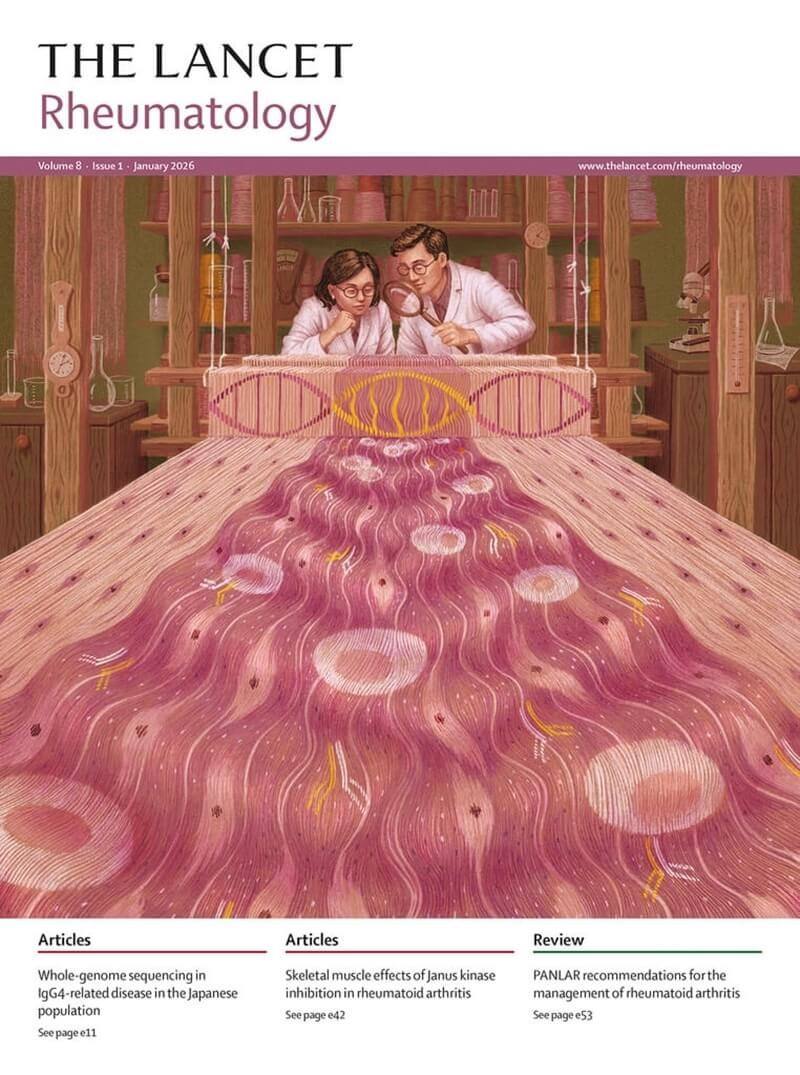
Taipei, Dec. 21 (CNA) Taiwanese doctor-turned-illustrator Emma Cheng (鄭光婷) has described the "unreal" feeling of seeing her artwork depicting DNA being woven on a loom grace the cover of The Lancet Rheumatology journal.
"Seeing it on the homepage feels so exciting and unreal- in the best way," Cheng wrote Saturday on Instagram.
Cheng's cover for the January 2026 issue shows two scientists keeping a watchful eye over a loom weaving DNA, as immune cells and proteins gradually pile up, a metaphor for chronic inflammation progressing into organ scarring.
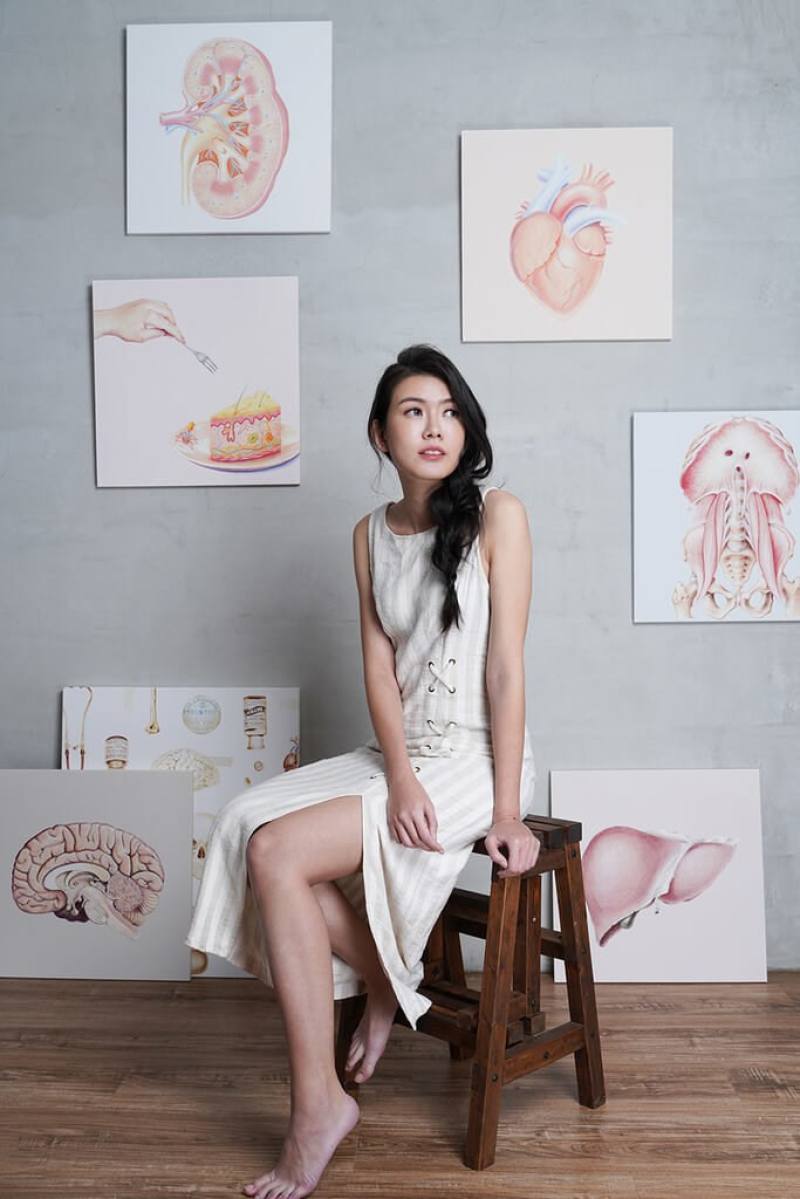
Born in Taiwan and now based in San Francisco, Cheng is known for turning organs, senses, and emotions into gentle, slightly quirky characters, such as anthropomorphic eyeballs or a brain relaxing in bed with a book.
The former aesthetic physician and Taipei Medical University graduate studied design and completed a Stanford fellowship before turning to illustration.
Cheng blends her medical training into her art, using illustrations not just to decorate, but to explain how the body works--making complex research more human and a touch playful.
The former doctor told CNA she never imagined being associated with the Lancet while practicing medicine.
"I was never the academia type, so I figured it wasn't something for me," she said. It wasn't until she became an illustrator that she learned the journal commissions artists for covers--and thought, "Wow, it would be so cool to collaborate as an illustrator."
Reflecting on international illustration work, Cheng noted that "in Taiwan, illustration is mostly associated with characters or picture books."
However, abroad, illustrators have more opportunities and often work directly with art directors instead of through an agent, she said.
She recalled collaborating with The New York Times, where the art director worked directly with her--"like colleagues talking shop"-making discussions smoother.
On the challenges of switching careers, Cheng spoke candidly about the persistent self-doubt she faces.
"How could you not doubt yourself?" she said.
But Cheng explained that over time, she realized the journey was not as intimidating as she had imagined.
"Self-doubt might be a lifelong companion, and learning to coexist with it has become part of the creative process," she said.