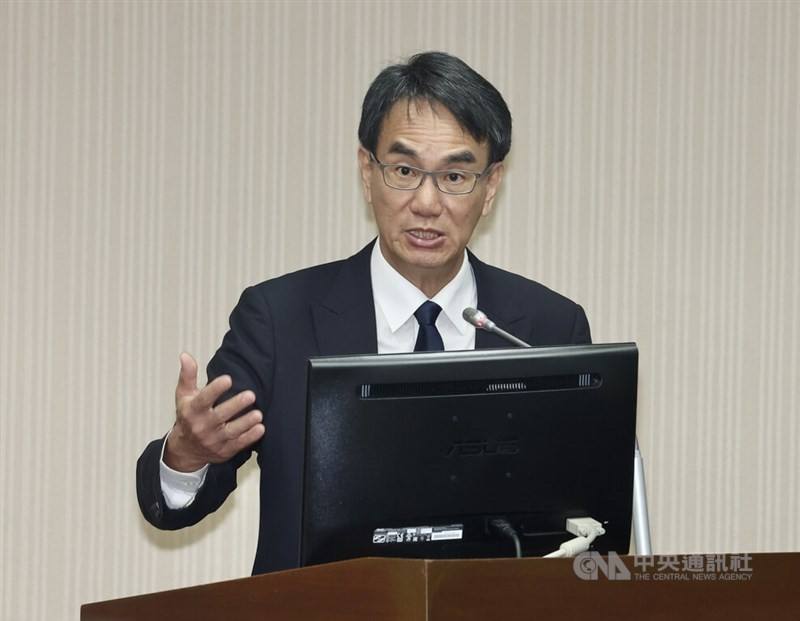
Taipei, Dec. 23 (CNA) Taiwan will add two international and three domestic undersea communications cables as part of its efforts to strengthen communications resilience, Minister of Digital Affairs Lin Yi-jing (林宜敬) said Tuesday.
Lin was briefing President Lai Ching-te (賴清德) and other participants on the ministry's efforts to bolster the country's communications and financial security at the sixth meeting of the Presidential Office's Whole-of-Society Defense Resilience Committee.
The new undersea cables will be hardened with an "armor-like" protective layer, so they will not be easily damaged, Lin said.
"We must ensure that our internet remains connected during typhoons, earthquakes or any other emergencies," he said.
As of press time, the ministry had not replied to CNA's query on when the planned communications cables will be completed.
Taiwan has reported several instances of alleged sabotage of underwater communications cables by Chinese civilian vessels in recent years.
In response, the Legislature passed a series of legal amendments earlier this month, mandating prison terms for saboteurs and the confiscation of vessels and tools used.
According to Lin, the planned undersea cables are part of the ministry's "three-dimensional defensive communications network" initiative, which aims to strengthen Taiwan's communication from land, air and sea.
The initiative also includes the addition of an Amazon low-earth-orbit satellite constellation and the inauguration of a high-orbit geosynchronous satellite being built by American manufacturer Astranis, he said.
On land, the ministry will plan disaster-resilient base stations, expand its existing fleet of vehicles with satcom-on-the-move capability, and procure a large number of mobile diesel generators, he said.
Lin said the ministry learned during typhoons over the past year that cellphone connectivity issues are most commonly caused by power outages at cell sites, and that the problem can be effectively solved with mobile generators.