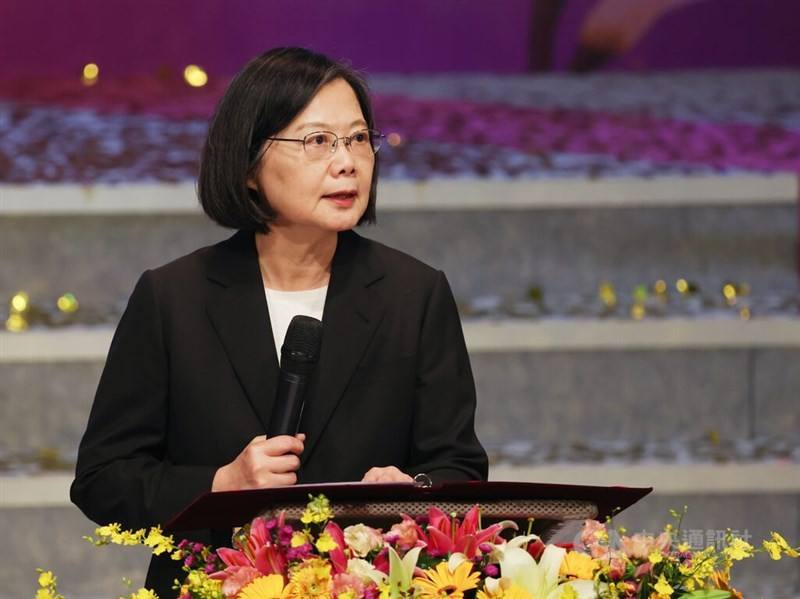
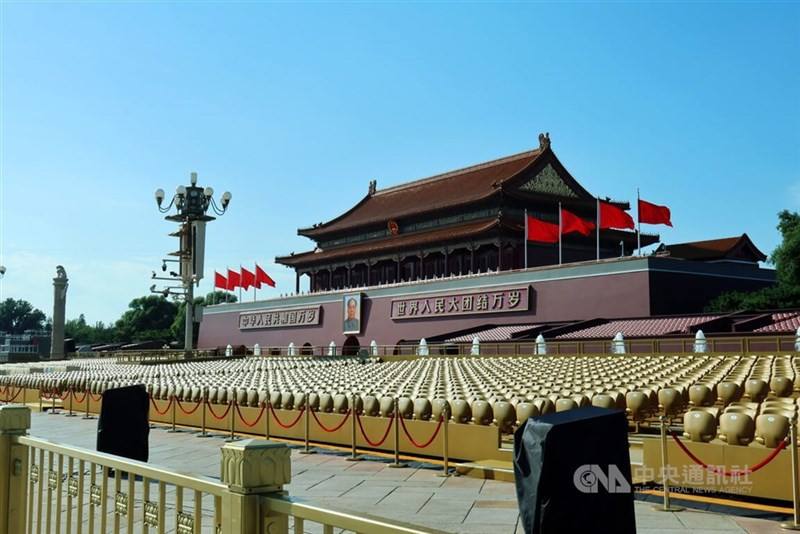
Taipei, Jan. 23 (CNA) Thinking Taiwan, a think tank founded by former President Tsai Ing-wen (蔡英文), on Friday released its inaugural report on China, providing what it describes as a comprehensive framework to track Beijing's evolving political and economic trajectory.
According to Tao Yi-feng (陶儀芬), project director of the "2025 China Monitoring Report," global assessments of China's political and economic direction have increasingly diverged in recent years, prompting the need for "a more comprehensive and objective" framework for long-term analysis.
The framework is structured around five core dimensions -- economy, finance, fiscal policy, society and politics -- using 50 monitoring indicators to track the path of China's political economy, said Tao, who is also an associate professor of political science at National Taiwan University.
Tao said the team draws on data from official, government-linked, and independent sources to provide "a snapshot of relevant trends at a specific point in time," stressing that the findings should be interpreted cautiously, given "the distinctive characteristics" of China's system and its evolving political and economic dynamics.
"On the one hand, bottom-up social dynamics may be more constrained; on the other, the state's capacity to suppress, defer, and transform risks may be relatively strong," it noted.
The inaugural report concluded that China's leadership continues to prioritize production and technological self-reliance over consumption-led growth, despite official rhetoric emphasizing the need to "continuously expand domestic demand."
Overall, the report argued, a near-term policy shift to tackle China's structural economic imbalances appears unlikely, warning that maintaining the current approach could intensify both domestic tensions and international economic pressures.
With domestic demand stalling, the report suggested China will likely offload its excess production through aggressive price cuts and a continued reliance on foreign markets.
This could intensify concerns over a "China Shock 2.0," in which Chinese overproduction floods global markets, putting additional pressure on manufacturing sectors abroad and worsening trade tensions with key partners, the think tank added.
Domestically, weak demand may fuel social unrest, erode public confidence in future economic prospects and trigger protests over welfare, while intensified political purges could undermine governance, according to the report.