Superstitions passed down through generations can shape people's lives in subtle yet lasting ways. In her debut solo feature film "Left-Handed Girl" (左撇子女孩), director Tsou Shih-ching (鄒時擎) uses one such belief to examine gender roles and social expectations imposed on women in Taiwanese society.
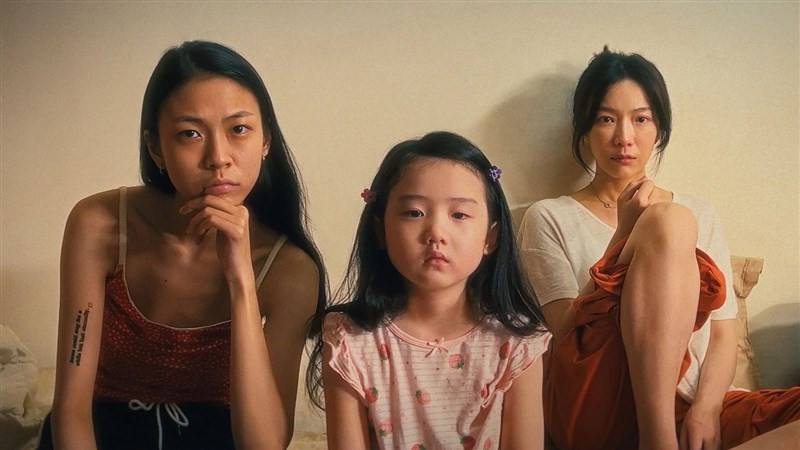
The movie follows Shu-fen, played by Janel Tsai (蔡淑臻), a single mother who moves with her two daughters from Taitung County in eastern Taiwan to Taipei, where she tries to start over by running a noodle stall at a night market.
As Shu-fen struggles with rent, a strained relationship with her family, and mounting tensions with her headstrong eldest daughter I-ann, played by Ma Shih-yuan (馬士媛), her 5-year-old younger daughter I-jing, played by Nina Ye (葉子綺), who is left-handed, begins stealing around the night market, believing her actions are driven by her "devil hand."
The film has been shortlisted for the Best International Feature Film category at the 98th Academy Awards (Oscars).
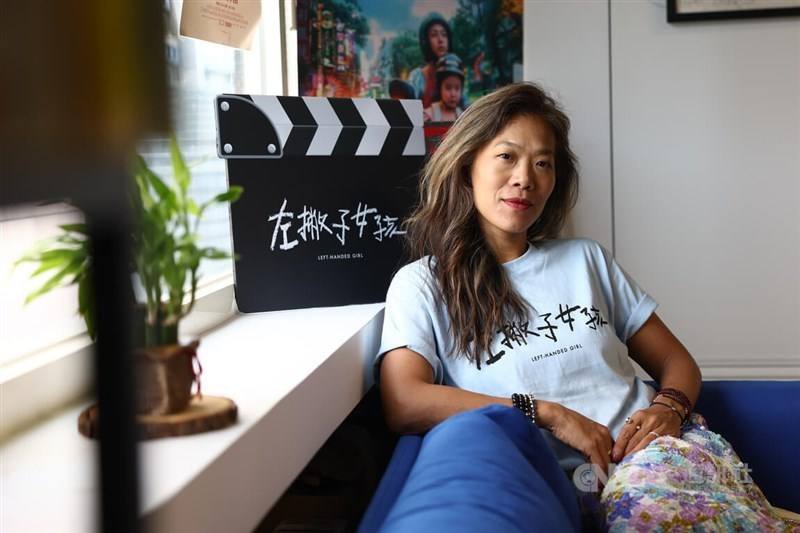
"The plot idea actually came from a high school memory, when my grandfather saw me cutting food with a kitchen knife in my left hand," Tsou told CNA in a recent interview.
"He got very emotional and told me not to use my left hand, proclaiming that 'the left hand is the devil's hand'."
Breaking away from conventions
As the story unfolds, Tsou uses the superstition surrounding left-handedness to highlight social frameworks and conventions unfairly imposed on women, constraints that, she said, "keep them from being themselves."
Growing up in Taiwan, Tsou recalled, it often felt as though teachers expected girls to fade into the background and avoid "standing out" so as not to attract "too much attention."
Pushing back against such restrictive conventions, she said, was a major impetus behind the script, and a theme established even before she and longtime collaborator Sean Baker, director of the Oscar-winning dramedy 'Anora,' began writing the film together.
"I said to Sean, 'If we're writing this movie, I want to tell my experience as a woman who grew up in Taiwan and all the stories I've heard'," Tsou said.
Twenty years in the making
Tsou said she met Baker at The New School while pursuing her master's degree, and he was immediately drawn to her "devil's hand" anecdote. The two wanted to make a film inspired by it in the style of Dogme 95, a Danish movement rooted in a purist approach to filmmaking that both share a passion for.
The idea brought them to Taiwan in 2001 in search of story material, during which Baker encountered distinctly Taiwanese elements such as betel nut stands and night markets, both of which feature prominently in the film.
However, with neither filmmaker having directed a feature at the time, securing funding proved nearly impossible, and the project was shelved.
Tsou said they continued refining the script and completed it in 2010, but it was not until 2021, when they attended the Cannes Film Festival for Baker's "Red Rocket" and spoke with the owner of a French distribution company, that "Left-Handed Girl" finally secured financing.
"'Parasite' had won the Oscars in 2020. That kicked down the doors for Asian stories, which were quickly gaining traction," she said.
Asked what motivated her to hold on to the project for so long, Tsou said the film held deep personal significance for both her and Baker.
"It could have been our first movie if we hadn't made 'Take Out'," she said, referring to the 2004 drama she co-directed with Baker.
Location, location, location
During her search for a distributor, Tsou said some suggested she shoot the film in New York instead, an idea she rejected outright.
"I was adamant, because the night market is central to the plot. If I don't film it in Taiwan, the story won't work," she said.
Now that the film has screened in theaters worldwide and is available on Netflix, Tsou said she is glad she was able to show Taiwan to a global audience.
"Making this movie made me rediscover Taiwan's beauty," said Tsou, who has continued to live in the United States since graduating from college.
She noted that people often grow indifferent to their surroundings after living in the same place for many years, but returning with fresh eyes can make familiar sights and sounds feel new.
"I'd be like, 'This is so Taiwanese. I've got to document this'," she said.
While the film unmistakably centers on female characters and women's experiences, Tsou said she hopes it will prompt broader reflection.
"Oddly enough, many conventions have been passed down even though they are completely meaningless," she said.
"I hope the film encourages people to look at their own lives and ask what beliefs they've inherited, and whether it's time to let them go."