Malaysia’s representative in Taiwan, Aznifah Isnariah Binti Abdul Ghani, arrived to take up her post in July of 2023.
With her blended ethnic background, she has a rich, dynamic understanding of Southeast Asia. This enables her to understand Taiwan and Malaysia’s long history of interactions and links from a broader perspective.
Sincere exchanges, enduring friendship
Aznifah says forthrightly: “The Malaysia–Taiwan relationship has not been built overnight. It’s an outcome that has been cultivated over many decades of friendship. When you talk about old friends, I think the most important thing is how we keep that friendship alive, and hence the name of our office is upheld—the Malaysian Friendship and Trade Centre.”
“We have always put a premium on the word friendship when it comes to Taiwan. One can always argue about the politicization of the relationship, which I feel is not so important.” She adds: “I truly believe in the whole idea of genuine friendship, where we forge a genuine relationship with someone with sincerity, not because we can get something out of it, but because it’s genuine enough that we understand and respect each other’s situation. That is the foundation of the relationship between Malaysia and Taiwan, which has always been within the sphere of mutual understanding and respect.”
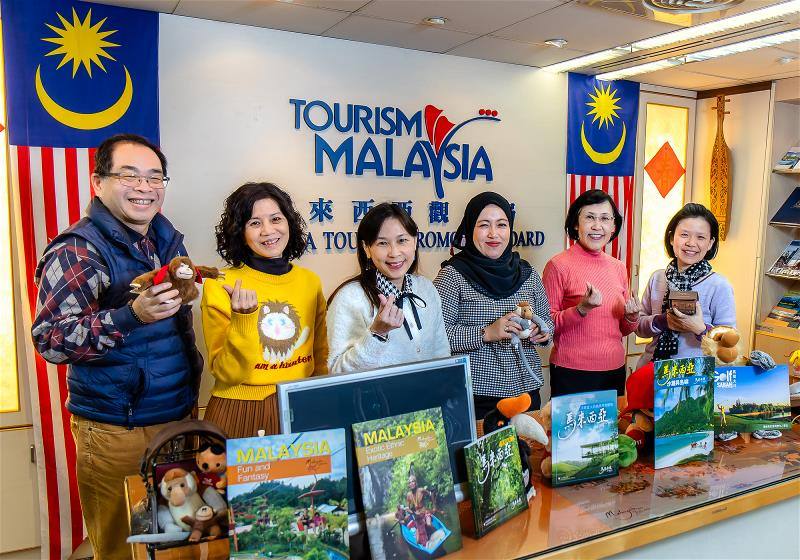
Since Malaysia first established a representative office in Taiwan in 1987, the scope and importance of its work have expanded as the interactions between the two sides have deepened. Aznifah recounts that at first the office provided only basic consular services and assistance to Malaysians who encountered difficulties in Taiwan. But over time, as Malaysians have discovered that Taiwan offers all kinds of opportunities, the tasks of the Malaysian Friendship and Trade Centre (MFTC) have expanded significantly. Today it has seven divisions, responsible for areas including tourism, trade, investment, and immigration. “This reflects the priority that the Malaysian government places on Taiwan and the importance of this relationship,” she says.
In 2024, Taiwan and Malaysia even announced the launch of their e-Gate automated passport control services for travelers from both sides. Aznifah is quite proud of the fact that this convenient measure was initiated by Malaysia, who extended such a service to Taiwan passport holders in June 2024. Based on its cordial friendship with Malaysia, in November 2024 Taiwan’s Ministry of the Interior reciprocated and extended the same services to Malaysian passport holders when entering Taiwan.
Complementarity
At present, wide-ranging bilateral interactions are in full swing. Aznifah enumerates some of these, including Malaysia’s aspirations to draw on the successful experience of Taiwan’s semiconductor industry and to attract more enterprises to invest in Malaysia. As the two sides are both promoting smart cities, many business delegations from Malaysia come to Taiwan each year to attend major industrial exhibitions like the Taipei International Information Technology Show (Computex) and to engage with Taiwanese businesses and industries.
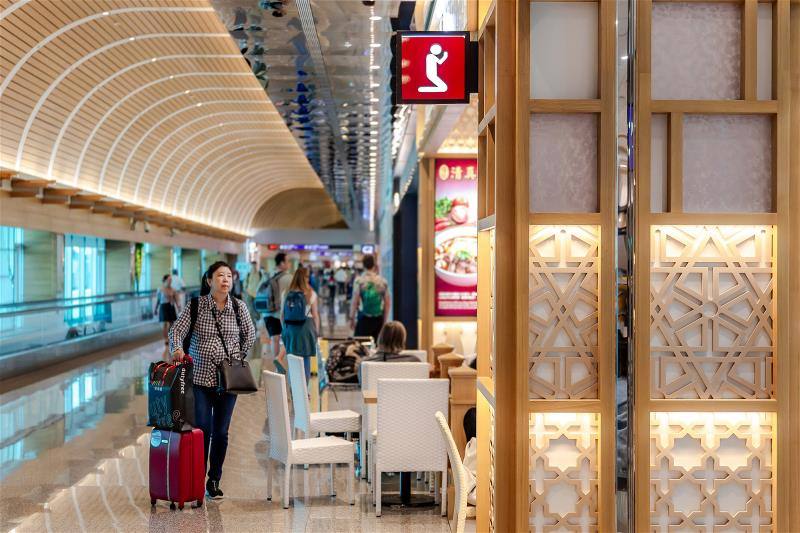
The MFTC plays a catalytic role in promoting and mediating such interactions, which benefits not only Malaysia but also Taiwan. Aznifah has visited some of Taiwan’s tourist attractions, and has been pleasantly surprised by the degree to which travel in Taiwan is Muslim-friendly, including easy access to halal cuisine and the availability of basic facilities such as prayer rooms. “I think there’s still so much more potential for these places to attract Muslim tourists from different parts of the world, including Malaysia,” she avers. The MFTC is proactively helping Taiwanese enterprises and halal certification bodies to obtain Malaysian halal certification, which will be of tremendous help to them in expanding their access to international markets.
To make Taiwanese halal tourism more attractive, Aznifah suggests that Taiwan could follow the examples of London, Paris, and Kuala Lumpur, where there are fast-food franchises such as Subway restaurants whose business model includes serving halal food and drink to cater to Muslim consumers, potentially earning higher revenues than the chain’s regular non-halal outlets. “Taiwan’s halal industry has done a very good job, even much better than some countries in East Asia, but I think more can be done to make it more streamlined, organized and inclusive and to give it more variety,” she suggests.
In our bilateral relations, Aznifah aims to build consensus based on foundational points of common interest, to enhance complementarity, and more importantly, to narrow down potential differences in order to drive greater opportunities for win–win outcomes. “Encountering something different from what we are accustomed to is actually an opportunity to learn and to understand. Yet when there’s a distinction in that sense, you have to accept that there will be different perspectives, so everyone will have their own standpoint.” As this remark of Aznifah’s suggests, Taiwan and Malaysia can continue developing their firm and long-lasting friendship based on this consensus and mutual acceptance that strengthens both parties.