文|曾蘭淑 圖|林格立
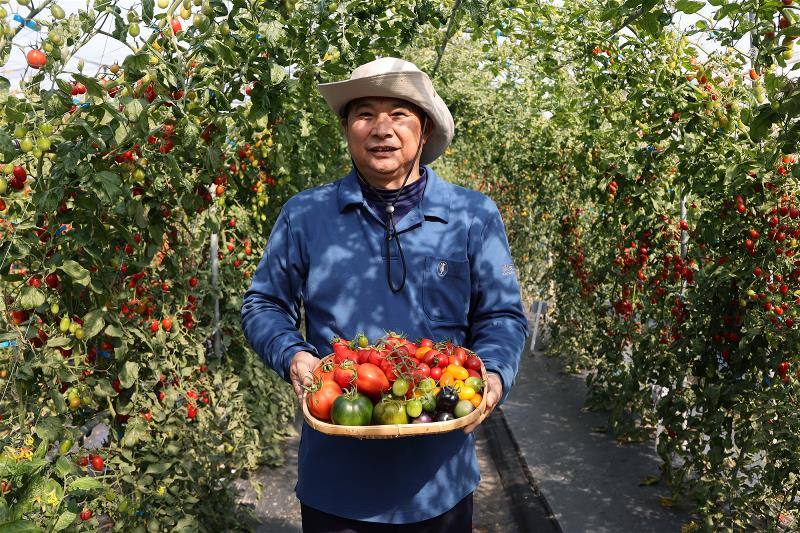
從事番茄育種超過24年的農友種苗公司台南研究農場場長黃俊傑說,每逢有外國採購者來到番茄園,對「黑柿仔」總是不屑一顧,但台灣人卻是情有獨鍾。
台灣人的最愛,卻是混血兒?
他透露,黑柿仔最早是民國63年(西元1974年)初培育的品種,但它其實是「台日混血」,由農友種苗的創辦人陳文郁引進日本當時流行的商業品種交配而成。
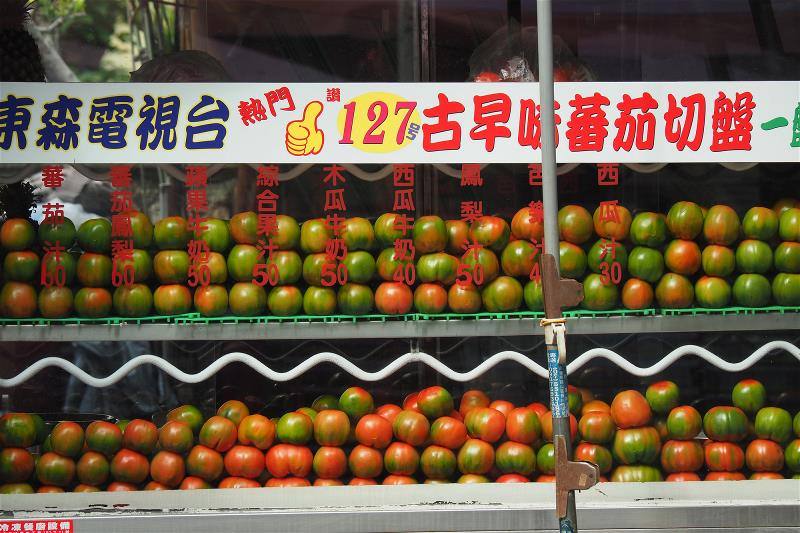
現有市場上的黑柿仔至少有來自農業部種苗改良繁殖場、亞蔬—世界蔬菜中心等各單位培育的不同品種。共同的特色,是有著青黑的肩部,而且「越黑越好吃」。
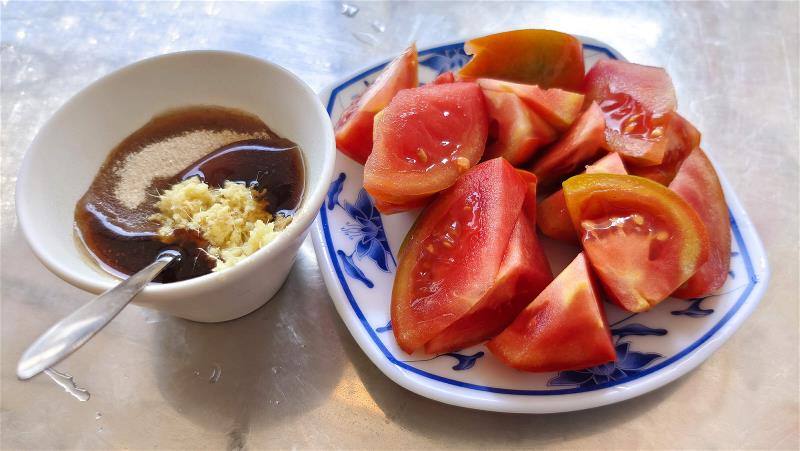
越黑越好吃?黃俊傑解釋,黑柿仔又叫「一點紅」,因為果實底部出現一點紅就採收,二天後送到消費者,已稍微轉色,有紅有綠的黑柿仔,甜中帶酸,保留脆爽的口感,正是冰果室「番茄切盤」以「脆」取勝的特色,如果全部轉紅的話肉質會變軟。台南、高雄各地民眾還會蘸紅糖薑汁、醬油、梅粉來吃,是特有的台灣滋味。
把番茄從蔬菜變水果
農友種苗的招牌番茄,卻不是「黑柿仔」,而是聖女小番茄。
農友種苗副總經理游煜華說起「阿公疼金孫」的典故。40年前,番茄都是大果、偏酸,創辦人陳文郁的孫子陳威廷不愛吃番茄,陳文郁不是叫孫子忍耐吃下去,而是囑咐育種人員去「研發一個新的品種」。
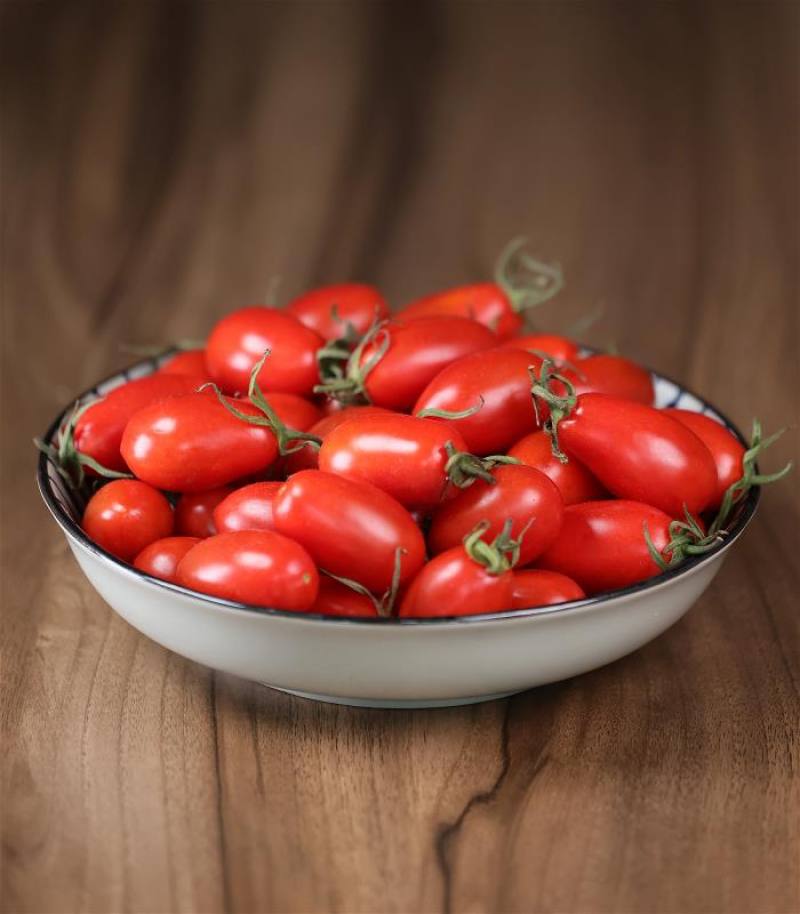
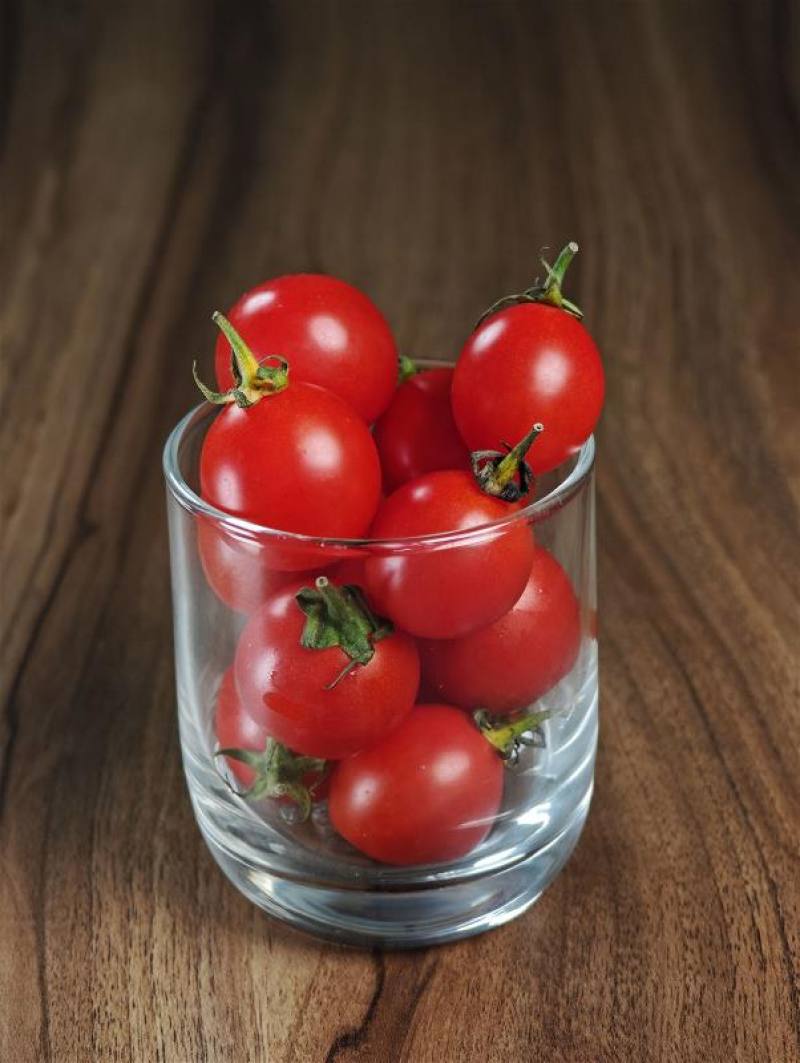
1989年終於育成像橄欖大小的橢圓型番茄,就是鼎鼎大名的「聖女番茄」,甜度高、果實小,讓孫子可以一口吃下去。
這個品種也外銷至中國,當地人稱為「聖女果」,就是指小番茄。游煜華認為,美國以前也沒有把番茄當成水果,而是當作蔬菜,農友種苗將「聖女」引進美國後,以「Grape Tomato」註冊,就像葡萄般大小,甜度高,可以一口接一口。
小而甜的聖女一炮而紅,不僅「金孫」愛吃,還打響國內外市場,影響所及,番茄當水果吃的風氣不脛而走,聖女番茄更成為小番茄的代名詞,縱使其他種苗公司陸續研發出其他小果番茄的品種,市場販售時,千篇一律貼上「聖女番茄」的標籤。
聖女引領風騷,玉女青出於藍
農友種苗公司經過11年,在2000年選育出「新一代女神」──玉女番茄。玉女果皮比聖女薄,甜度更高,複穗的特性產量也高,果實也比聖女大。
但說起「玉女」的種苗推廣工作,其實困難重重,因為大多數果農採露天種植,玉女容易裂果,而且太陽一曬,會轉色成類似木瓜的橘紅色,而非紅色,玉女變醜女,農民怨聲載道。直至嘉義農民以溫室種植,革命終於成功。
俗話說:「嬌生慣養」,黃俊傑說,就是指玉女番茄,它不耐熱,需要細心呵護,尤其是肥培管理、濕度控制等技術很重要,五年後打開市場,造就「玉女時代」。
金枝玉葉的「玉女」,天生麗質難自棄,可謂小果番茄天花板,目前溫室栽培的市佔率已近九成,唯受限於氣候因素,種子不好採收;每年種苗都缺貨,供不應求。
黃俊傑認為,台灣人很幸福,因為玉女皮薄,容易壓傷,台灣基礎建設強,運輸路況好,不會吃到被壓成番茄醬的玉女番茄。
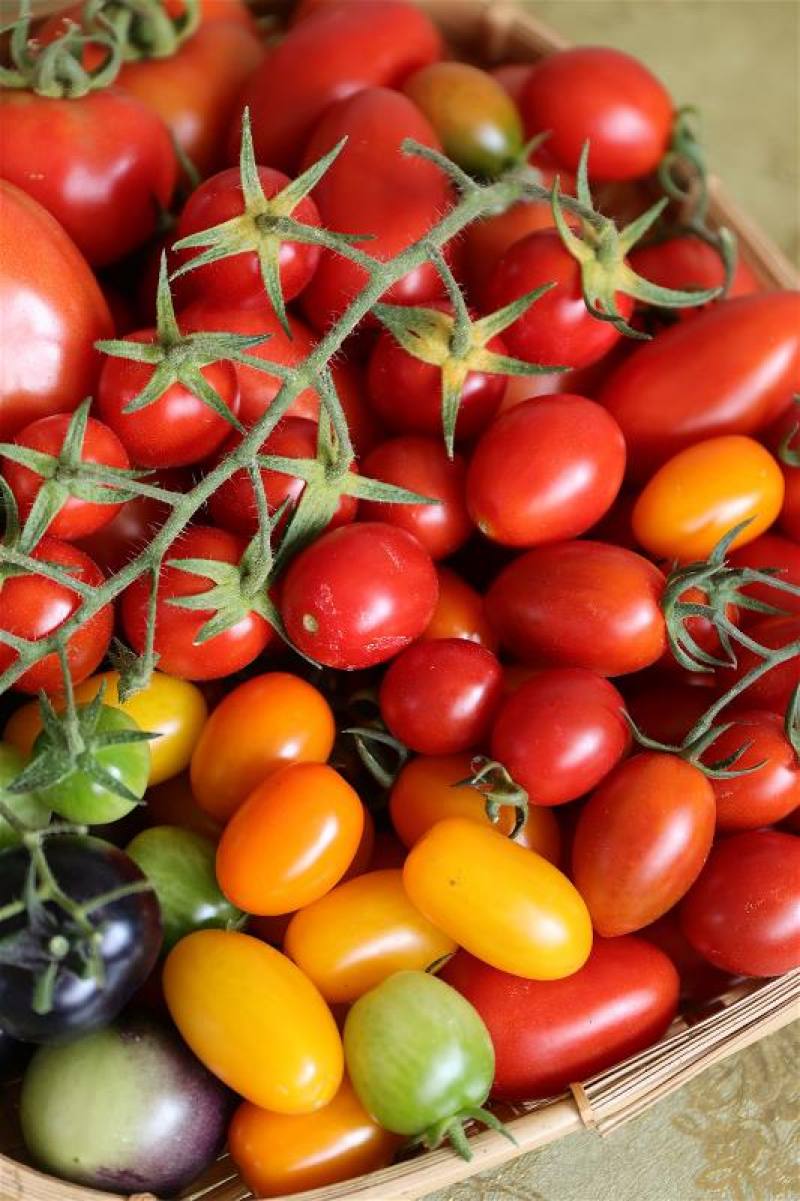
其實,台灣還有許多小番茄品種:小明、夏珠、愛女或是惠女,當你咬下這顆皮薄、噴汁的番茄時,請記得這不只是一種水果,更是一場跨越40年對美味的堅持。
Vegetable or Fruit?
—Taiwan’s Signature Tomatoes
Do you know the favorite tomato varieties of Taiwanese people? Did you know that Taiwan has been instrumental in transforming people’s view of the tomato, from thinking of it as a vegetable to viewing it as a fruit?
Huang Chun-chieh, director of the Tainan Research Farm of Known-You Seed Company, has been breeding tomatoes for over 24 years. He says that when foreign buyers come to the farm’s tomato growing section, they treat the mottled-skinned ‘Heishi’ variety with disdain, but Taiwanese actually have a special fondness for it.
Mixed breed a Taiwanese favorite
Huang reveals that the Heishi tomato was first bred in 1974 as a “Taiwanese–Japanese hybrid.” It was created by company founder Chen Wun-yu, who imported then-popular Japanese commercial varieties and crossed them with Taiwanese tomatoes.
The common characteristic of the Heishi tomatoes currently on the market is that they have a green-black shoulder (the rounded portion at the top of the fruit, surrounding the stem scar). Moreover, says Huang, “the darker they are, the better they taste.”
Huang explains that Heishi tomatoes are also known as “red spot” because they are harvested when a small patch of red appears at the bottom. This variety, part red and part green, is sweet with a tinge of tartness and a crisp texture—it provides the crispness that makes the “sliced tomato platter” at shaved ice shops stand out. People in Tainan and Kaohsiung also eat them dipped in soy sauce, dried plum powder, or a brown sugar and ginger sauce, offering uniquely Taiwanese flavors.
From vegetable to fruit
Despite the popularity of Heishi in Taiwan, Known-You’s marquee variety of tomato is ‘Santa.’
Known-You vice general manager Natasha Yu relates the origin story of this variety as being a classic tale of “a grandfather doting on a beloved grandchild.” Forty years ago, only large, sour tomatoes were grown in Taiwan, and Chen Wun-yu’s grandson Chen Wei-ting didn’t like them. Rather than tell his grandson to eat them anyway, the grandpa told his researchers to develop a new variety.
In 1989 they finally produced an olive-sized “grape tomato” (an elongated small tomato), which has become the celebrated Santa. It is very sweet, and small enough for children to eat in a single bite.
Yu says that in the past Americans did not consider tomatoes to be fruit, but rather vegetables. After Santa seedlings were imported into the US, they were registered as “grape tomatoes” because they were the size of grapes, were sweet, and could be eaten in rapid succession.
Santa surpassed by Rosada
Eleven years later, Known-You bred “a next-generation Santa”—the ‘Rosada’ variety. Rosada has a thinner skin than Santa and is even sweeter. Larger than Santa, it features a compound inflorescence and is high yielding.
Despite its advantages, Rosada faced obstacles in gaining market acceptance. It was only when farmers in Chiayi began raising it in greenhouses that this variety came of age.
Huang says that “pampered” describes Rosada well. It is not heat tolerant and requires meticulous care, especially fertilizer management and moisture control. The market really took off five years after it was first grown in Chiayi, launching the “Rosada era.”
The well-bred Rosada has a natural beauty which can be described as a “ceiling” for small tomatoes. At present it holds a nearly 90% share of the Taiwanese market for greenhouse-raised grape tomatoes.
Because the thin-skinned Rosada is easily bruised, Huang suggests that Taiwanese are lucky in that the nation’s infrastructure is sound and roads are in good shape, so that they can enjoy Rosada tomatoes that haven’t been crushed into ketchup.
In fact, many other small tomato varieties are grown in Taiwan, including ‘Milton,’ ‘Sun Jewel,’ ‘Annie,’ and ‘Shiny Ruby.’ The next time you bite into a thin-skinned, juicy tomato, please remember that it is not just a fruit, it is the product of four decades of perseverance in the pursuit of delicious flavor.