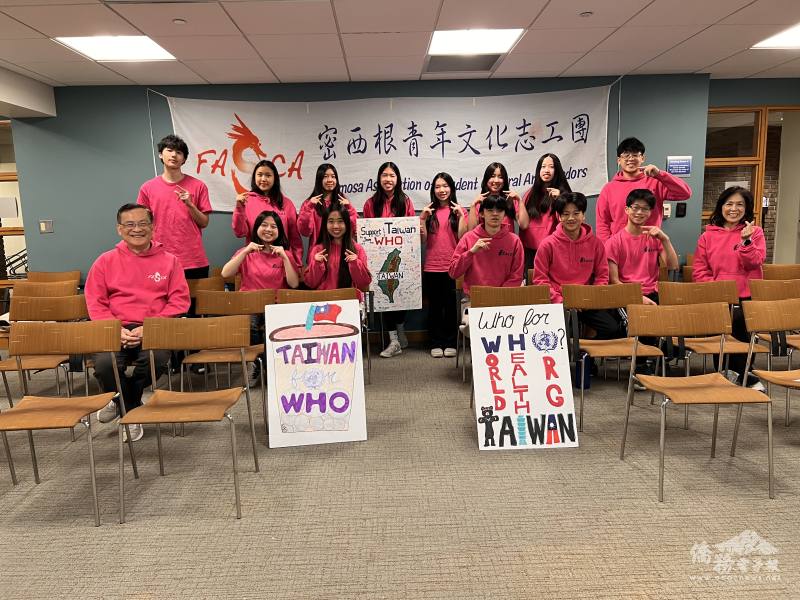
FASCA (Formosa Association of Student Cultural Ambassadors) Michigan Chapter explored Taiwan's participation in the World Health Organization (WHO) on April 19, 2026. Students gathered for their annual meeting at the Bloomfield Township Public Library, continuing their efforts to advocate for Taiwan's re-admittance to the WHO. This year, students focused on deepening their understanding of the historical background and political complexities surrounding the issue in order to become more informed and effective cultural ambassadors. Senior mentors facilitated the session, emphasizing that understanding international relations is a crucial skill for the next generation of the Taiwanese diaspora.
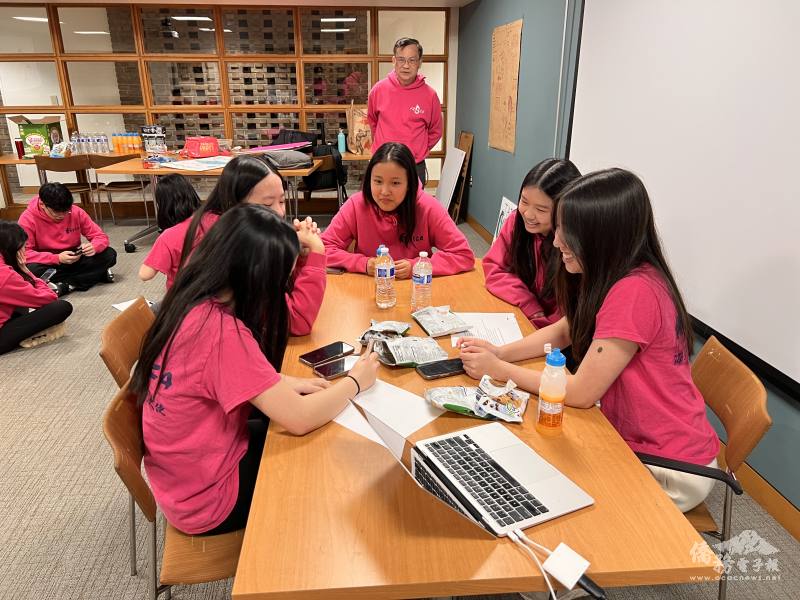
The students divided into groups to research guiding questions that encouraged both factual understanding and critical thinking. A concrete prompt - "What is UN Resolution 2758?" - helped students grasp the historical context behind Taiwan's contested membership status. Meanwhile, open-ended questions such as "Should public health be separated from politics?" and "Why?" fostered deeper discussion and debate among students. Through this activity, FASCA students gained insight into the significance of the World Health Organization, the political factors sustaining Taiwan's exclusion, and the broader implications of this status on both Taiwan and global public health—especially during the COVID-19 pandemic.
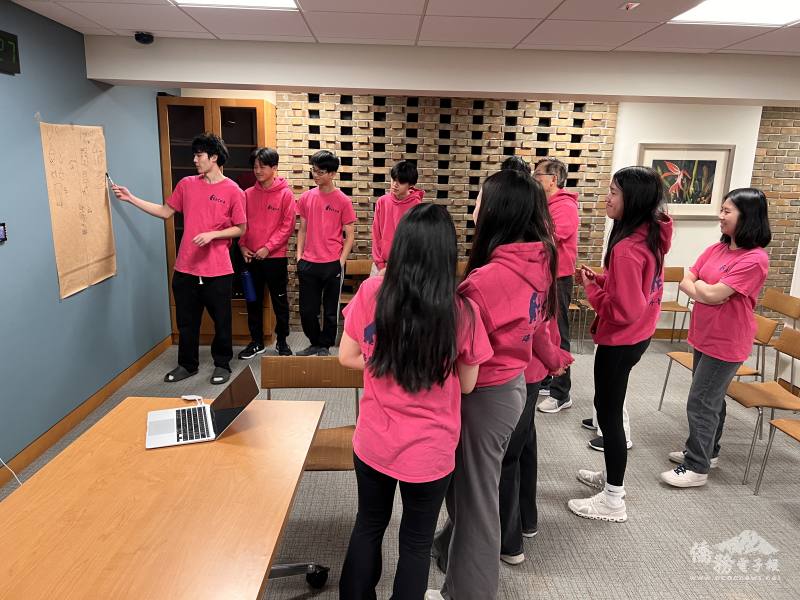
Students were then encouraged to form their own perspectives on the issue and propose potential courses of action. Drawing on what they had learned about the WHO, some students argued that membership is vital to safeguarding the health of the Taiwanese people and that Taiwan, as a member, could make meaningful contributions to global public health. Representing her group, VP of Operations West T. W. Cheng expressed the optimism and determination shared by her peers: "We believe that we can work to help Taiwan gain entry into the WHO. We can advocate by writing letters to the organization."
Conversely, other students expressed reservations about whether pursuing WHO membership is the most effective path forward. They pointed to Taiwan's swift and effective implementation of containment strategies at the outset of the COVID-19 pandemic as evidence that it has been capable of managing public health crises independently, even without WHO membership. Despite differing perspectives, however, all students reached a shared conclusion, articulated by Titus Shillair: "As long as China is around, it will take significant effort for Taiwan to rejoin the WHO."
This workshop not only broadened the students' international horizons but also empowered them to articulate Taiwan's value on the global stage with evidence-based arguments. FASCA Michigan looks forward to continuing its exploration and dialogue on Taiwan's participation in the World Health Organization, fostering greater awareness and engagement among future cultural ambassadors.
Reported by FASCA Michigan news team - Gwyneth Lin