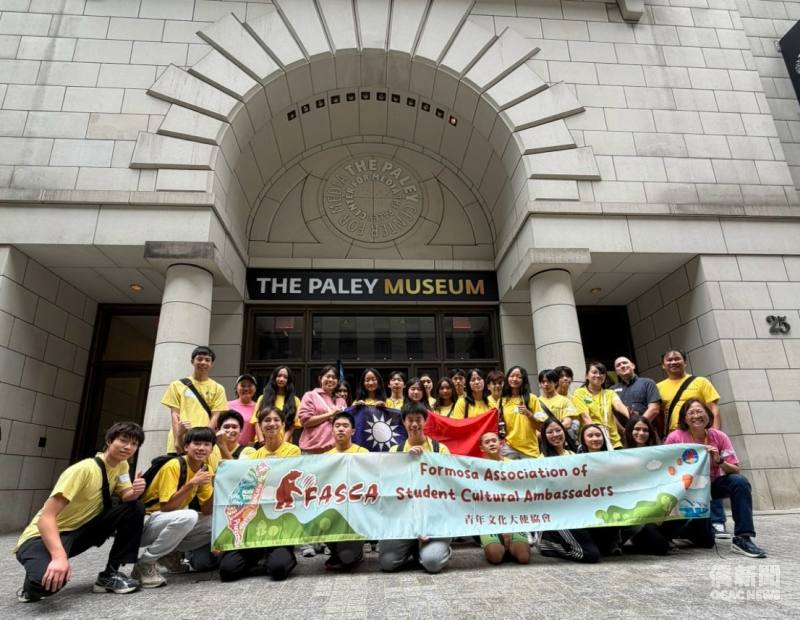
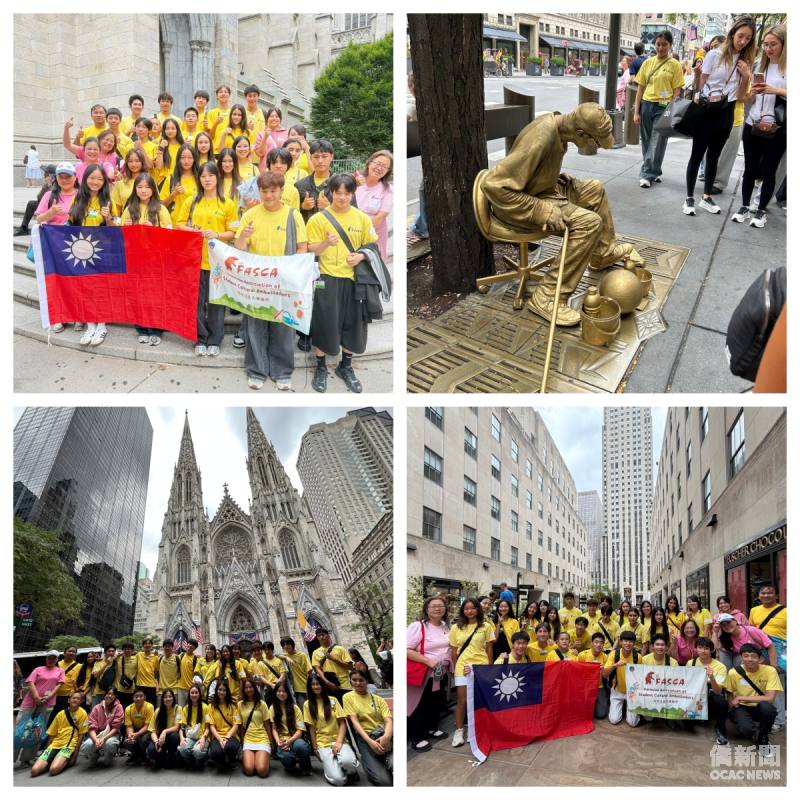
On August 21, 2026, members of the Formosa Ambassador Association (FASCA) Princeton and New York chapters visited the Paley Center for Media in New York City, exploring how television, radio, gaming, and emerging technologies have shaped entertainment and culture—and how rapidly advancing technologies such as artificial intelligence (AI) may influence the future of media and gaming.
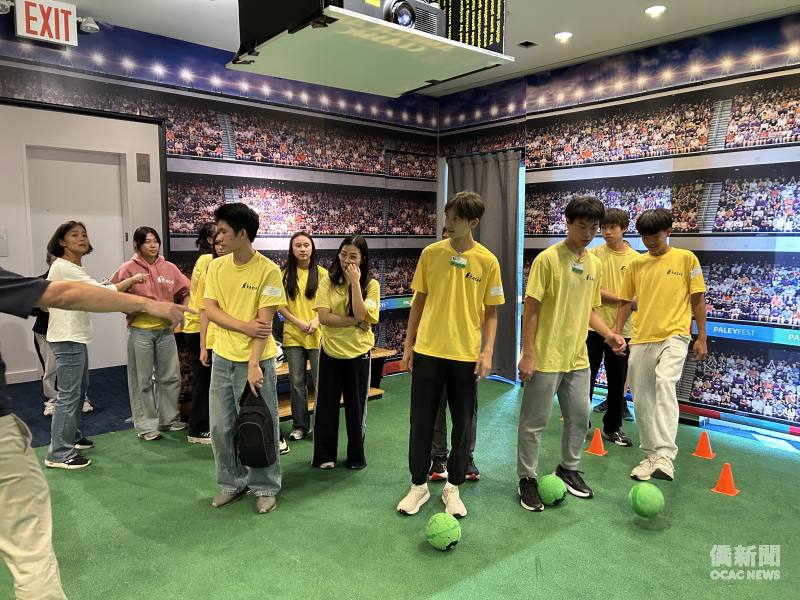
The visit began with the Paley Center’s FIFA World Cup exhibition. Students viewed highlights from past and current matches, explored jerseys from different decades, and even stepped into the role of sports broadcasters by pretending to narrate exciting game moments.
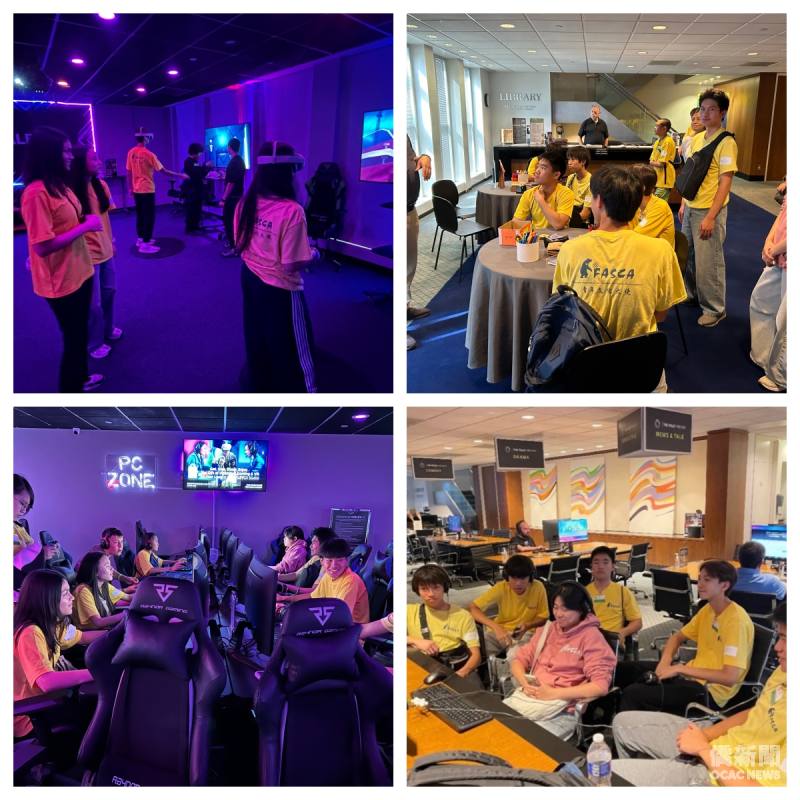
The interactive experience continued in the Paley GX gaming area, where members enjoyed driving games, gaming consoles, PC multiplayer games, and virtual reality (VR) experiences. Popular games such as Among Us and Roblox encouraged students to collaborate and interact with one another. The VR activities were especially popular, allowing participants to physically move around while completing challenges and earning points.
The gaming exhibits also prompted students to think about where the industry is heading. As gaming increasingly incorporates AI, high-performance graphics processing units (GPUs) have become central to both gaming and AI development. Students learned about the growing competition between technology leaders NVIDIA and AMD. NVIDIA, led by CEO Jensen Huang, has maintained a dominant position in the discrete desktop graphics-card market, holding about 94% of the market at the end of 2025.
For Casey Chen of FASCA Princeton, the gaming area was the highlight of the visit. “I was really skeptical about Paley at first, since usually all that I get to do at museums is walk around and take pictures,” Casey said. “It's more interactive than I would've thought.” The variety of activities made the museum feel less like a traditional museum and more like an engaging, hands-on experience.
At the same time, AMD, led by CEO Lisa Su, continues to invest heavily across its CPU, GPU, NPU, and networking technologies as demand for AI computing expands. Su has described AI as a major driver of demand across AMD’s markets, while the company is expanding its next-generation GPU and AI infrastructure platforms. These developments gave FASCA members an opportunity to connect the games they were experiencing firsthand with the larger technological forces shaping the future of gaming, graphics, and artificial intelligence.
Students also received a behind-the-scenes look at the Paley Center’s extensive media library. Librarian Mark Ekman explained that nearly 160,000 television programs, commercials, and radio programs are available in the Paley collection. Many original recordings are preserved in a vault outside New York City while the collection continues to be digitized. The archive also contains previously lost episodes of classic television programs and materials representing many different genres, from classical music to animated series such as The Simpsons.
The experience helped students understand that preserving media is about more than entertainment. The Paley Center protects recordings and broadcasts that might otherwise have been forgotten, overlooked, or discarded, providing future generations with access to important pieces of cultural history.
Founded in 1975 by CBS founder William S. Paley as the Museum of Television & Radio, the institution was renamed the Paley Center for Media in 2007 to reflect the growing influence of the Internet, mobile video, podcasting, and other emerging platforms.
Jaslene Jen of FASCA Princeton Chapter said this aspect of the visit was especially meaningful. “It made me appreciate the museum more because it showed how important it is to preserve history and memories for future generations,” Jaslene reflected.
Through this visit, FASCA members not only enjoyed games and interactive exhibits but also gained a deeper appreciation for media literacy, cultural preservation, and the rapid evolution of communication technology. From historic television broadcasts to virtual reality and AI-powered computing, the experience connected the media of the past with the technologies shaping the future. For FASCA’s young cultural ambassadors, the visit was a reminder that understanding technology—and thinking critically about how it affects society—is an important part of becoming informed creators and leaders in an increasingly digital world.
(Reported by Jaslene Jen and Casey Chen of FASCA Princeton Chapter, and Emily Wang of FASCA New York Chapter.)