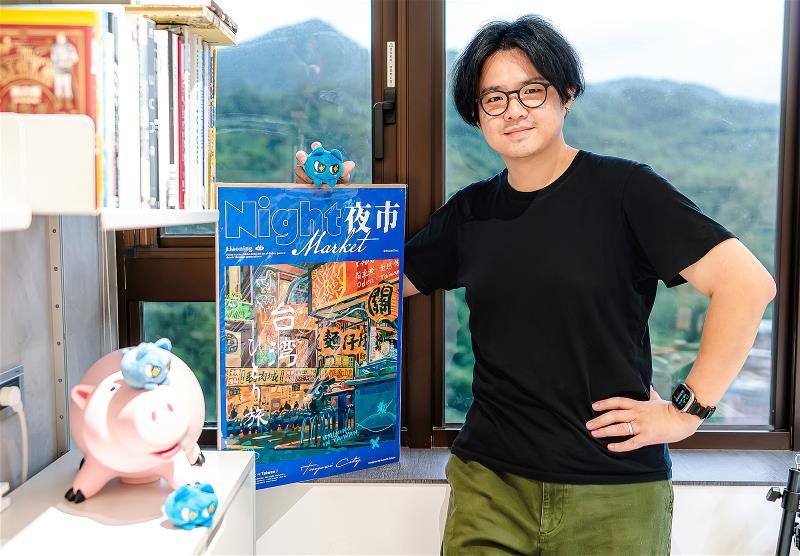
台灣溽熱的夏季街頭可以有如彈珠汽水那樣的清涼;雜亂無章的夜市可以保有奔放的生命力又不失和諧。建築科班出身的插畫家諾米(本名陳于峰),以14年的場景繪製功力,讓台灣染上了魔幻寫實的色彩。
以建築類型的插畫走跳於插畫圈的諾米直言:「本來對建築是沒感覺的。」
喜歡畫畫的他,高中唸的是廣告設計,直到進入台北科技大學建築系就讀,才打開了建築師之眼,學會用人文的眼光來欣賞一座座水泥盒子。
畢業後,諾米也曾進入建築師事務所工作,這段經歷讓他明瞭,業界並非他的心之所嚮,果斷地成為插畫家。
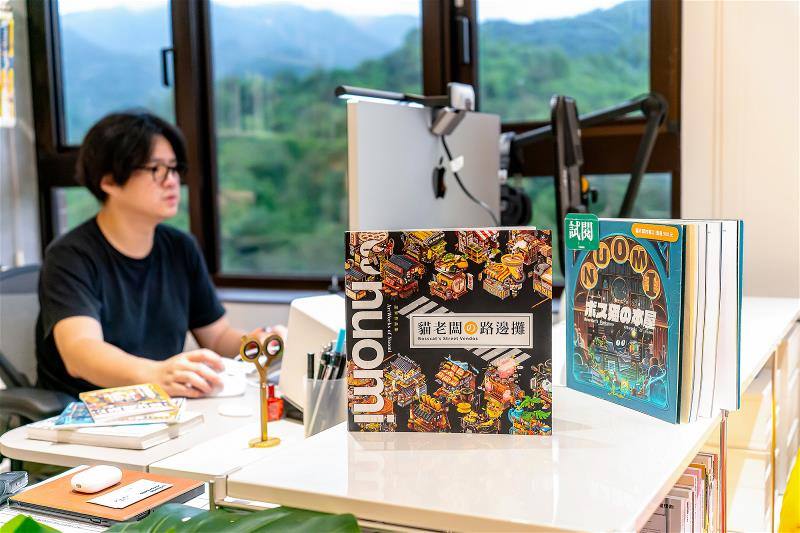
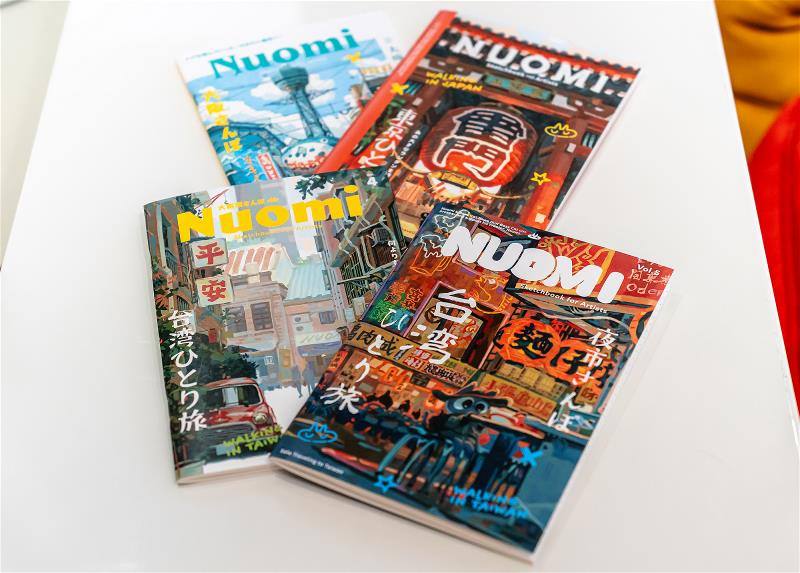
但科班訓練仍在他身上留下痕跡,從第一本畫冊《旅人島》,到《貓老闆的路邊攤》、《貓老闆的書店》,以及以個人品牌「諾米Nuomi」的創作,精準的透視,對環境、空間的嫻熟掌握,都是他作品的鮮明特質。
理性腦先決
沒有創作者常見的浪漫直覺,說自己總是「理性腦」的諾米,創作之前都經過一番縝密的考量。
早年,為了儘早讓大眾認識他,故強調建築系出身,刻意在畫面使用誇張效果的仰角或廣角。到現在,多用長焦鏡頭的角度來表現,少了畫面上的張力,卻更予人安定感。
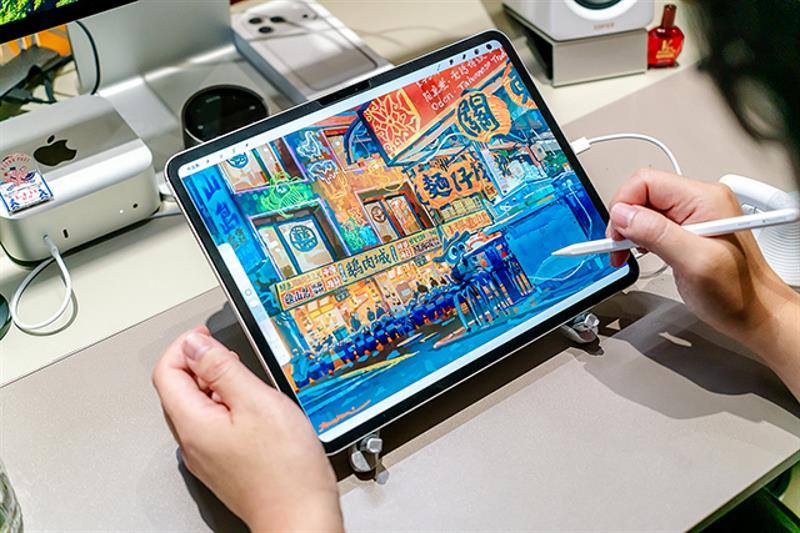
考量到市場需求,他也從入行之初只用黑白,開始學習用色。也因應趨勢以及商用之便,從手繪大刀闊斧轉往電腦繪圖。
不擅長畫人物的他,刻意將此標榜為個人的風格特質,為了避免畫面過於安靜,而在畫裡「裝」上黑貓與黑熊(其實用色都是早年黑白手繪時期的痕跡),沿用至今,漸漸成為粉絲指認他作品的重要符碼。
不完美,但卻是感性所在
四處走走畫畫的諾米,台灣的鄉鎮,東京、首爾,是最常取景的場域。
畫久了以後,他對於不同國家的街景也自成見解。
關於台灣,他說:「騎樓一定要有盆栽。如果拿掉了盆栽,你會懷疑這是哪裡?另外一定要有的是機車,還有偶爾可見延伸到騎樓的攤位。」
關於東京,「街道很乾淨又理性,一切都是規劃好的,大樓的垂直水平抓得很漂亮,但反而因此沒有我的發揮空間。如果畫東京,我反而偏好新舊交融的場景,譬如說拿淺草的商店街搭配晴空塔,亂亂的反而有活力。」
關於首爾,「首爾因為沒有地震,建築的跨距可以抓得很大,建築的型態跟台灣與日本又不大相同,街景上,則介於台灣與日本之間。他們也很擅長使用Led廣告燈來妝點街景,流行色彩強烈。不過,每個國家在進入現代化以後,建築的差異不會很大,我比較想畫的是傳統的場景,譬如說廣藏市場。」
以前畫的多是知名的地標景點,現在的他更偏好巷弄中的日常風景。有著書法字體招牌的小店、九重葛盛開的花牆、暮色低垂時夜市的其中一隅⋯⋯。
「台灣其實很好畫。」諾米說。
在社群平台上相當活躍的他,每每貼出新作,往往能引發台灣人記憶深處中的共鳴。台灣街景的混亂中散發出的活力、張狂的飽和色彩、多樣到讓人眼花的字體,透過畫筆的修飾與轉譯,成為一種既熟悉又魔幻的景致。那難以言喻卻能觸動人的氛圍,或許一言以蔽之,就是時下流行的台灣感性吧?
Illustrating Taiwan:
Nuomi’s Magical Realism
Despite the sweltering heat in summer, Taiwanese streets sometimes exude a coolness as refreshing as the old-style ramune fizzy drinks sold in glass bottles sealed with a marble. Though apparently chaotic, the night markets across Taiwan brim with vitality, boasting a harmony of their own. Nuomi, an illustrator with a background in architecture, taps into his 14-year experience in scene design to give local subjects an air of magical realism.
Nuomi (Chen Yufeng), whose illustrations often feature architectural subject matter, recalls that at first he was “indifferent to architecture.”
Always fond of drawing, he studied graphic design at secondary school and went on to pursue an undergraduate degree in architecture at National Taipei University of Technology. It was there that he learned to appreciate the cultural nuances of seemingly uninspiring concrete buildings.
Nuomi’s academic training influenced the bearings of his art, which is characterized by his accurate use of perspective and his deft manipulation of space.
A rational artist
While creative souls are often driven by impulses, Nuomi says he follows the dictates of his rational mind. Each of his projects is the result of meticulous planning.
To capture attention quickly, he used to capitalize on his architectural training, adopting low-angle or wide-angle viewpoints for dramatic effect. Nowadays, he prefers long-focus views which are less mind-boggling, but confer a soothing sense of stability.
While he started out with black-and-white illustrations, Nuomi learned to use more colorful palettes in response to market demand. He has also followed industry trends by turning to digital art, which lends itself more readily to commercial use.
Nuomi doesn’t specialize in human figures. He regards this not as a shortcoming but as his defining trait. To breathe life into his illustrations, he “installs” a black cat or a Formosan black bear in the scenes he creates. These creatures have become hallmarks of his art.
Looking for inspiration
A peripatetic artist, Nuomi gains inspiration from Tokyo and Seoul, as well as from Taiwanese towns and villages. Personal experience has helped him distill precious insights into the characteristic street scenes of different countries.
Referring to Taiwan, he says, “Any covered sidewalk here has to have potted plants. If you don’t see these, you’ll wonder where you are. There must also be scooters. Another characteristic motif is the stalls that occasionally spill onto the covered sidewalks.”
Speaking of Tokyo, he comments, “The streets are clean and well planned. The vertical and horizontal elements of buildings are beautifully proportioned. For me, however, this also means that there’s less room for creativity. When portraying Tokyo, I prefer scenes where the new and the old intermingle. For example, a scene combining the shopping streets in Asakusa with Tokyo Skytree will look rather messy, but also very lively.”
As for Seoul, because the city “is not prone to earthquakes, buildings there can afford to have large spans. The characteristic architectural styles are also quite a bit different from those in Taiwan and Japan. In terms of street scenes, Seoul is somewhere between Taiwan and Japan. They’re also good at using LED displays to decorate their streets, which look very trendy indeed.”
While Nuomi used to focus on famous sites and landmarks, he now pays more attention to ordinary scenes in backstreets, depicting shops whose signs are notable for their calligraphic charm, walls covered with bougainvillea blooms, and corners of night markets at dusk.
Nuomi says Taiwan provides plenty of inspiration for illustrators.
Active on social media, Nuomi continues to post new works that resonate deeply with the memories of his Taiwanese followers. Through the transformative power of his art, Nuomi presents portraits of local streets both familiar and magical, capturing the energy that arises from mess and disorder, the anarchic vitality of bold colors, and the kaleidoscopic richness of different calligraphic styles. The ineffably touching atmospheres he conjures up perhaps illustrate what we call “Taiwanese sensibility” in fashionable parlance.