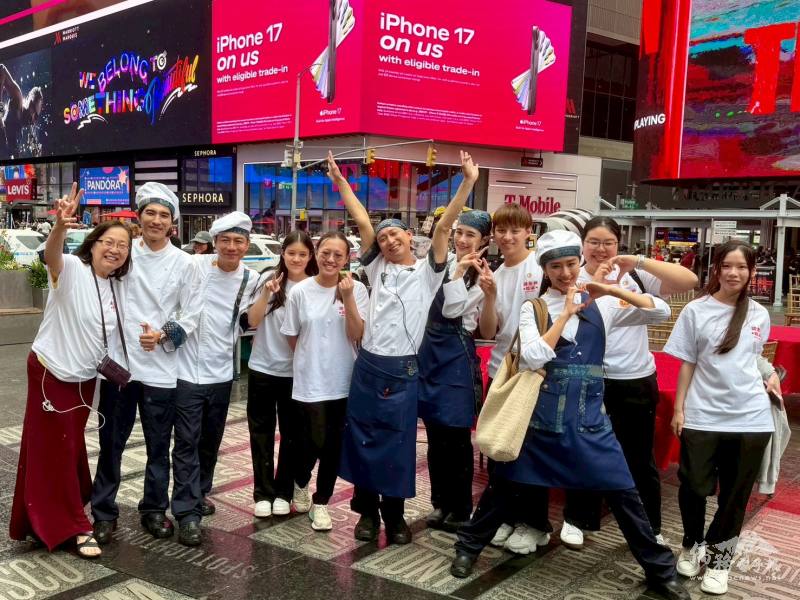
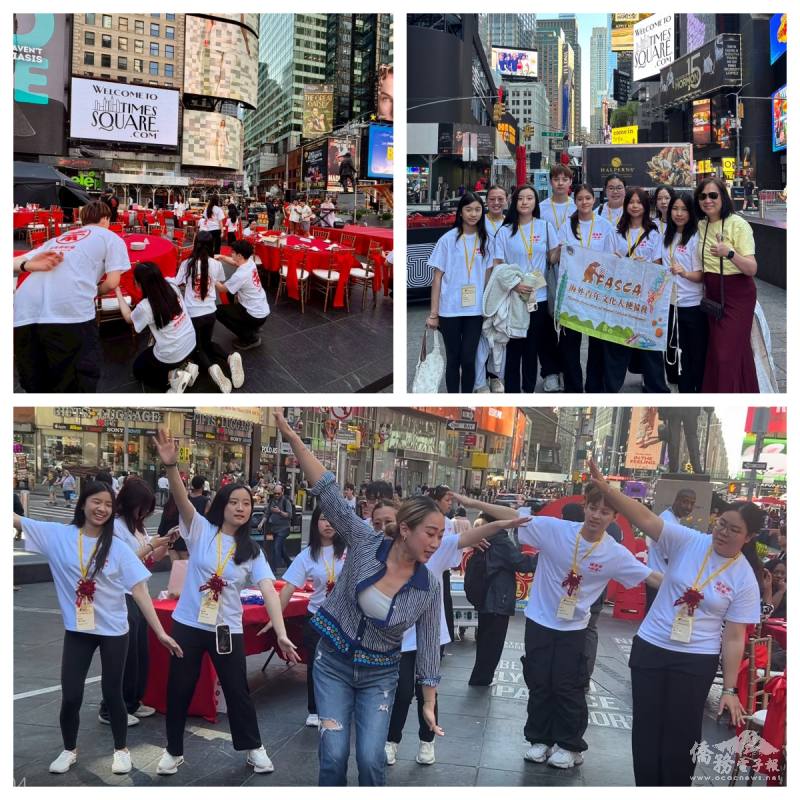
NEW YORK, NY — April 17, 2026 — Against the dazzling backdrop of Times Square, Taiwanese culture took center stage as the international reality show “Have a Seat 請世界吃桌” filmed a traditional Taiwanese wedding banquet, or “ban-do.” Supporting this large-scale cultural production were ten members of the Formosa Association of Student Cultural Ambassadors (FASCA), who played an essential role in assisting the filming while serving as cultural ambassadors.
Representing FASCA chapters from Albany, New York, and Princeton, the students—ages 15 to 23 and primarily second-generation Taiwanese Americans—were guided by counselor Tina through both preparation and execution. Two weeks before the event, participants attended a webinar to learn about Taiwanese banquet traditions, including ceremonial procedures, the symbolism behind each dish, and their responsibilities during filming.
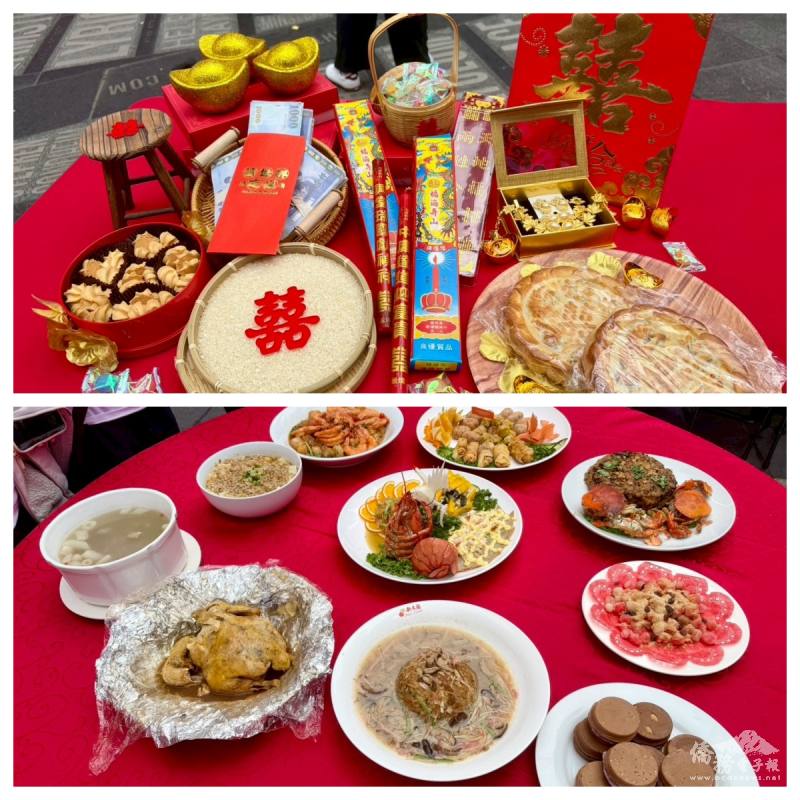
On the day of the event, FASCA members arrived as early as 8 a.m., with some traveling long distances—driving from upstate New York or taking early morning trains from Philadelphia. Once onsite, they worked closely with the production team, assisting with detailed preparations such as tying decorative bows, arranging seating, and setting up cultural displays. Their efforts helped transform a busy urban space into an immersive cultural setting.
During filming, FASCA students supported both guests and crew. They welcomed attendees, assisted with check-in, guided seating, and introduced key elements of Taiwanese wedding traditions. One highlight was their explanation of the “Six Rites” of traditional Chinese weddings, providing cultural context that enriched both the live audience’s experience and the storytelling of the show.
Central to the banquet was the cultural meaning embedded in the cuisine. Unlike typical Western receptions, Taiwanese banquets emphasize symbolism through shared dishes. Each course conveys blessings—such as unity, prosperity, and family harmony—while the act of dining together reflects a strong cultural value: enjoying food collectively and avoiding waste. FASCA members were tasked with learning these meanings in advance and sharing them with guests throughout the event.
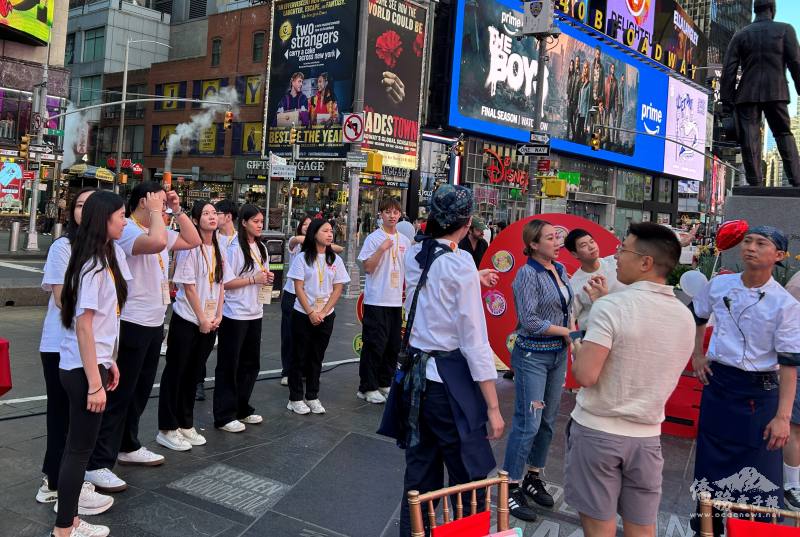
The filming quickly drew attention from tourists and passersby in Times Square. Crowds gathered to watch, take photos, and ask questions, turning the event into a spontaneous cultural exchange. Many were intrigued by the elaborate setup, traditional elements, and the significance behind each dish, making the banquet not only a visual spectacle but also an educational experience.
Distinguished guests included Director-General James Lee (李志強) of the Taipei Economic and Cultural Office in New York (TECO-NY), along with representatives from the Culture Center of TECO in New York. In his remarks, Director-General Lee expressed appreciation for FASCA’s contributions, thanking the students for their dedication and highlighting the importance of youth engagement in promoting Taiwanese culture internationally. Event hosts also extended their gratitude, noting that FASCA members’ professionalism and enthusiasm were key to the success of both the event and the filming process.
For many students, the experience was both meaningful and eye-opening. One participant shared that the event offered a rare opportunity to experience a traditional banquet firsthand, something many second-generation Taiwanese Americans have not encountered before. Another reflected that participating in a reality show production in such a prominent location demonstrated how cultural traditions can reach global audiences and foster greater understanding.
“Have a Seat 請世界吃桌” is an international reality program that uses Taiwanese banquet culture as a form of “culinary diplomacy,” bringing traditional dining experiences to iconic locations around the world. By showcasing the artistry, symbolism, and emotional significance behind Taiwanese cuisine, the program aims to connect cultures through the universal language of food.
As filming concluded and guests enjoyed the final courses, the Times Square banquet left a lasting impression. Through their dedication and cultural pride, FASCA members demonstrated how the next generation can actively preserve and share their heritage—bringing Taiwanese traditions from local communities to the global stage.
Reported by FASCA - Claire Su , Triona Tsai, Audris Tsai, Caleb Lee