文/鄧慧純 圖/林旻萱
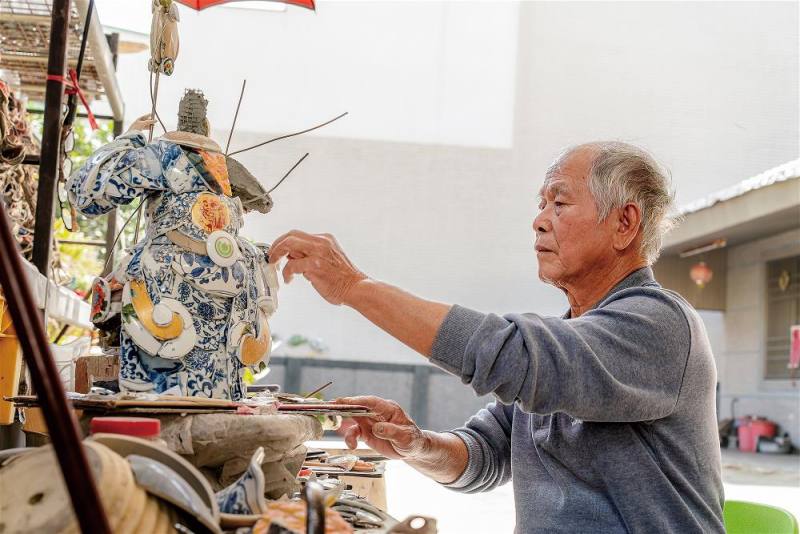
投入剪黏超過一甲子的陳三火,一輩子在廟宇屋脊上與風雨烈日相伴。被尊稱為「人間國寶」的他,卻不習慣被稱為「老師」;「叫我火師(火獅)就好,」他說,「『火獅』就是廟前守護廟宇的那兩尊石獅;我這個『火師』,要守護的是台灣的本土藝術。」
敲出自己的舞台
出身台南麻豆的陳三火,17歲入行,師承同為剪黏大師的兄長李世逸,30歲方自立門戶。戰後台灣寺廟大量興建與修復,對剪黏的需求大增,他憑藉精湛手藝嶄露頭角,成為眾多廟宇指名的工藝師。
然而,這些廟宇屋脊上的風景,隨著可大量灌漿燒製的淋搪模組化裝飾興起,其工時短、成本低廉,遂使傳統剪黏逐漸式微。50多歲時,火師一度萌生退意,卻始終不捨,他反覆問自己:這門工藝,是否還有新的可能?
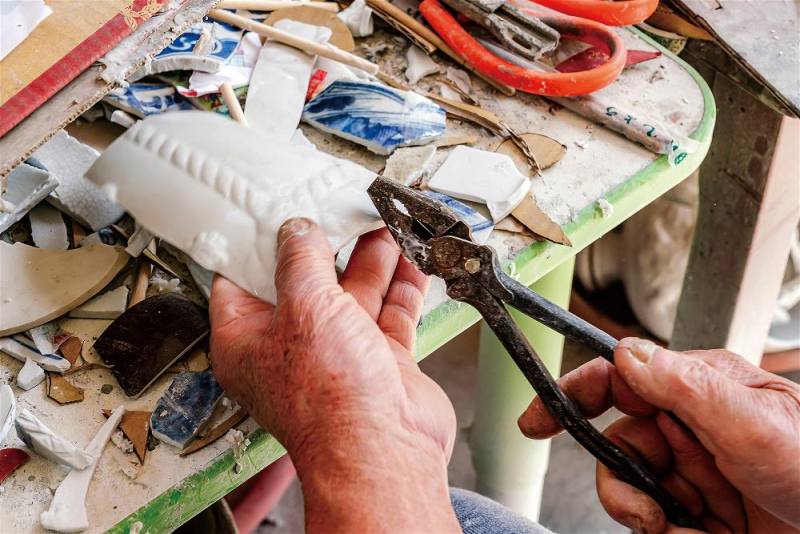
54歲那年,他偶然拿起一只花瓶,心念一起,隨手以鉗子將花瓶摃破,再順著碎片的形狀拼組出一尊「達摩尊者」。
過去的做法,是工匠在心中先有構圖,再用剪仔與鑽筆將玻璃裁割成所需形狀,再一片片黏上粗坯;他改用「敲」的,讓破碎決定形狀,讓偶然成為創作的語言;「這一敲,敲出我的舞台,敲出我不一樣的人生,也敲出我的使命。」
以摃代剪、隨心而不隨意
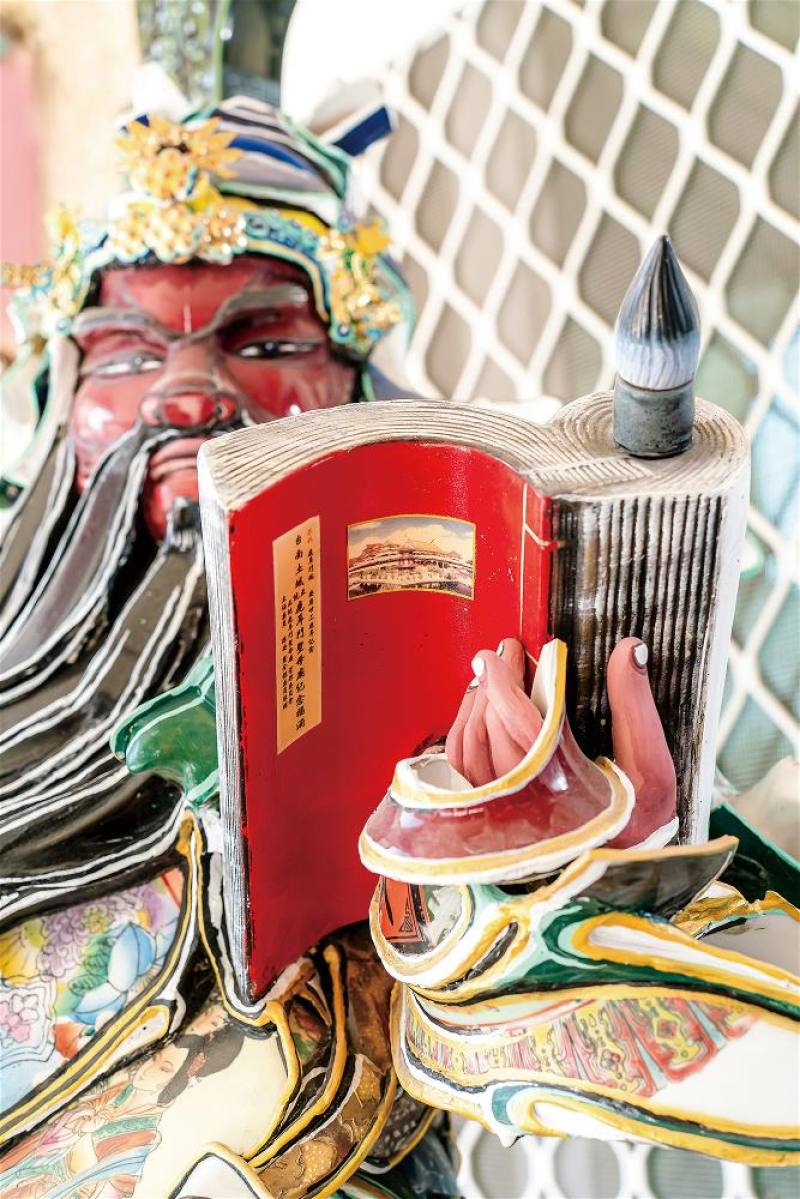
走進台南市北區鄭子寮福安宮,那邊有火師60歲時,「隨心不隨意」以「以摃代剪」完成的作品。殿外牌頭上的護法伽藍和韋馱,衣衫上華麗的紋飾是舊花瓶的圖案,衣襬末端猶可見摃敲破碎的稜角。
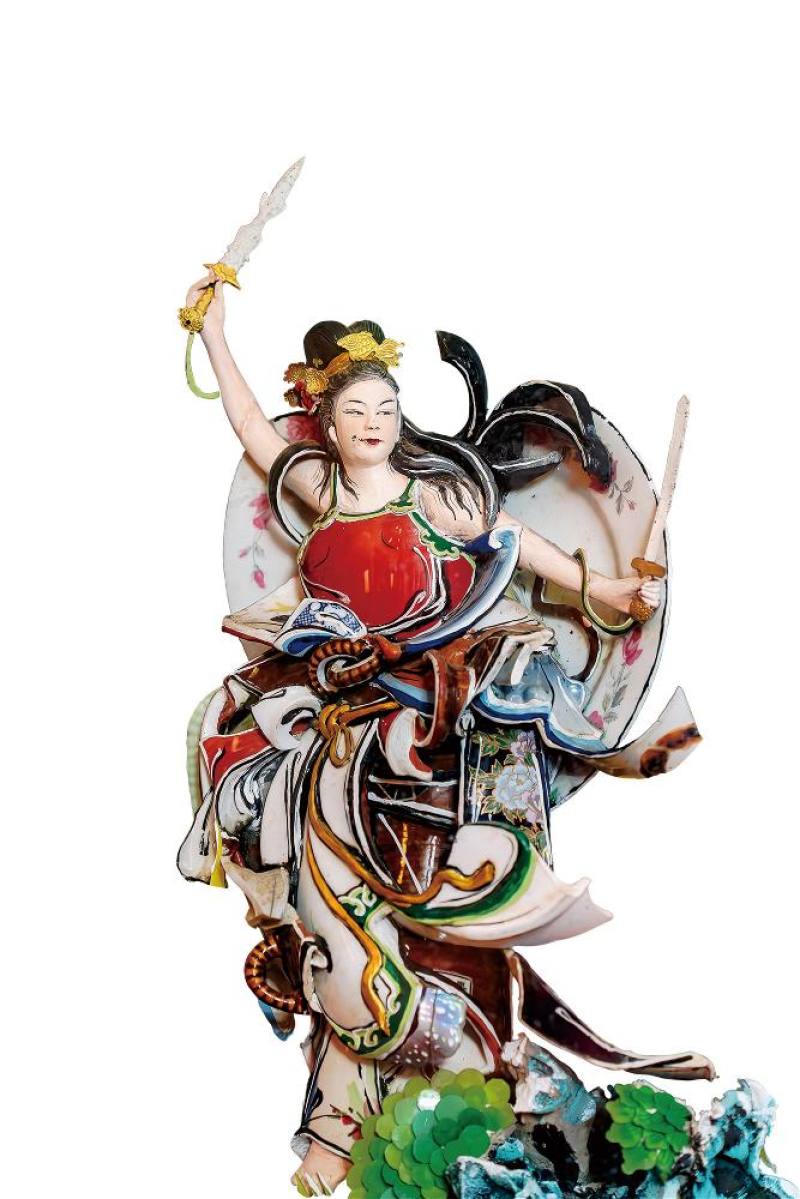
內殿虎邊壁堵主題是「上帝公收服二聖」。作品中上帝公的黑色衣衫是由黑色酒壺碎片組成,利用酒壺的曲線展現服飾的飄揚與動勢,他讓原本冷硬的瓷片,在拼組之間生出柔軟與流動。龍邊牆堵是「太子爺鬧東海」,用小吃店常見的白色瓷盤當蚌精的蚌殼,或在角色衣著、帽邊可見品牌名字,為觀者帶來意外的細節趣味。
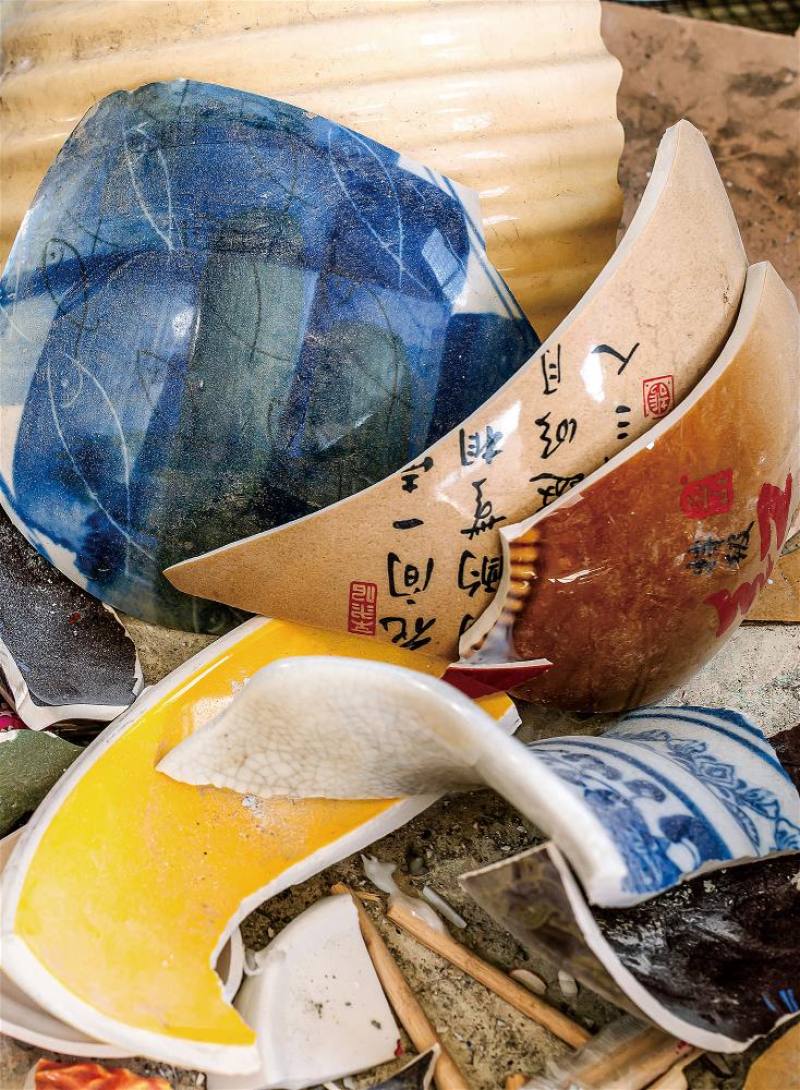
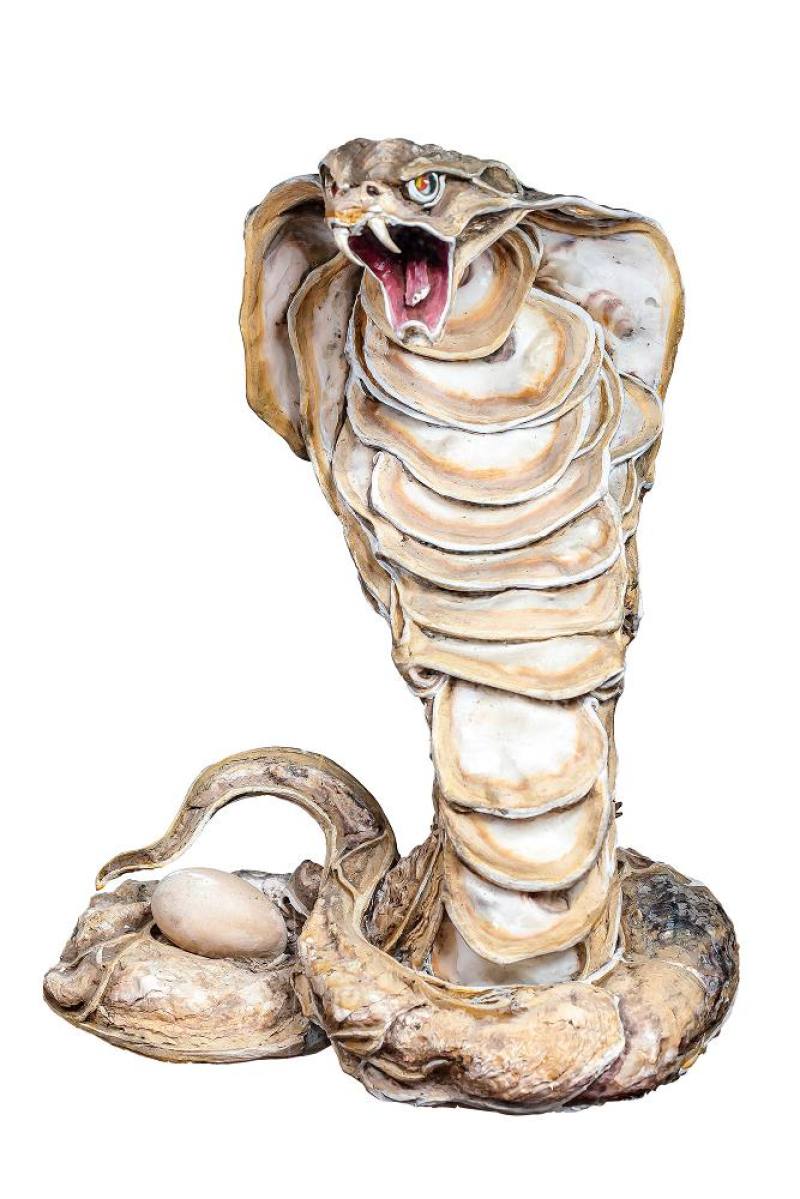
火師工作室門口,堆滿親朋好友送來的廢棄陶瓷與酒瓶,靜靜等待被轉化;就連蚵殼,也能在他手中化為作品。
把日常敲進剪黏
火師的創作靈感,更有來自日常生活的觀察與轉化。他將24節氣擬人化:把「立春雨水」化為身著草花紋樣的春神與掌管降雨的龍王;「大暑小暑」則成為手捧火種和頭頂火盆的神差,充滿想像與戲劇張力。
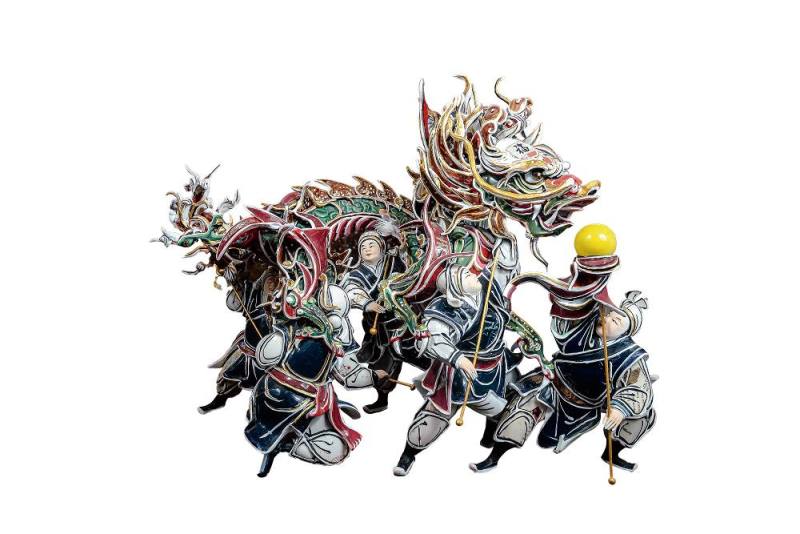
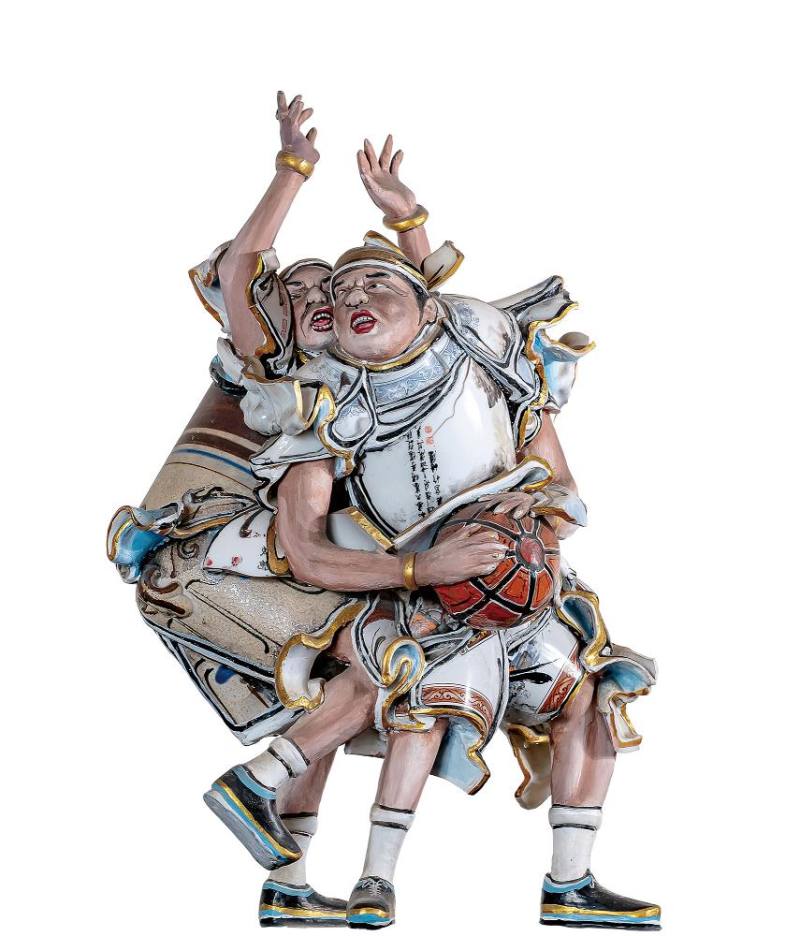
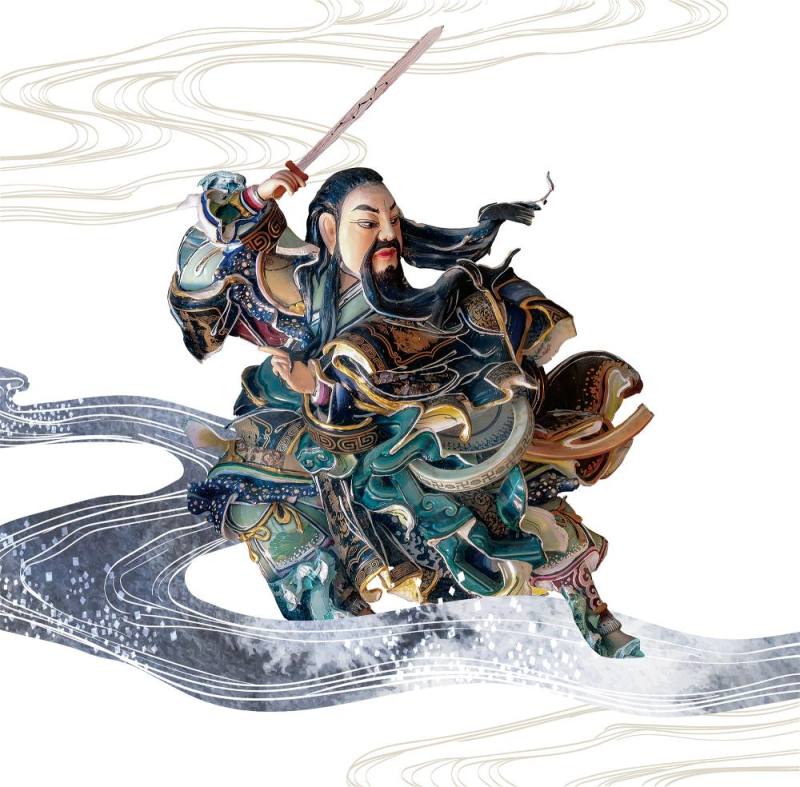
當「豪小子」林書豪風靡全台時,他創作「灌籃」,把人物搶球的動勢與灌籃的步伐凝結成瞬間,延續他傳承自剪黏大師洪坤福一派,誇張且生動的戲劇韻味。至於祭典中常見的「宋江陣」、「弄龍陣」,讓街頭陣式裡的熱鬧喧騰如在眼前搬演。
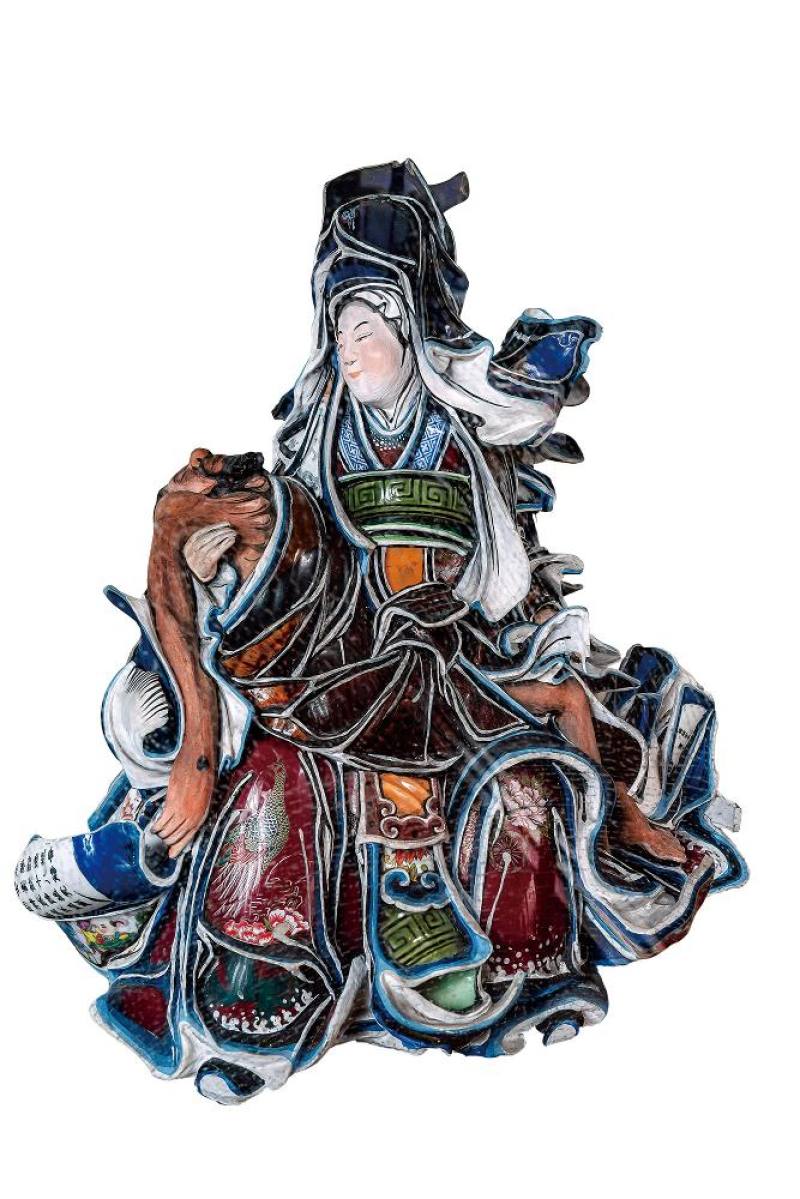
去一趟歐洲,火師見到米開朗基羅的「聖殤」,深受觸動。返台後即以陶瓷酒瓶為媒材,創作出屬於自己的「聖殤」。有人提點他作品中耶穌手的垂放姿勢彷彿仍活著,他隨即微調手部角度,毫不避諱地說:「不好當然要改,不改會醜一輩子。」
這份不斷修正、持續轉化的創作意志,讓他的剪黏,始終活在當下,而不只是停留在傳統之中。
留下可被時間看見的手藝
當年兄長李世逸遽然離世,火師思索能在自己的生命留下什麼?如今,國家三級古蹟新港奉天宮,留有他的手藝風景。2021年,陳三火獲頒文化部國家重要傳統工藝剪黏保存者之「人間國寶」,同年,再獲「國家工藝成就獎」的殊榮。創作的「媽祖出巡」則獲國立台灣工藝研究發展中心典藏。
台灣美術史學者蕭瓊瑞曾指,火師的剪黏是賦傳統予新意,而不失傳統的本意,「由技入藝、由藝進道。」而今,火師的剪黏生命,還在敲摃與拼黏之間,持續尋找傳統新的形狀
Reconfiguring Tradition:Chen San-huo’s Art of Jiannian
Cathy Teng /photo byLin Min-hsuan /tr. byBrandon Yen
Chen San-huo is a master of jiannian (“cut-and-paste” ceramics), a traditional art that involves clipping shards of colored ceramics and sticking them onto a base structure. For over six decades, he has been creating jiannian sculptures on the roof ridges of temples, often having to brave inclement weather.
Celebrated as a national treasure, Chen nevertheless prefers the modest sobriquet Master Huo. In both Taiwanese and Mandarin, the word for “master craftsman” is pronounced the same as the word for “lion.” Chen says that just as stone lions guard the entrances to local temples, he wants to ensure the survival of Taiwanese art.
Coming into his own
Born in Madou, Tainan, Chen San-huo started his career at age 17 under jiannian master Li Shiyi. After World War II, the construction and restoration of a large number of temples across Taiwan created a surge in demand for jiannian artworks. Chen’s deft hand won him recognition, and many temples sought his expertise.
However, with the rise of molded decorations such as Cochin ware, which can be mass-produced by slip casting, traditional jiannian went into decline. In his 50s, Chen had to consider abandoning the old craft.
One day, when he was 54, he found himself picking up a ceramic vase. Acting on a whim, he struck it with a pair of pliers and then assembled the shards into the shape of Bodhidharma, the legendary monk credited with bringing Chan Buddhism to China.
Traditional jiannian artists would first come up with clear images of their works and then use pincers and diamond scribers to turn ceramic shards into desired shapes before attaching them, one by one, to cement-covered wire armatures or base forms. Chen departed from this time-honored practice, starting by shattering ceramics and letting the random shards determine the shape of a work. In so doing, he surrendered his creativity to serendipity. “From that single act of striking a vase were born my creative platform, a very different career, and my calling.”
Serendipity
We visit Fu’an Temple at Zhengziliao in Tainan’s North District to see one of the “serendipitous” works Chen created when he was 60.
Entering the inner hall, we find the left wall, depicting the Daoist deity Xuantian Shangdi subduing the demonic turtle and snake. The god’s garment is composed of fragments of black liquor jars. The curved shards serve to bring out the ethereal motions of the costume: originally cold and hard, they now convey a sense of supple fluidity in their new assemblage. On the right side of the hall is an image of Prince Nezha wreaking havoc in the East Sea. The shell of the clam spirit here is made of a broken white plate of a kind commonly used at local eateries, while business names from promotional tableware are visible on the figures’ clothes and headdresses, bringing smiles to our faces.
At the entrance to Chen’s studio, there are piles of used ceramic ware and liquor jars from his friends and relatives. They’re waiting to be transformed into artworks. In Chen’s hands, even unsightly oyster shells can be turned into art.
Inspirations
Chen’s creative process is rooted in observing and transforming elements from his daily life. For example, he has personified the 24 solar terms of the traditional Chinese calendar, portraying Major Heat (Dashu) and Minor Heat (Xiaoshu) as celestial envoys, one carrying a brazier and the other holding a flame—images full of drama and imagination.
When the Taiwanese-American basketball player Jeremy Lin was causing a sensation in Taiwan, Chen created a work capturing the moment when a player has stolen the ball and is about to perform a slam dunk. The almost exaggerated dramatic vitality marks Chen out as a disciple of the old jiannian master Hong Kunfu’s style.
During a visit to Europe, Chen was deeply moved by Michelangelo’s Pietà. When he came back to Taiwan, he set about creating his own pietà, using shards of ceramic liquor containers.
Legacy
When his mentor Li Shiyi passed away, Chen began to wonder about his own legacy to the world. Fengtian Temple in Xingang, Chiayi County, a county-level monument, is graced by his work. He was named a National Living Treasure by the Ministry of Culture in 2020 and received the National Crafts Achievement Award the following year. His Mazu Parade is in the collection of the National Taiwan Craft Research and Development Institute.
Art historian Hsiao Chong-ray says that Chen San-huo has breathed new life into jiannian, without forfeiting the original essence of the tradition. “From technical prowess to artistry, and from artistry to the Dao,” Chen continues to reconfigure tradition by reassembling fragments and giving them new life.