On some evenings in Massachusetts, Brenda Perez-Goodrum finished teaching a college class and headed straight into another classroom. This time, she took a seat as a student. Tired after teaching but eager to learn, the experienced science and STEM educator was finally pursuing an interest she had carried for years: studying Mandarin.
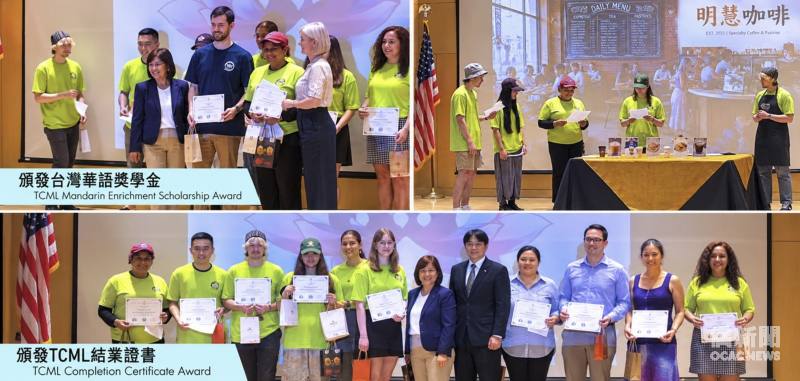
That decision brought her to the Taiwan Center for Mandarin Learning (TCML) at Ming Hui Academy Boston in Cambridge in fall 2025. It has since taken her to Hualien, Taiwan, where language study is helping her fulfill a personal ambition, explore Taiwanese culture, and reconsider familiar questions about how students learn.
“Being a student again is changing my perspective as an educator,” Perez-Goodrum said.
Perez-Goodrum teaches at both the secondary and college levels, with work spanning biology, biomedical and biotech science, student research, and robotics. Her approach emphasizes curiosity and hands-on learning, encouraging students to connect classroom lessons with the wider world. Through learning Mandarin, she is experiencing that connection from the learner’s perspective.
Her interest in the language began much earlier in her career. Professional commitments, family responsibilities, and other demands delayed formal study until the opportunity at TCML emerged. Enrolling gave a longstanding goal a regular place in her schedule, even when attending meant moving directly from the demands of teaching to the challenges of learning.
Outside class, practice required deliberate effort. Without Taiwanese or Mandarin-speaking friends around her, Perez-Goodrum had to seek opportunities to listen, review, and use what she was learning. Progress depended on returning to unfamiliar sounds and characters, including on days when speaking felt uncomfortable.
At TCML, she found support for that effort. She credits Cynthia, Wen, Sunling Liew, the principal, and the wider Ming Hui community with creating a welcoming environment that extended beyond lessons. Teachers, students, families, and friends contributed to a sense of belonging that helped her keep trying.
Cooking, calligraphy, meditation, and celebrations introduced Taiwanese culture alongside the language. Learning to make dumplings became one enjoyable part of the experience. These activities gave her opportunities to participate, ask questions, and connect with people while deepening her understanding of the culture that had sparked her curiosity.
Speaking remained her greatest challenge. Although she increasingly recognized Traditional Chinese characters and vocabulary, forming sentences quickly was another matter. She could know the words she wanted yet struggle to assemble them in conversation. Concern about pronunciation or saying something incorrectly added another obstacle.
A Dragon Boat Festival celebration pushed her to confront that hesitation. Standing onstage, she told riddles in Mandarin while children answered. She was so nervous that she could barely register how she sounded, but their participation made the experience enjoyable. A classroom skit about ordering drinks offered another opportunity to practice speaking before others.
“I was nervous, but I did it,” she recalled.
Those experiences were small but meaningful steps toward using Mandarin with greater confidence. They also made the gap between recognizing information and expressing it more immediate for an educator accustomed to helping others bridge that gap.
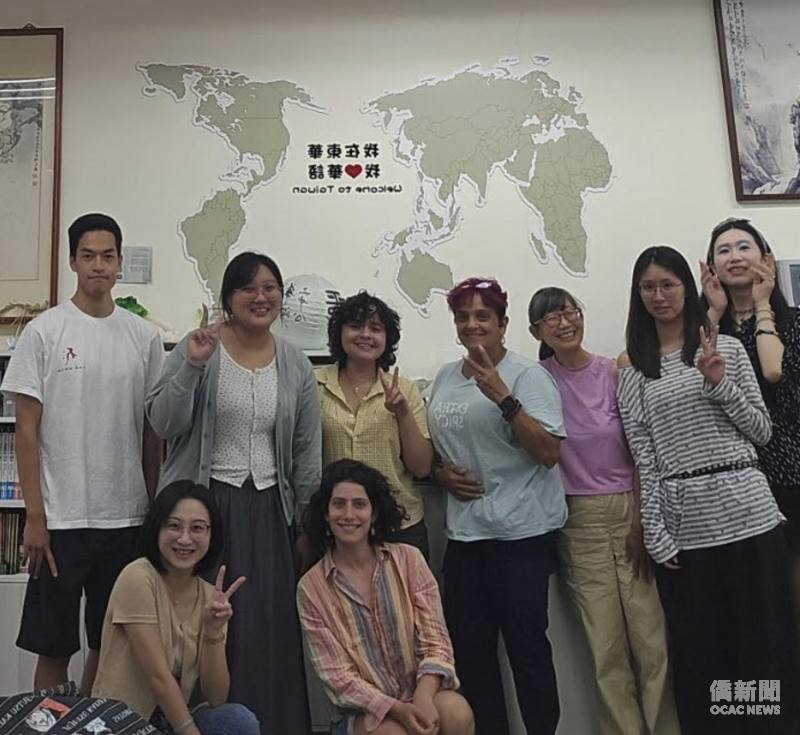
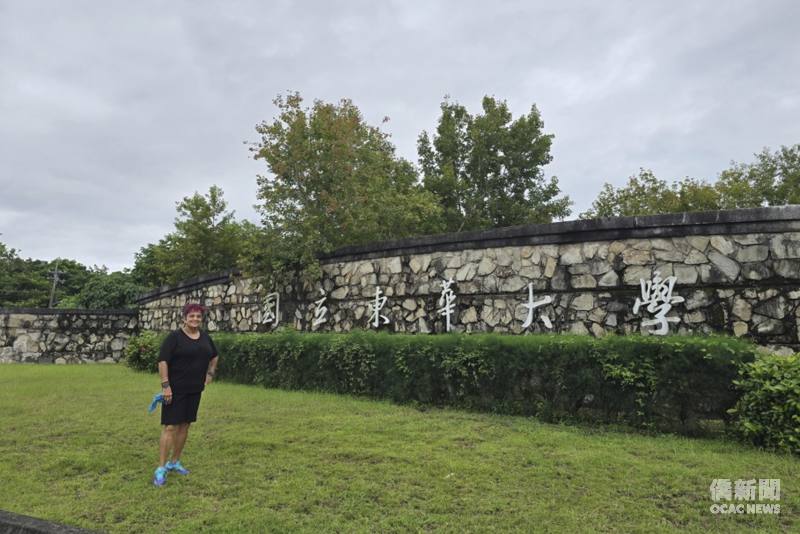
In 2026, Perez-Goodrum received the Huayu Enrichment Scholarship from Taiwan’s Ministry of Education, allowing her to continue studying at the Chinese Language Center at National Dong Hwa University in Hualien. The move expanded her learning environment from scheduled classes to everyday routines.
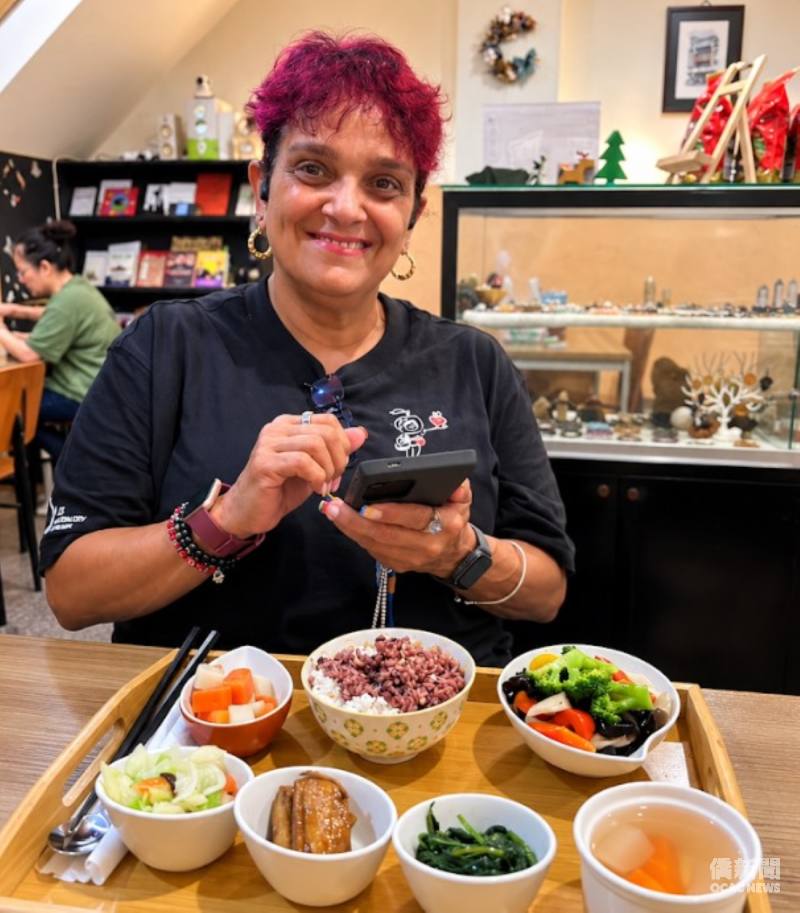
Finding a train, navigating campus, reading signs, ordering food, and asking directions now require her to apply what she has studied. A phone conversation can become an unexpected listening exercise. These encounters can be challenging and sometimes funny, giving vocabulary a practical purpose and making each day another opportunity to learn.
Taiwan has also broadened her understanding through encounters that require more than language proficiency. Before she had settled into university life, a retired professor she had never met gathered helpful information, showed her around campus, and took her to dinner. When transportation felt uncertain, strangers helped her find the correct train to Hualien.
Their assistance reminded her of the community she first found at Ming Hui TCML. Despite her limited Mandarin, she has repeatedly encountered people willing to help. Those exchanges have made everyday relationships central to her experience of Taiwan, alongside formal instruction and cultural activities.
Hualien itself has also left a strong impression on her: greenery, peaceful surroundings, a sense of safety, and mountains rising into clouds. She arrived expecting to study a language, but kindness, tranquility, and community have become equally memorable parts of her stay, widening her view of what learning abroad can offer.
These experiences have deepened her appreciation of language as a way to understand how people interact and build relationships. They have also given her opportunities to explore Taiwanese culture directly through participation in daily life.
The experience is sharpening her awareness of students’ needs. Difficulty retrieving a word, needing repetition, or hesitating before speaking now carries personal meaning. She recognizes parallels with her English-learning students and with science students encountering unfamiliar terminology and concepts. Patience, visual support, and encouragement help make participation possible; feeling safe enough to make mistakes matters, too.
For Perez-Goodrum, Mandarin remains a daily challenge and a continuing commitment. She hopes to explore Taiwanese life through conversations, food, traditions, and the people she meets, while carrying a renewed understanding of learning into her professional work. Her next steps will continue to involve more practice and the satisfaction of making herself understood.
“My goal is not simply to learn a language, but to use what I learn to build connections between people, education, science, and culture,” she said.