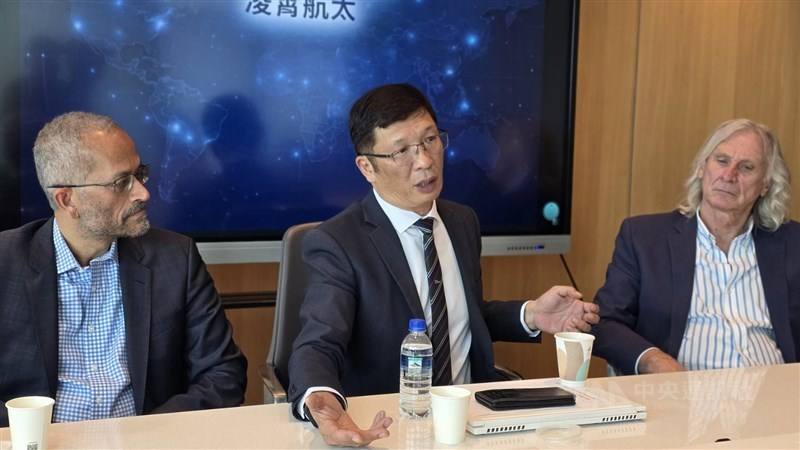
Taipei, Oct. 28 (CNA) Taiwan's drone industry needs supply chains capable of sustaining production during a prolonged conflict, rather than relying on stockpiles alone, AerosoarX Chairman Max Lo (羅正方) said Wednesday, drawing lessons from Russia's war in Ukraine.
Speaking at his company's first public event since it was established in April, Lo warned that a war of attrition could rapidly deplete even substantial inventories and that sustaining operations required production capacity across the entire supply chain.
"Stockpiles can only determine the first month of fighting," he said, arguing that continued production and replenishment would determine who could endure.
He proposed setting up manufacturing operations in different countries that share assembly specifications and interchangeable components. If a conflict or a blockade disrupted one location, others could take over and expand production, he said.
"Defense self-reliance does not mean doing everything ourselves," said Lo, a major figure in Taiwan's drone industry and the chairman of the Taiwan National Drone Industry Association.
Lo also suggested cooperation based on common standards, joint procurement, distributed production, mutual maintenance and shared reserve inventories and said such arrangements should be established before a conflict.
Reflecting on his earlier experience at drone maker Geosat Aerospace & Technology, Lo recalled taking pride in doing nearly 80 percent of the development in-house.
That approach, however, is now too slow for rapidly changing requirements, Lo believed.
Supply chain diversification
AerosoarX, dedicated to developing AI-enabled unmanned vehicles and platforms, envisages Taiwan as a hub for system integration, modular design and component kits shipped overseas for assembly, with Vietnam and Malaysia seen as potential supply-chain and assembly hubs.
For company co-founder and CEO Jason Wu (吳俊逸), making that network commercially sustainable requires reaching beyond Taiwan's domestic market.
"If we only looked at Taiwan from the beginning, frankly, we couldn't build this supply chain," he said.
Lo also acknowledged the economic cost of replacing Chinese suppliers, and he advocated a gradual reduction in dependence focused on critical supply-chain links.
Maintaining a large factory without steady orders would be commercially difficult, he said, arguing that focusing on smaller operations serving international customers offered a way to keep production active while retaining the flexibility to increase output during an emergency.
(By Chao Yen-hsiang)
Enditem/ls